
Quick Summary
Recognizing the early warning signs of automatic gate operator failure – such as sluggish movement, electrical humming, and unexpected reversals – is critical to preventing sudden breakdowns and severe entrapment hazards. Because electrical motor faults often mimic physical hardware resistance from worn hinges or misaligned tracks, Ironworks Gate Co. delivers comprehensive diagnostics to accurately determine whether a component requires adjustment, repair, or full replacement. After reading this guide, Anaheim property owners will understand how to spot critical operator malfunctions and can contact Ironworks Gate Co. to schedule a free on-site motor inspection or same-day repair.
Signs Your Gate Motor Is Failing: Troubleshooting and Safety Guide
When an automated driveway gate starts acting up, it rarely fixes itself. Catching the early signs that your gate operator system is failing can prevent sudden malfunctions and dangerous safety hazards. Whether your gate is moving slowly, stopping erratically, or humming loudly without budging, recognizing common symptoms helps you address issues promptly. Please note that available research does not establish Anaheim-specific failure patterns or local statistics.
According to Ironworks Gate Co., automatic gate systems combine electrical controls with heavy mechanical hardware. The U.S. Consumer Product Safety Commission (CPSC) identifies malfunctioning or missing sensing devices and reversing mechanisms as primary automatic gate hazards. A gate that fails to stop or reverse on contact presents a severe entrapment risk. For that reason, diagnosing an operator problem requires evaluating the entire physical setup, because symptoms may result from the motor, controls, wiring, sensors, alignment, obstructions, rollers, hinges, or other hardware.[1]
Top Warning Signs of Gate Operator Failure
Quick Summary: Common warning signs of gate operator issues include slow or erratic movement, unexpected stopping or reversing, unusual grinding or humming, difficulty moving manually, unreliable obstruction sensing, and failed safety functions. These symptoms may stem from the motor, controls, wiring, sensors, alignment, obstructions, rollers, hinges, or other hardware.
Because an operator moves a physical load, electrical faults and mechanical resistance can produce similar symptoms. Common warning signs that indicate a system requires professional inspection include:
- Slow or Erratic Movement: The gate struggles to open, pauses mid-cycle, moves erratically, or operates noticeably slower than normal due to potential issues with the motor, controls, wiring, alignment, rollers, or hinges.
- Unusual Grinding, Screeching, or Humming: Loud grinding noises, screeching, or an electrical hum without movement can result from motor wear, drive component failure, seized hardware, or physical obstructions.
- Unexpected Stopping or Reversing: The gate stops unexpectedly during travel or reverses direction without an apparent obstacle, which may be caused by sensor faults, wiring issues, motor problems, or mechanical binding.
- Unreliable Obstruction Sensing: Sensing devices fail to detect obstructions or cause erratic stops, indicating potential wiring, control, or sensor alignment faults.
- Difficulty Moving Manually: When the release mechanism is disengaged, the gate remains stiff or difficult to move manually, suggesting binding tracks, damaged rollers, worn hinges, or alignment problems rather than solely an electrical motor fault.
Safety and Entrapment Standards
The cited CPSC material describes at least two entrapment-prevention mechanisms for automated gate systems, including a reversing sensing device and a secondary device such as an electric eye or edge sensor.[3]
CPSC guidelines recommend that access controls be installed far enough away so users cannot touch the moving gate while operating the switches, while still maintaining a clear, direct view of the entire gate run. Supported hazards associated with automatic gates include failure to reverse, unreliable obstruction sensing, exposed rollers, pinch points, missing or failed end-stops, and unsafe control placement. If your gate fails to reverse, sensing devices are unreliable, or safety functions do not work, stop using the gate immediately and have a qualified technician inspect it. Users should not attempt electrical or operator repairs themselves; a qualified technician should determine whether repair or replacement is appropriate.[4]
Operational Strain and Environmental Factors
Need signs your gate motor is failing anaheim?
We’re available now - call for a fast, free estimate.
Physical layout and environmental conditions can place added strain on gate operating systems. As specialists at Ironworks Gate Co. explain, gates operating on steep inclines must constantly work against gravity, increasing load and torque on drive mechanisms, brackets, and physical hardware. Elevated ambient temperatures can also place additional thermal and electrical stress on operators and control components. However, available research does not establish Anaheim-specific failure patterns or local statistics. Any operational symptom observed under these conditions may result from the motor, controls, wiring, sensors, alignment, obstructions, rollers, hinges, or other hardware.
Component Overview: Motor, Opener, and Hardware Symptoms
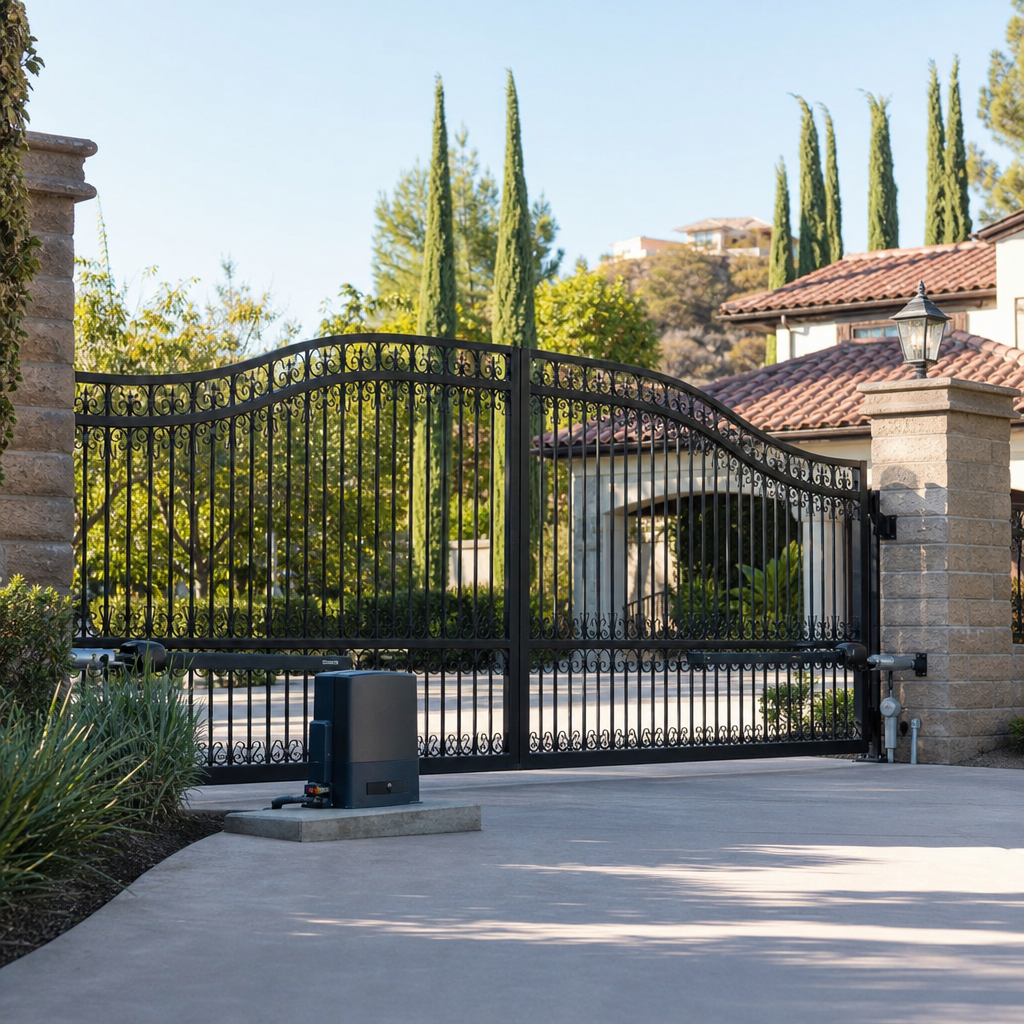
Evaluating an operational problem requires understanding that symptoms can originate across multiple electrical and mechanical components.
1. Drive Motor and Internal Components
If an operator emits unusual grinding, clicking, or humming sounds without moving the gate, the cause could be internal drive wear, motor failure, wiring faults, or severe physical resistance from the gate structure.
2. Safety Sensors, Wiring, and Controls
When a gate fails to close or exhibits unexpected reversing, the issue may involve sensors, controls, or wiring. Unreliable obstruction sensing, misaligned optical sensors, or damaged wiring can interrupt normal operation. Visible hazards such as broken or unreliable sensors, exposed rollers, pinch points, and missing or failed end-stops present serious entrapment risks that require prompt professional correction.[5]
3. Gate Hardware: Hinges, Rollers, and Alignment
Mechanical hardware must always be evaluated alongside the motor, according to Ironworks Gate Co. Sagging posts, worn rollers, damaged hinges, bent tracks, or alignment issues can create heavy physical resistance. When extra resistance is present, the operator may stop or reverse. Symptoms observed during operation may stem from the motor, controls, wiring, sensors, alignment, obstructions, rollers, hinges, or other hardware.
Gate Opener Systems: Repair vs. Replace Considerations
Need signs your gate motor is failing anaheim?
We’re available now - call for a fast, free estimate.
Deciding whether to repair or replace an operator depends on the nature of the fault, hardware condition, and safety compliance. Users should not attempt electrical or operator repairs themselves; a qualified technician should determine whether repair or replacement is appropriate.
| Scenario | Recommended Action | Key Factors to Consider |
|---|---|---|
| Electrical or Control Component Fault | Professional Inspection / Repair | Component availability, wiring integrity, and overall system condition as evaluated by a qualified technician. |
| Misaligned or Unreliable Safety Sensors | Professional Realignment / Repair | Sensor wiring, physical alignment, optical path clarity, and secure mounting. |
| Severe Mechanical or Drive Failure | Professional Repair or Replacement | Extent of drive component wear, parts availability, and technician recommendation. |
| System Lacking Required Safety Devices | Safety Upgrade / Replacement | Absence of dual entrapment-prevention mechanisms, such as a reversing device and secondary electric eye or edge sensor, creating severe hazard risks. |
Evaluating Your System
- Safety Mechanisms: Ensure the installation includes at least two entrapment-prevention mechanisms, including a reversing sensing device and a secondary device such as an electric eye or edge sensor.
- Physical Hazards: Check for exposed rollers, pinch points, missing or failed end-stops, or unsafe control placement, which pose severe injury hazards.
- Hardware Condition: Ensure hinges, guide posts, tracks, and rollers are properly aligned and structurally sound. Symptoms may result from the motor, controls, wiring, sensors, alignment, obstructions, rollers, hinges, or other hardware.
- Professional Evaluation: A qualified technician should assess the system to determine whether repair or replacement is appropriate.
Professional Gate Motor Safety and Inspection
Because automated gates involve heavy mechanical loads and electrical systems, Ironworks Gate Co. advises that users should not attempt electrical or operator repairs themselves. Hardware failures, including broken hinge mounts, missing or failed end-stops, exposed rollers, pinch points, unsafe control placement, and failure to reverse on obstruction, can lead to severe entrapment or physical injury. When a gate fails to reverse, sensing devices are unreliable, or safety functions do not work, stop using the gate immediately and have a qualified technician inspect it.[2]
Frequently Asked Questions About Gate Motor Failure
What are the most common signs an electric gate motor or operator is failing?
Common signs include slow or erratic movement, unexpected stopping or reversing, unusual grinding or humming noises, difficulty moving manually, unreliable obstruction sensing, and failed safety functions. These symptoms may result from the motor, controls, wiring, sensors, alignment, obstructions, rollers, hinges, or other hardware. Research does not establish Anaheim-specific failure patterns or local statistics.
Why is my automatic gate opening slowly or getting stuck?
Slow or hesitant travel is often caused by mechanical resistance or electrical faults. Potential causes include worn rollers, damaged hinges, track misalignment, physical obstructions, or issues within the motor, controls, and wiring.
Can environmental factors and inclines cause gate operators to stop working?
Yes. Operating on a steep incline increases gravitational drag and mechanical strain on drive components, while high ambient temperatures can add thermal stress to electrical components. However, symptoms observed under these conditions may also stem from the motor, controls, wiring, sensors, alignment, obstructions, rollers, hinges, or other hardware.
How do I know if my gate needs a sensor repair, hardware adjustment, or motor replacement?
Because symptoms overlap significantly, diagnosing the exact cause requires a comprehensive inspection. A gate that fails to close or reverses unexpectedly may suffer from sensor misalignment, damaged wiring, physical track obstructions, hinge wear, or motor failure. Users should not attempt repairs themselves; a qualified technician should determine whether repair or replacement is appropriate.
Why does my gate motor make a humming sound without opening?
A humming sound generally indicates that the operator is receiving electrical power but cannot move the gate. This can occur due to internal motor or drive component faults, control issues, or mechanical binding such as a damaged hinge, jammed roller, or track obstruction. If the gate fails to operate or safety functions do not work, stop using the system and contact a qualified technician at Ironworks Gate Co.
Need signs your gate motor is failing anaheim?
We’re available now - call for a fast, free estimate.
Sources
- AB 2149 (Connolly) – sjud.senate.ca.gov (2024)
- Petition File No. 605 Cal/OSHA Evaluation – dir.ca.gov (2024)
- [PDF] Federal Register/Vol. 84, No. 130/Monday, July 8, 2019/Proposed … – govinfo.gov (2019)
- New Safety Standard for Automatic Security Gates Helps Prevent … – cpsc.gov (2001)
- [PDF] Investigation Guideline Product: Automatic Gate Operators Appendix – reginfo.gov (2000)
Related reading: Troubleshooting Gate Photo Eyes Anaheim | Call Now-10% Off | Same-Day Service | Free Estimate
Frequently Asked Questions
How can I tell if my gate issue is a failing motor or just mechanical hardware binding?
Physical hardware binding usually leaves the gate stiff to push manually even when the release mechanism is disengaged, whereas motor or electrical faults often produce humming sounds without movement. Because symptoms overlap significantly, technicians at Ironworks Gate Co. test both mechanical resistance and electrical components to pinpoint the exact failure without unnecessary part replacements.
How quickly can a failing gate operator be diagnosed and repaired in Anaheim?
Ironworks Gate Co. provides fast, same-day gate operator diagnosis and repair services across Anaheim to address severe entrapment risks and operational breakdowns immediately. A qualified technician evaluates the entire system on-site, including motor health, safety sensors, and drive hardware, to restore safe operation.
Can I schedule a free inspection to determine if my gate motor needs repair or replacement?
Yes, property owners in Anaheim can schedule a free on-site motor inspection with Ironworks Gate Co. to evaluate operator performance and safety compliance. Our technicians provide an honest, accurate assessment of whether a simple adjustment, component repair, or full operator replacement is required.
About the author
 |
David Harrison David Harrison is a seasoned technical writer with over eight years of experience specializing in the access control and home security industries. Holding a Bachelor’s degree in Communications from California State University, Fullerton, he translates complex gate repair diagnostics and pricing structures into clear, actionable advice for property owners. David’s practical insights help Orange County residents and businesses navigate automatic gate maintenance with confidence and transparency. |
Gate not opening, off track, or opener dead?
We’re available now - call for a fast, free estimate.
Call Now - Free Estimate