
Last updated August 25, 2026
Free on-site gate assessment - hinges, posts, and your LiftMaster or Nice gate operator checked before anything is quoted
The assessment is free and the quote is the invoice.

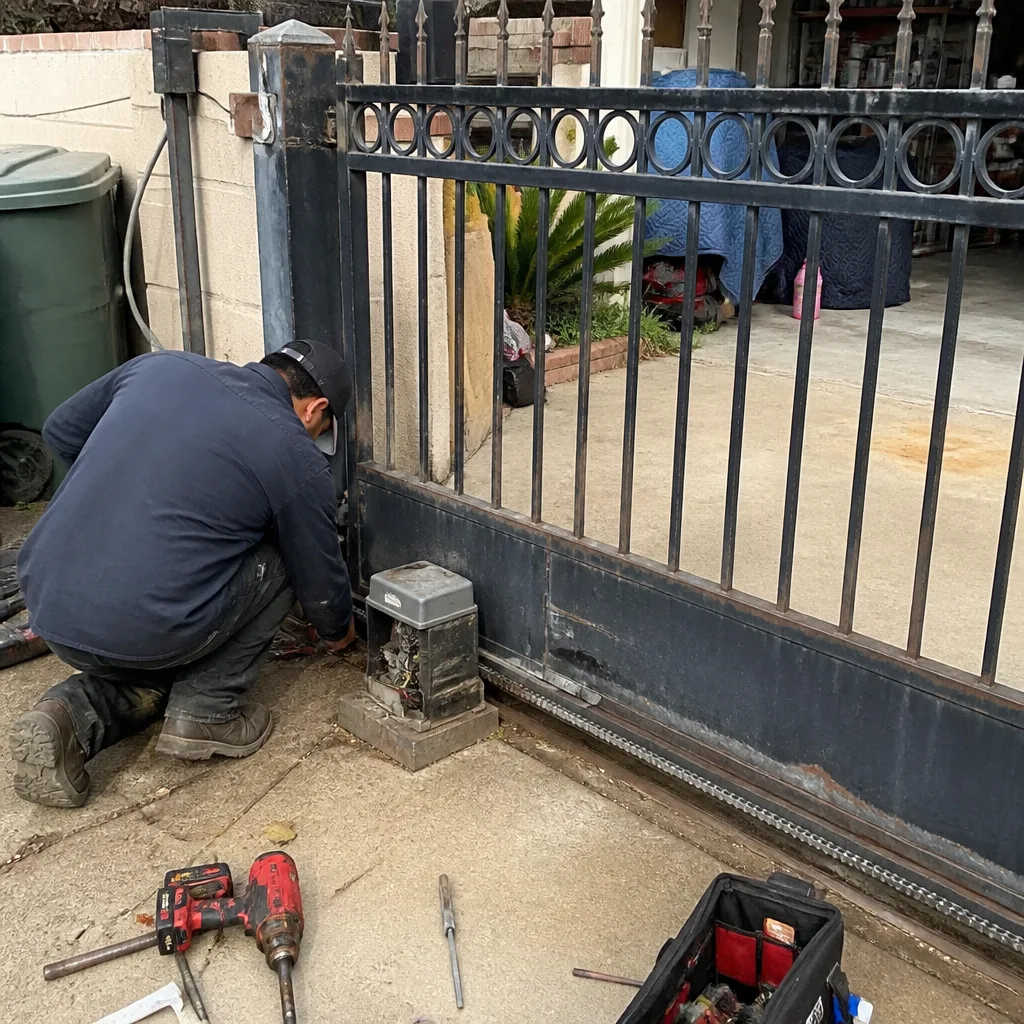 Before
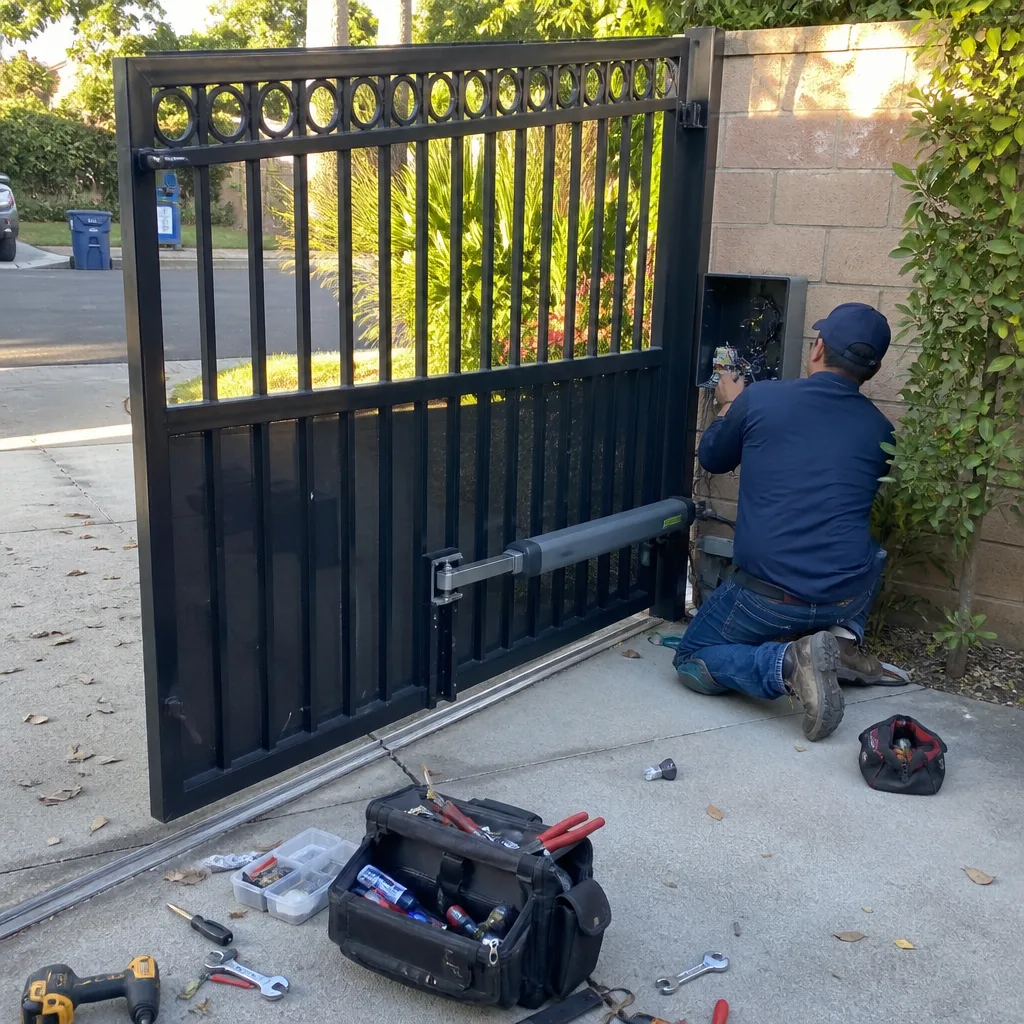 After
After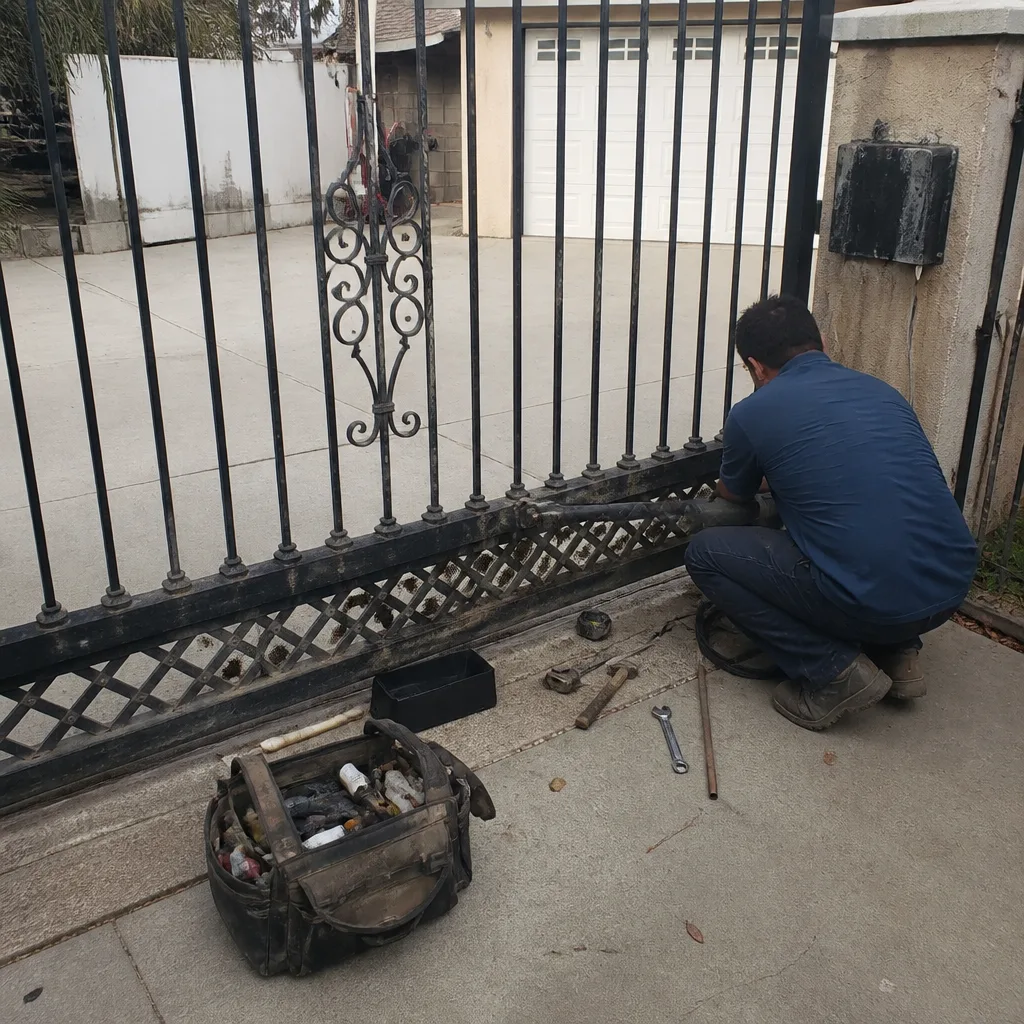 Before
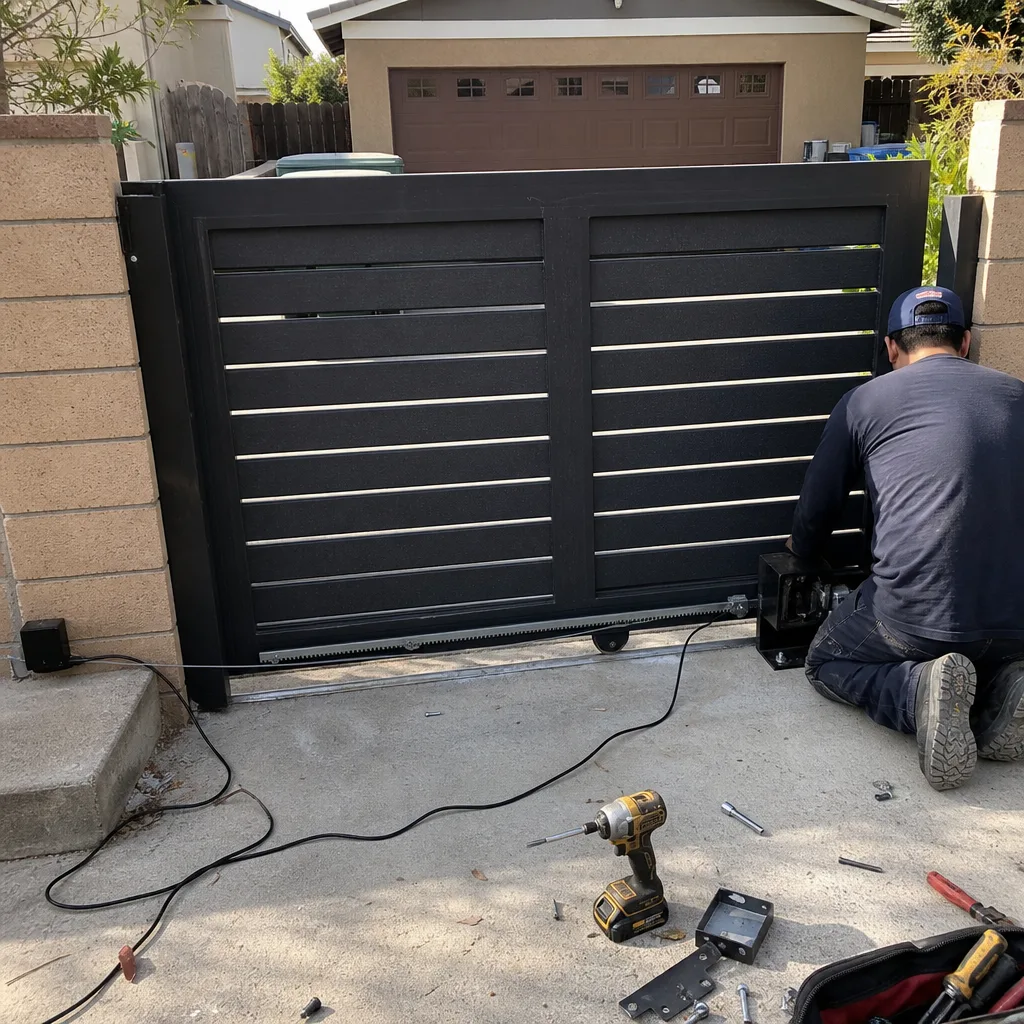 After
After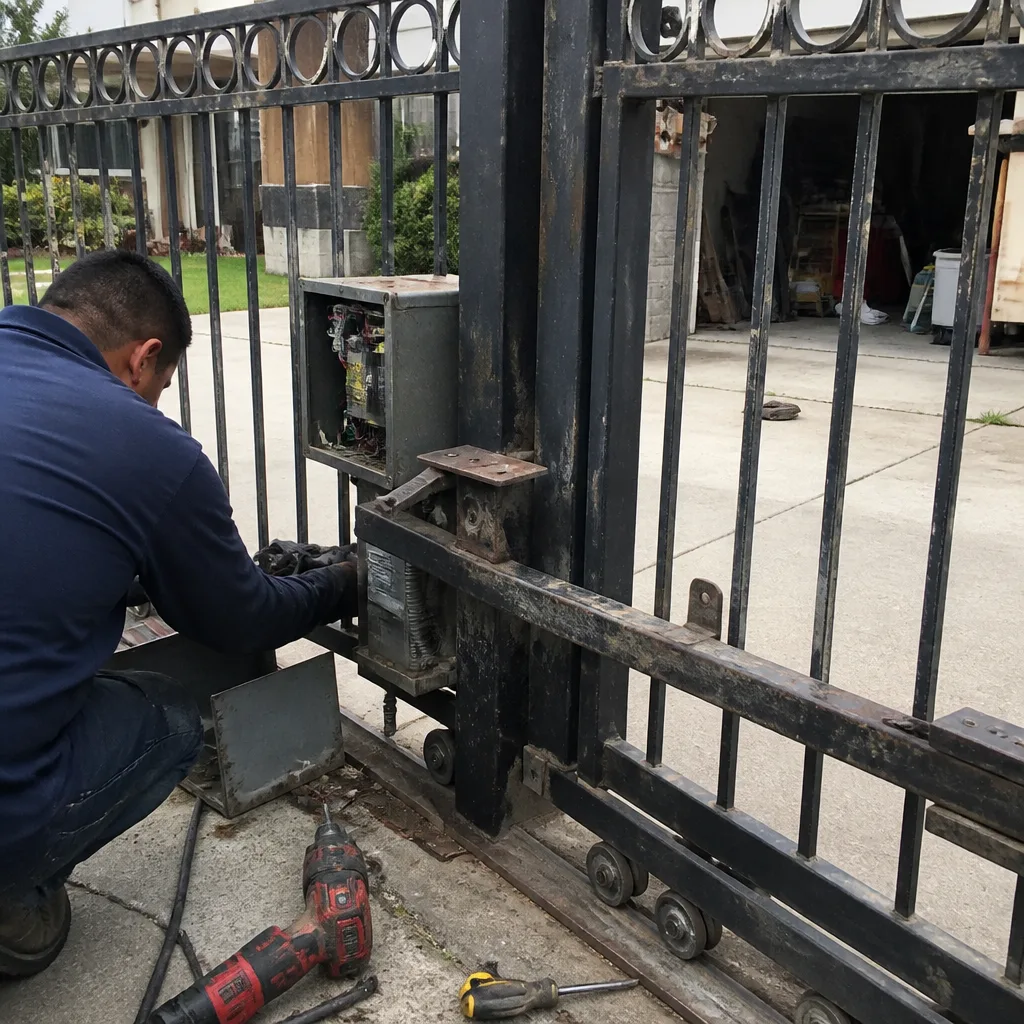 Before
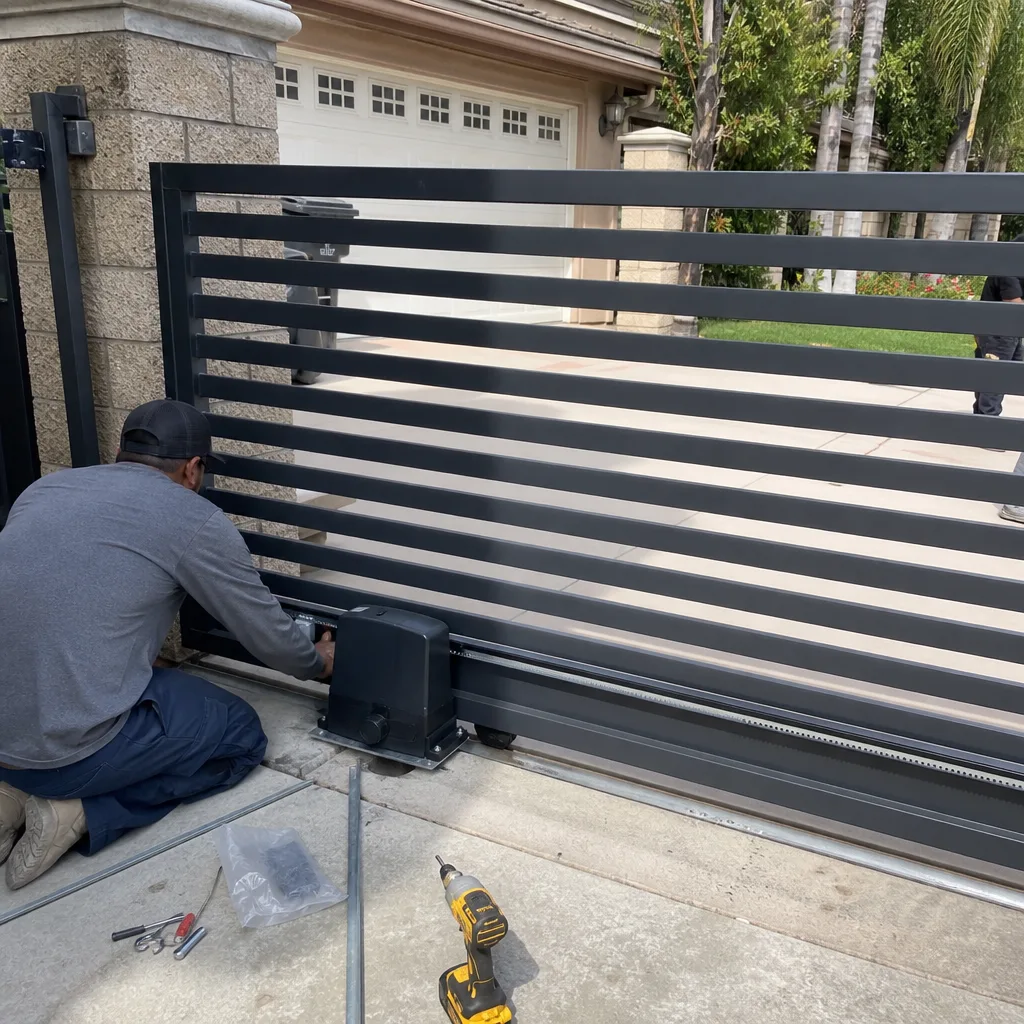 After
AfterDIY vs Professional Gate Repair: The Anaheim Homeowner’s Decision Guide
Here is a number that surprises most Anaheim homeowners: roughly six out of ten gate repairs we walk into started as a DIY attempt that went sideways. The homeowner watched a video, bought a part, and spent a Saturday afternoon on a fix that held for three weeks before the gate sagged again, the opener burned out, or the whole assembly jammed against the post. This guide exists because the real question is not whether you can turn a wrench. The question is whether the repair will hold. We will walk through what actually fails on gates in Anaheim, what you can safely handle yourself, what you should not touch, and what each path costs when it goes right and when it does not. By the end, you will know exactly where the line is between a Saturday project and a phone call.
Quick Answer
Most Anaheim homeowners can safely handle light maintenance like cleaning tracks, tightening visible bolts, and lubricating hinges. But any repair involving gate springs, opener motors, circuit boards, or structural welding should go to a professional. The cost of a professional repair in Anaheim is almost always less than the cost of fixing a DIY attempt that failed, and a trained technician finishes the job in one visit instead of three weekends.
Table of Contents
- What Actually Fails on Anaheim Gates
- The DIY Safe Zone: What You Can Handle
- The Danger Zone: Why Springs and Cables Are Not DIY
- Opener and Automation Repairs: The Electronic Divide
- Welding and Structural Repair: Where Craft Beats Hardware Store
- Cost Comparison: DIY vs Professional in Anaheim
- When DIY Goes Wrong: The Real Cost of a Failed Fix
- Common Mistakes to Avoid
- When to Call a Professional
- Frequently Asked Questions
- The Bottom Line
What Actually Fails on Anaheim Gates
Most gate problems fall into four categories, and knowing which one you are dealing with tells you most of what you need to know about whether to pick up a wrench or pick up the phone.
Mechanical wear: hinges, wheels, and tracks
A sliding gate in Anaheim rides on steel wheels along a track, and those wheels wear out. A swing gate hangs on hinges that bear the full weight of the gate every time it moves. When a gate starts to drag, screech, or bind, the culprit is usually something mechanical that has simply worn down over years of use. These parts are not expensive. What costs money is the labor to align everything correctly after the part is swapped. A wheel that is off by a quarter inch makes the gate fight the motor on every cycle, which kills the opener within a year or two.
Electronics and automation: boards, sensors, and receivers
Gate openers in Anaheim sit outside in heat, dust, and occasional rain. The control board inside the opener is the brain of the system, and it fails more often than the motor itself. Photoelectric safety sensors get knocked out of alignment by kids, cars, and gardeners with weed whips. Remote receivers stop responding. These problems are rarely solved by replacing a fuse, and they are never solved by hitting the opener with a hammer, which happens more than you would think.
Structural issues: sagging steel, cracked welds, shifting posts
Anaheim sits on soil that moves. The clay-heavy ground expands when wet and contracts when dry, and over a decade or two, concrete gate posts shift. A post that has moved even half an inch changes the entire geometry of the gate. The latch no longer lines up. The gate catches on the ground. The hinges bind. These are structural problems, and they require more than a hardware store part.
Power and wiring problems
Underground wire runs from the house or a gate opener transformer to the operator. Rodents chew insulation, irrigation water seeps into conduit, and connections corrode. When a gate works intermittently, the problem is often in the wiring run, not in the opener itself. Diagnosing this requires a multimeter and patience. Fixing it usually requires trenching.
The DIY Safe Zone: What You Can Handle
There is real maintenance work on a gate that a careful homeowner can do well, and doing it regularly extends the life of the entire system. None of these tasks require special tools or put you at risk.
Step-by-step: quarterly gate maintenance
- Clean the track. For sliding gates, remove leaves, dirt, and debris from the track channel. Anaheim wind blows a surprising amount of grit into gate tracks, especially in neighborhoods near the Santa Ana River channel.
- Inspect visible bolts and fasteners. Use a wrench to check that hinge bolts, wheel brackets, and operator mounts are snug. Do not overtighten. If a bolt will not stay tight, the hole may be wallowed out, and that is a professional repair.
- Lubricate hinges and wheels. Use a spray lubricant designed for metal, not WD-40. Apply to hinge pins and wheel bearings. Wipe off excess so it does not collect dust.
- Test the safety sensors. Wave your hand between the photoelectric eyes while the gate is closing. It should stop and reverse. If it does not, stop using the gate and call a professional.
- Listen. A gate that sounds different than it did last month is telling you something. Grinding, squealing, or a new clunk is an early warning, and catching it early costs far less than waiting.
These five steps take about twenty minutes four times a year. They will not fix a broken gate, but they will prevent a lot of breakdowns before they happen, and they give you a baseline for how your gate sounds and feels when it is healthy.
The Danger Zone: Why Springs and Cables Are Not DIY
Gate springs and tension cables are under constant load. A torsion spring on a driveway gate stores enough energy to break bones or worse if it lets go while you are working on it. This is not an exaggeration, and it is not a scare tactic. It is the same reason garage door springs carry warning labels.
What we see in Anaheim, especially in older neighborhoods like the Colony and along the West Street corridor where many homes still have ornamental steel gates from the 1980s and 1990s, is that springs fatigue over time. The steel loses its temper. A homeowner notices the gate is heavier to open, buys a replacement spring, and starts unbolting the old one without realizing the gate panel weighs three hundred pounds and is now unsupported. The gate drops. The spring flies. Best case, the gate is bent and the track is damaged. Worst case, someone is in the way.
The same caution applies to cables on sliding gates. A cable that has frayed strands is about to fail, and when it fails, the gate can slide freely or drop. If you see frayed cable strands, do not try to rethread or splice them. A trained professional has the tools to unload the tension safely and the experience to know what else is about to fail alongside the cable.
Our recommendation is straightforward: if the repair involves a spring, a tension cable, or anything that will suddenly release stored energy if a bolt comes loose, call a professional. This is a safety issue, and no amount of YouTube confidence changes the physics.
Opener and Automation Repairs: The Electronic Divide
Gate opener problems are where we see the widest gap between what people think is wrong and what is actually wrong. The symptom is usually simple: the gate will not open, or it opens partway and stops, or the remote stopped working. The cause is rarely simple.
What a typical opener diagnosis looks like
A gate opener is not a garage door opener bolted to a bigger door. It is a system: the control board, the motor, the limit switches, the safety sensors, the receiver, the keypad, and the power supply. Any one of these can fail, and the symptom is often identical: the gate does not move. A homeowner who replaces a motor because the gate will not open, when the real problem was a failed limit switch on a Viking opener, has spent four hundred dollars on the wrong part. A technician who works on Viking, Ghost Controls, DoorKing, Elite, and the other major brands every week recognizes the failure pattern in minutes because he has seen it before.
There is also a code and safety dimension in Anaheim. Gate safety sensors must meet the UL 325 standard, and any work on the automation system should leave the gate compliant with the entrapment protection requirements that keep children and pets safe. A DIY opener repair that bypasses a sensor because it kept false-triggering creates a hazard. It also creates liability if someone is hurt.
What you can safely do with an opener
- Check the power: confirm the breaker is on and the outlet is live.
- Replace remote batteries and reprogram fobs using the manufacturer button sequence.
- Clean the photoelectric sensor lenses with a soft cloth.
- Verify the manual release works so you can open the gate by hand in an emergency.
Anything beyond that, involving a multimeter, a wiring diagram, or the phrase “it is probably the board,” is professional territory. We complete most opener repairs in a single visit because we carry common parts for the major brands on the truck, and because we diagnose before we replace.
Welding and Structural Repair: Where Craft Beats Hardware Store
A cracked hinge mounting plate on a wrought-iron gate is a welding job. A bent top rail from a car bump is a welding job. A post that has pulled away from the concrete is a structural job. None of these are fixable with parts from a hardware store.
Welding is a craft, and it is a craft that Ironworks Gate Co. has practiced since 1984. The difference between a weld that holds and a weld that looks like it holds is invisible to an untrained eye, and both of them are hidden under paint. A cold weld, a weld with poor penetration, a weld done without cleaning the metal first: all of these fail, and they fail after the check has cleared.
In Anaheim, there is another factor at work: the coastal influence on corrosion. Homes in the western part of the city get more marine air than people realize, and steel gate components corrode from the inside out. A structural repair on an older gate often requires cutting out the corroded section and welding in fresh steel, not just tacking a bracket over the rot. That is a job for a welder who understands how the gate was built and how it is going to be used.
The Ironworks Gate Co. home page describes the full scope of our welding and structural repair work, from hinge rebuilds to complete custom gate fabrication. When we repair a gate, we do not patch it. We make it right, and we stand behind it in writing with our 90-Day Done Right Promise.
Cost Comparison: DIY vs Professional in Anaheim
The math on DIY gate repair looks different when you count all the costs. Here is a straight comparison based on what we see in Anaheim.
What a DIY attempt typically costs
- Parts. A replacement hinge assembly runs $40 to $120. A control board for a major brand like Ghost Controls or DoorKing costs $180 to $400 online. A spring kit is $60 to $150.
- Tools. Most homeowners do not own a welder, a multimeter, or a torque wrench. Rental or purchase adds $50 to $300 depending on the job.
- Time. Figure a full Saturday for diagnosis, a trip to the hardware store, the repair attempt, and cleanup. Your time has value.
- The risk of doing it wrong. A wrong diagnosis means the part you bought did not fix the problem, and now you have spent money and the gate still does not work.
What professional repair typically costs in Anaheim
- Diagnostic service call. $89 to $149, which most companies credit toward the repair if you proceed.
- Hinge or wheel replacement. $180 to $340 depending on gate size and access.
- Opener control board replacement. $290 to $520 installed, depending on brand.
- Spring or cable replacement with adjustment. $220 to $390.
- Structural welding repair. $300 to $700 depending on the extent of the damage.
The honest comparison is not the price of the part versus the price of the service call. It is the price of a repair done correctly with a written guarantee versus the price of a repair attempt that may or may not work, plus the parts, plus the time, plus the frustration, plus the possibility that the gate is now worse than before you started. We quote the price before any work begins, and that price does not change unless the scope changes and we agree on it first. A square deal: upfront price, no surprises on the bill.
When DIY Goes Wrong: The Real Cost of a Failed Fix
We repaired a gate on a home near Pearson Park last year. The homeowner had replaced the opener himself with a unit he bought online. The opener worked for two weeks. Then it stopped. When we arrived, the problem was not the opener, it was the gate itself. The wheels were worn down to the hubs, the gate was dragging, and the new opener had been fighting the load until it tripped its thermal protection. The DIY repair cost him four hundred dollars for the opener and did not fix the problem. The actual fix, replacing the worn wheels and aligning the track, cost less than two hundred, and we completed it in one visit. He could have called first and saved the entire cost of the new opener.
This is the pattern. A gate that will not open is a symptom. The cause is usually mechanical wear, a structural problem, or an electrical fault. Replacing the most expensive component that might be responsible is a gamble, and the house odds are not good. The failure also often damages other components: a gate that binds burns out a motor, a misaligned sensor wears out the opener relay, a dragging wheel wallows out the mounting holes. By the time a professional arrives after a failed DIY repair, the original small problem has become two or three larger problems.
There is a reason we complete most jobs in a single visit: by the time we arrive, we have usually already spoken with the homeowner on the phone, asked the right questions about the gate type, the opener brand, and the symptoms, and we are carrying the parts that are most likely needed. The K.E.Y.S. code that guides our technicians, Krafted right, Every time, Your home first, Standing behind it, is not a poster on a wall. It means the 400th job gets the same care as the first, and it means we do not leave until the gate works right.
Common Mistakes to Avoid
- Replacing the opener before diagnosing the gate. The opener is rarely the root cause. A gate that is hard to move will destroy any opener bolted to it. Fix the mechanical issues first.
- Lubricating with the wrong product. WD-40 is a solvent, not a lubricant. It cleans, then it evaporates, and the gate runs dry. Use a proper metal lubricant on hinges and bearings.
- Overtightening hinge bolts. Overtightening deforms the hinge and makes the gate bind. Snug but not cranked is the rule.
- Bypassing safety sensors. Disconnecting a photo eye or shorting a safety circuit to keep the gate operating is dangerous. Sensors that false-trigger need alignment or replacement, not bypass.
- Attempting spring repair under tension. Gate springs store dangerous energy. This is not a job for an adjustable wrench and optimism.
- Ignoring a gate that is getting harder to open by hand. Manual gates get harder to move when something is wearing out. Ignoring it because it still opens means the eventual failure will be bigger and more expensive.
- Buying the cheapest opener online and self-installing. Gate openers are not universal. The wrong opener for the gate size, weight, or duty cycle fails early and voids the warranty. A 16-foot steel driveway gate needs a different class of operator than a 6-foot pedestrian gate.
When to Call a Professional
Call a professional when the repair involves springs, cables, welding, structural alignment, or anything inside the opener housing beyond a reset button. Call a professional when the gate is used every day and you cannot afford for it to be down for a week while you troubleshoot. Call a professional when you have already tried once and it did not hold. Call a professional if you are not certain what is wrong, because a wrong guess costs more than a service call. Ironworks Gate Co. offers free estimates in Anaheim. Call (424) 395-3381, and a live person will answer, day or night. We will be there when we say, and the price you are quoted is the price you pay.
Frequently Asked Questions
Gate repair in Anaheim typically costs between $180 and $520 for most common repairs like hinge replacement, wheel replacement, or opener board replacement. Structural welding repairs run higher, from $300 to $700 depending on the extent of the damage. Call (424) 395-3381 for an exact quote, estimates are free and the price is settled before work begins.
Most gate repairs are completed the same day we arrive, and we carry common parts for major brands like Viking, Ghost Controls, DoorKing, and Elite on the truck. In many cases, we can schedule the visit within one or two days of your call. Call (424) 395-3381 and tell us the symptoms, and we will tell you when we can be there.
We are trained and equipped on nine gate automation brands: LiftMaster, FAAC, BFT, Linear, Viking, Ghost Controls, DoorKing, Elite, and Mighty Mule. Whatever is on your driveway, we have almost certainly worked on it before. Call (424) 395-3381 to schedule a service visit in Anaheim.
No. Gate springs are under constant tension and can release stored energy suddenly, causing serious injury. If you see a broken or stretched spring, do not attempt to remove or replace it. Call a professional. We handle spring and cable repairs safely in Anaheim, and the work is covered by our written 90-Day Done Right Promise.
Yes. We offer free estimates on gate repair and installation throughout Anaheim. We also offer a Free Second Opinion on any written estimate, so if another company has quoted you and you want a straight answer, call (424) 395-3381 and we will take a look.
We offer $50 off any repair over $250, an $89 seasonal tune-up, and a permanent 5% discount for seniors and veterans. Call (424) 395-3381 and mention the offer when you schedule. These are standing offers, not promotions that expire.
Ironworks Gate Co. has been serving local communities for over 42 years. We were founded in 1984, and Victor Salinas leads the team today with the same standard he started with: do it right, stand behind it in writing. Call (424) 395-3381 to speak with a live person about your gate.
The Bottom Line
Most gate repairs in Anaheim fall into two buckets: the small preventive maintenance a homeowner can do in twenty minutes with a wrench and a can of lubricant, and the real repairs that require training, tools, and a guarantee. The line between them is usually clear if you look at it honestly. Springs, cables, welding, and opener electronics are professional work, and the cost of doing it right the first time is less than the cost of fixing a failed attempt. If you are not sure which bucket your gate problem falls into, call (424) 395-3381 and describe the symptoms. We will give you a straight answer, a free estimate, and a job done right, backed in writing.
Written by Victor Salinas, Owner at Ironworks Gate Co., serving Anaheim since 2013.