
Quick Summary
When driveway gates drag across concrete surfaces, proper sagging gate repair requires identifying the root mechanical cause across hinge assemblies, post plumb, or frame alignment rather than relying on temporary caster wheels. With over four decades of specialized experience, Ironworks Gate Co. provides targeted structural diagnostics and post stabilization that resolve alignment issues without forcing unnecessary, expensive gate replacements. After learning how to evaluate gate hardware and operator clearance, property owners can schedule a free on-site gate assessment with Ironworks Gate Co. to receive a clear, upfront written repair estimate.
Sagging Gate Repair: Fast Fixes to Stop Concrete Dragging
When a driveway gate begins scraping against the pavement, property owners often look for a quick fix. However, a dragging gate indicates alignment or structural issues within the access system. Proper sagging gate repair requires identifying where the alignment changed to determine the appropriate repair based on the gate’s condition.[1]
Whether you have an ornamental iron swing gate or an automated system, gate operation depends on geometry, hardware condition, and post stability. Here is how to evaluate why a gate may be sagging and how to address it safely.
Sagging Gate Repair: General Diagnosis and Considerations
Quick Summary: A gate may drag on the ground due to several possible causes, including loose or worn hinges, a moving or unstable post, a weakened or distorted frame, or material deterioration. If a powered gate is malfunctioning, binding, or appears dangerous, take it out of use and seek competent service before attempting an evaluation.
When a driveway gate drags on the surface, identifying the underlying cause helps determine the appropriate course of action. A general evaluation may include checking hinge condition, post stability, frame squareness, and operator alignment.
Key Takeaways: Gate Alignment and Repair
- Multiple Potential Causes: Gate sag can stem from a variety of factors, including loose or worn hinges, an unstable post, a distorted or weakened frame, or general material deterioration.
- Stop Use if Binding Occurs: Adding temporary wheels or forcing operation can lead to further issues. Binding or abnormal operation warrants stopping use and having the system inspected.
- Safety First on Powered Gates: If an automatic gate shows signs of binding, malfunction, or safety risks, take it out of use and consult a qualified professional.
- General Alignment Checks: Measuring diagonals or checking post plumb are general diagnostic checks to help assess overall condition rather than definitive standalone tests.
Evaluating Causes of Gate Sag and Caster Wheel Applications
Evaluating a sagging driveway gate involves understanding the loads on the structure. A closed swing gate acts as a lever arm exerting pulling force on the top hinge and pushing force on the bottom hinge. When supporting elements shift or wear, the latch-side corner can drop.
Possible Causes of Gate Sag
Gate sag may result from loose or worn hinges, a moving or unstable post, a weakened or distorted frame, or material deterioration over time. Environmental factors such as soil movement, moisture, or heavy use can contribute to post movement or structural strain.
As a general check, examining the post with a level can indicate whether it is out of plumb. However, a leaning post is not definitive proof of footing failure, and multiple factors may contribute to alignment issues.
Assessing Caster Wheels for Sagging Gates
Installing a caster wheel at the outer edge of a dragging gate is sometimes considered as an alternative approach, but it has important limitations:
- Driveway Irregularities: Slopes, seams, or debris on the pavement surface can obstruct the wheel and interfere with smooth travel.
- Opener Performance: The supplied context does not establish opener damage from sagging itself, but binding or abnormal operation warrants stopping use and arranging an inspection.
- Unaddressed Structural Issues: A caster does not resolve an unstable post, worn hinge, or distorted frame, and may redirect mechanical stress to other parts of the assembly.
Step-by-Step Diagnostic: General Checks for Gate Alignment
The following general checks can help evaluate the condition of a sagging gate before deciding on repairs.
-
Step 1: Inspect the Upper and Lower Hinge Assemblies
Check the hinge pins, housings, and mounting hardware for signs of visible wear, play, loose fasteners, or cracking. Verify whether adjustable components have shifted.
-
Step 2: Check Post Plumb and Ground Clearance
Use a level against the post to check whether it is plumb, and look for visible movement or cracking near the ground. A leaning post suggests movement, though further assessment is needed to determine the exact cause.
-
Step 3: Evaluate Frame Alignment
Measure diagonally from opposite corners of the frame. While unequal diagonal measurements indicate that the frame may be out of square, they serve as a general check rather than proof of a specific repair need.[2]
-
Step 4: Check Powered Systems
For automated gates, observe whether the gate travels smoothly. If binding, excessive resistance, or abnormal operation is detected, take the gate out of use and seek competent service.
Key Components in Sagging Gate Repair: Hinges, Posts, and Operators
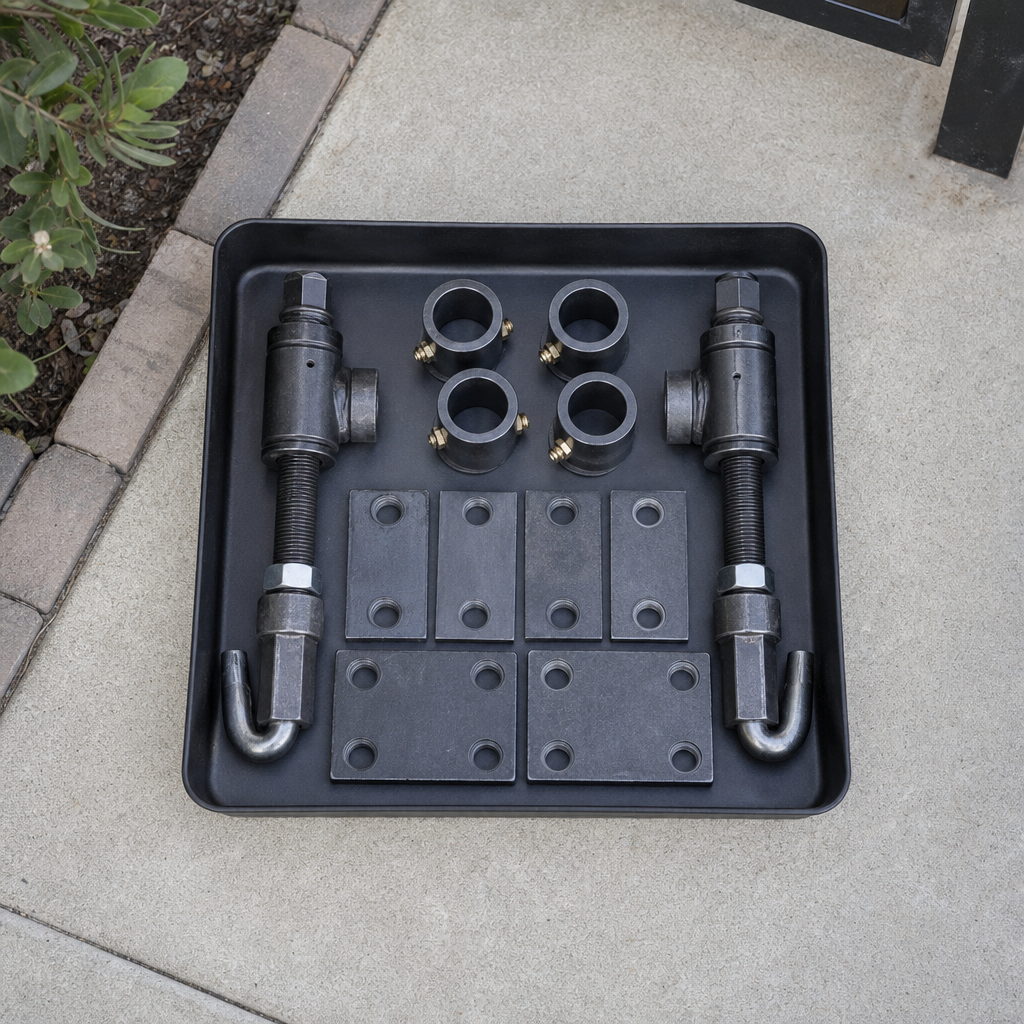
The appropriate repair depends on the gate’s condition, as no single fix applies to all situations. The available brief provides no outcome or durability data for specific repair methods.
Hinge Maintenance and Adjustments
When adjusting hardware, always properly support the weight of the gate and use only intended adjustments. Follow the gate or hinge manufacturer’s instructions, and consult a qualified professional like Ironworks Gate Co. for heavy gates or complex hardware systems.
Gate Post Stability
If a gate post is unstable or shifting, surface hardware adjustments alone may not resolve the issue. Evaluating and reinforcing an unstable post or foundation requires assessing site conditions, and work on unstable structural posts should be referred to a qualified professional.
Automatic Gate Opener Considerations
If an automatic gate begins dragging or binding, stop using the operator to prevent unnecessary strain. Inspect mounting brackets and pivot points for visible wear or looseness, and consult a professional technician from Ironworks Gate Co. for necessary repairs.
Automated Gate Systems and Safety Checks
Automated gate systems require careful maintenance to ensure safe, reliable operation. If physical repairs are performed on a gate panel or support structure, the operating system must be checked thoroughly.
Maintenance and Safety Checks
For powered gates, emphasize competent maintenance and comprehensive safety checks. Always follow the manufacturer’s manual for maintenance guidelines, safety device testing (such as photo-eyes and obstruction detection), and operational adjustments. If the system malfunctions or exhibits binding, seek competent service rather than attempting unverified calibration procedures.
What Does Sagging Gate Repair Cost?
The cost of sagging gate repair depends on whether the issue involves minor hardware adjustments or extensive structural stabilization. Because repair requirements depend entirely on the gate’s condition and configuration, estimates should be evaluated on a case-by-case basis.
| Repair Approach | Addresses Root Cause | Post Footing Stability | Durability Considerations |
|---|---|---|---|
| Caster Wheel Addition | No (May mask structural issues) | Unchanged | May introduce travel resistance |
| Hinge Adjustment / Replacement | Depends on condition (If hardware-related) | Unchanged | Follow manufacturer instructions |
| Post Stabilization & Frame Realignment | Depends on condition (If structure-related) | Evaluated during repair | Outcome depends on gate condition |
Because gates vary in weight, width, material, and foundation requirements, consult a qualified professional such as Ironworks Gate Co. for an on-site assessment to determine the appropriate repair.
Frequently Asked Questions About Sagging Gate Repair
Why is my driveway gate sagging on one side?
Gate sag can be caused by loose or worn hinges, an unstable or shifting post, a weakened or distorted frame, or general material deterioration over time.
Can a sagging gate damage my automatic gate opener?
The supplied context does not establish that sagging definitively damages gate openers. However, binding or abnormal operation warrants stopping use immediately and seeking an inspection by a qualified professional.
How do you adjust hinges on a heavy iron or metal gate?
When adjusting hinges, support the gate securely to relieve load on the pivot points, use only intended adjustment mechanisms, and strictly follow the gate or hinge maker’s instructions. For heavy gates, consult a qualified professional.
How can I reinforce a leaning or sagging gate post?
Addressing an unstable or leaning post depends on the post type, foundation, and surrounding soil conditions. Because structural post repairs involve significant loads, consult a qualified professional like Ironworks Gate Co. to assess the post and recommend an appropriate solution.
Should I repair or replace a severely sagging gate?
Whether a gate should be repaired or replaced depends on its overall condition, including the integrity of the frame, posts, and hinges. Because the available brief supplies no specific outcome or durability data, have a qualified professional evaluate the system to determine the most suitable option.
Sources
Related reading: Gate Access Control Repair Anaheim – Call Now-10% Off – On-Site in 60 Minutes – Free Estimate
Related reading: Automatic Gate Opener Troubleshooting – Call Now-10% Off – Same-Day Service – Free Estimate
Frequently Asked Questions
How much does sagging gate repair typically cost, and how do I get an accurate quote?
Repair costs depend on whether the issue stems from worn hinge hardware, frame misalignment, or shifting post footings. Ironworks Gate Co. offers a free on-site gate assessment to evaluate your system's structural integrity and provide a clear, upfront written repair estimate.
Why is installing a caster wheel discouraged for a sagging driveway gate?
Caster wheels transfer stress to other gate components and often get stuck on driveway slopes, joints, and debris. Rather than masking the problem with a temporary wheel, Ironworks Gate Co. fixes root causes like post instability and hinge fatigue to restore smooth, level operation.
Can a severely dragging gate be repaired without replacing the entire system?
Yes, most dragging gates can be saved through targeted post reinforcement, hinge realignment, or frame squaring without the expense of a full replacement. Backed by over four decades of diagnostic experience, Ironworks Gate Co. prioritizes durable, cost-effective structural repairs that restore your existing gate.
About the author
 |
David Harrison David Harrison is a seasoned technical writer with over eight years of experience specializing in the access control and home security industries. Holding a Bachelor’s degree in Communications from California State University, Fullerton, he translates complex gate repair diagnostics and pricing structures into clear, actionable advice for property owners. David’s practical insights help Orange County residents and businesses navigate automatic gate maintenance with confidence and transparency. |
Gate not opening, off track, or opener dead?
We’re available now - call for a fast, free estimate.
Call Now - Free Estimate