
Last updated August 25, 2026
Free on-site gate assessment - hinges, posts, and your LiftMaster or Nice gate operator checked before anything is quoted
The assessment is free and the quote is the invoice.

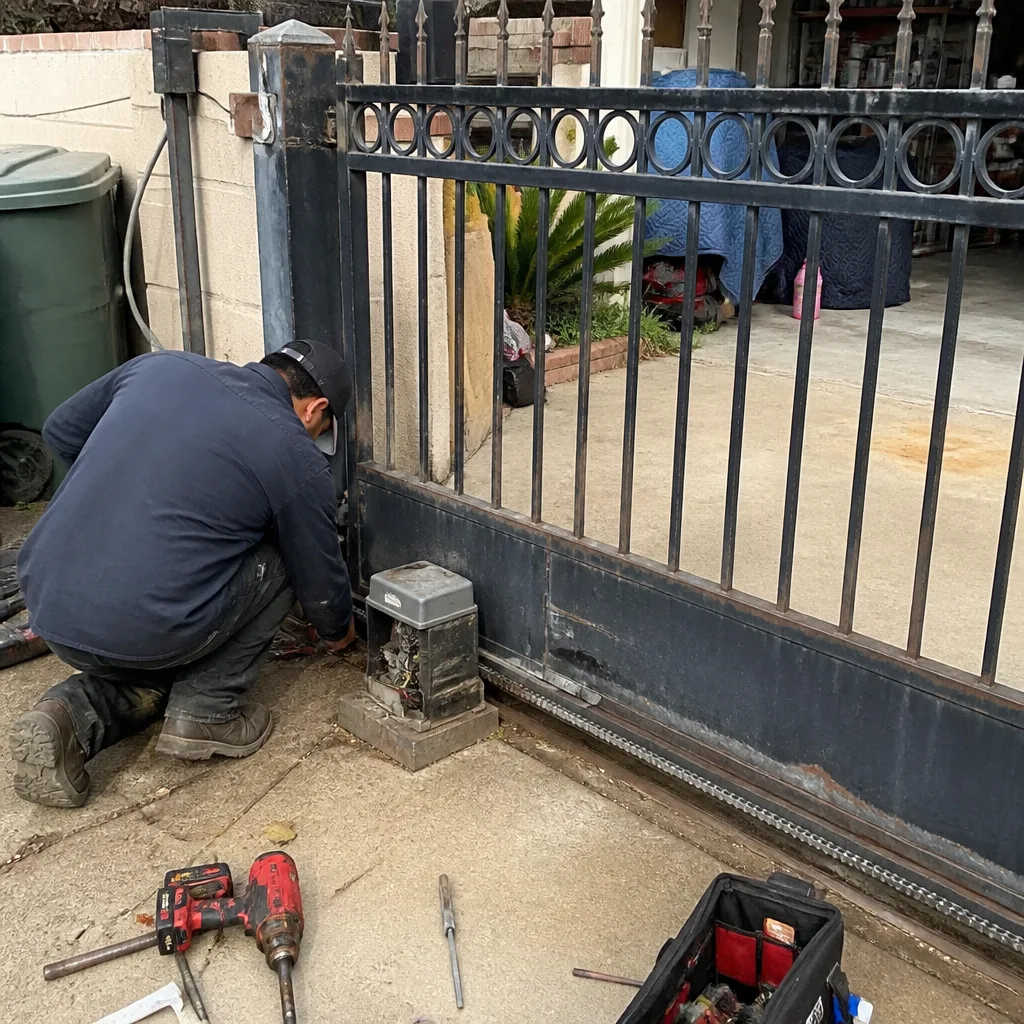 Before
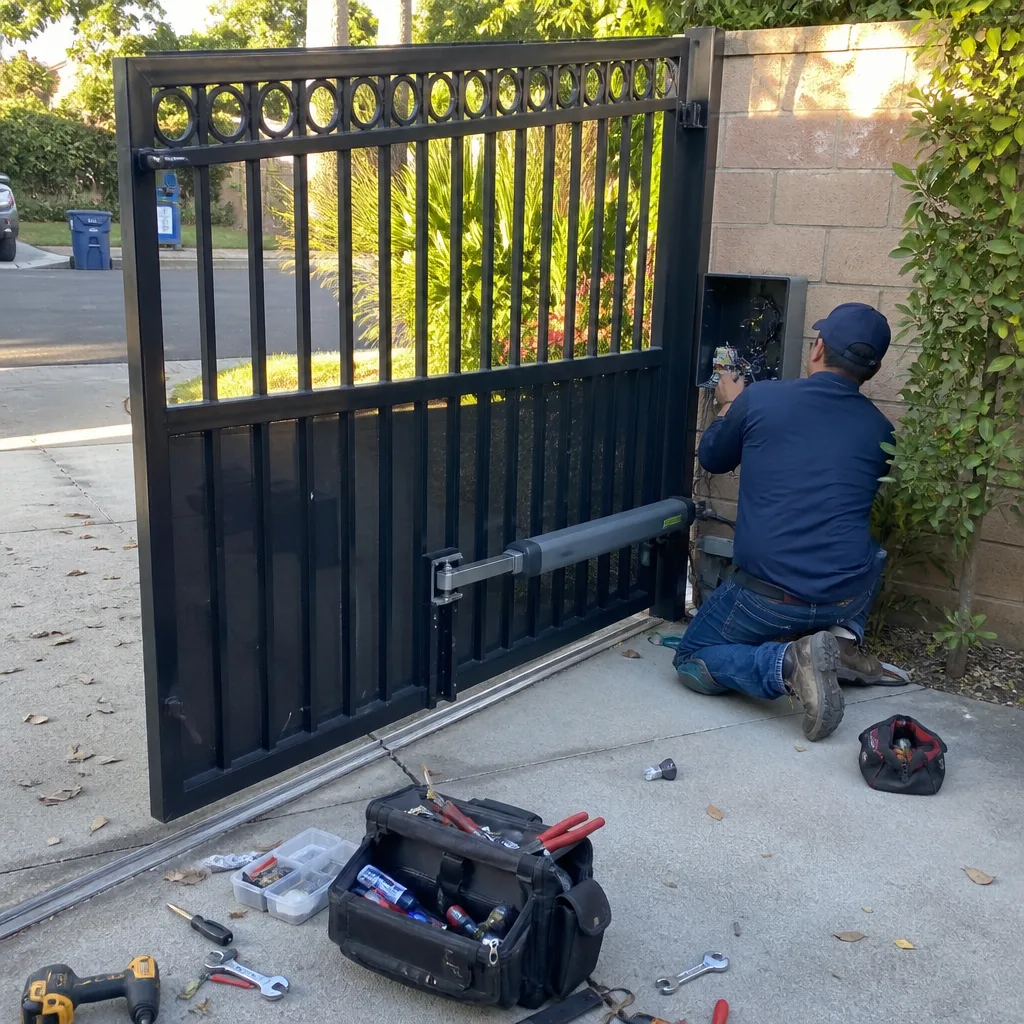 After
After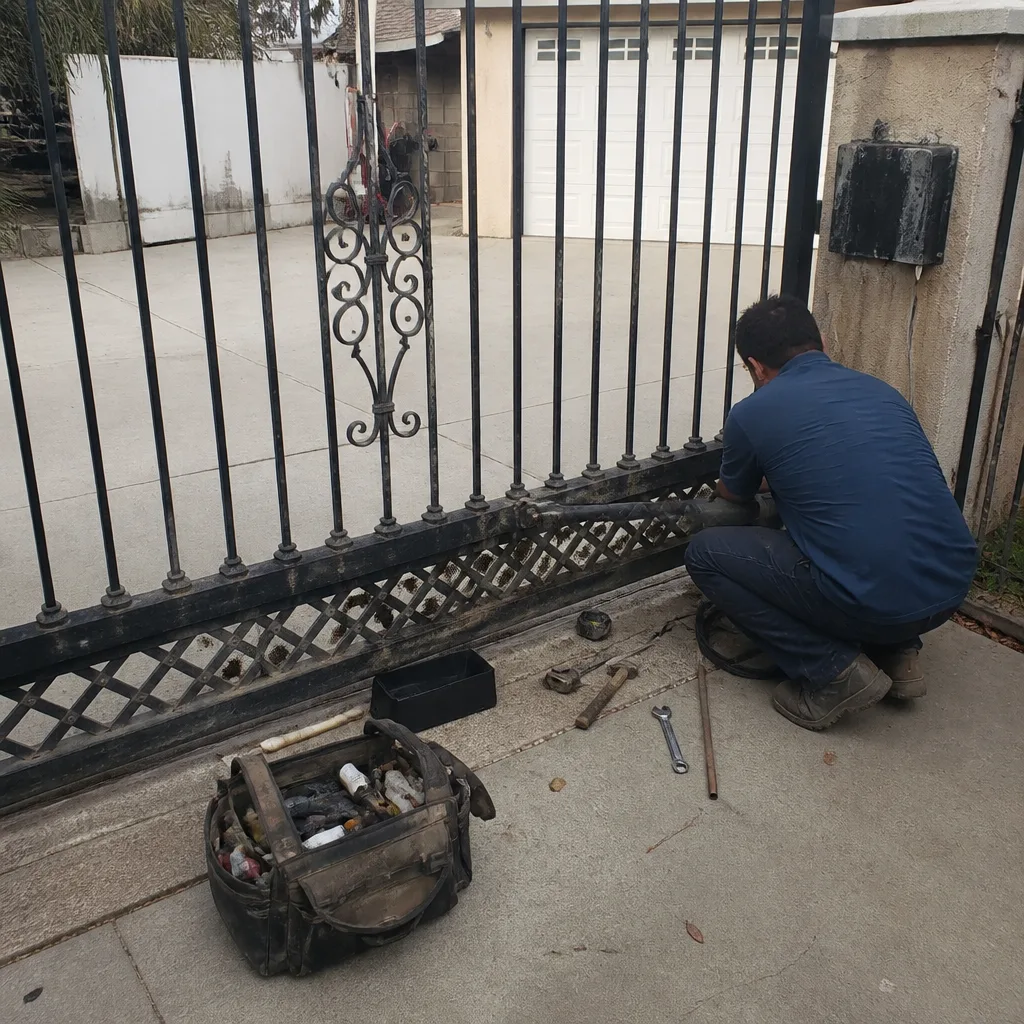 Before
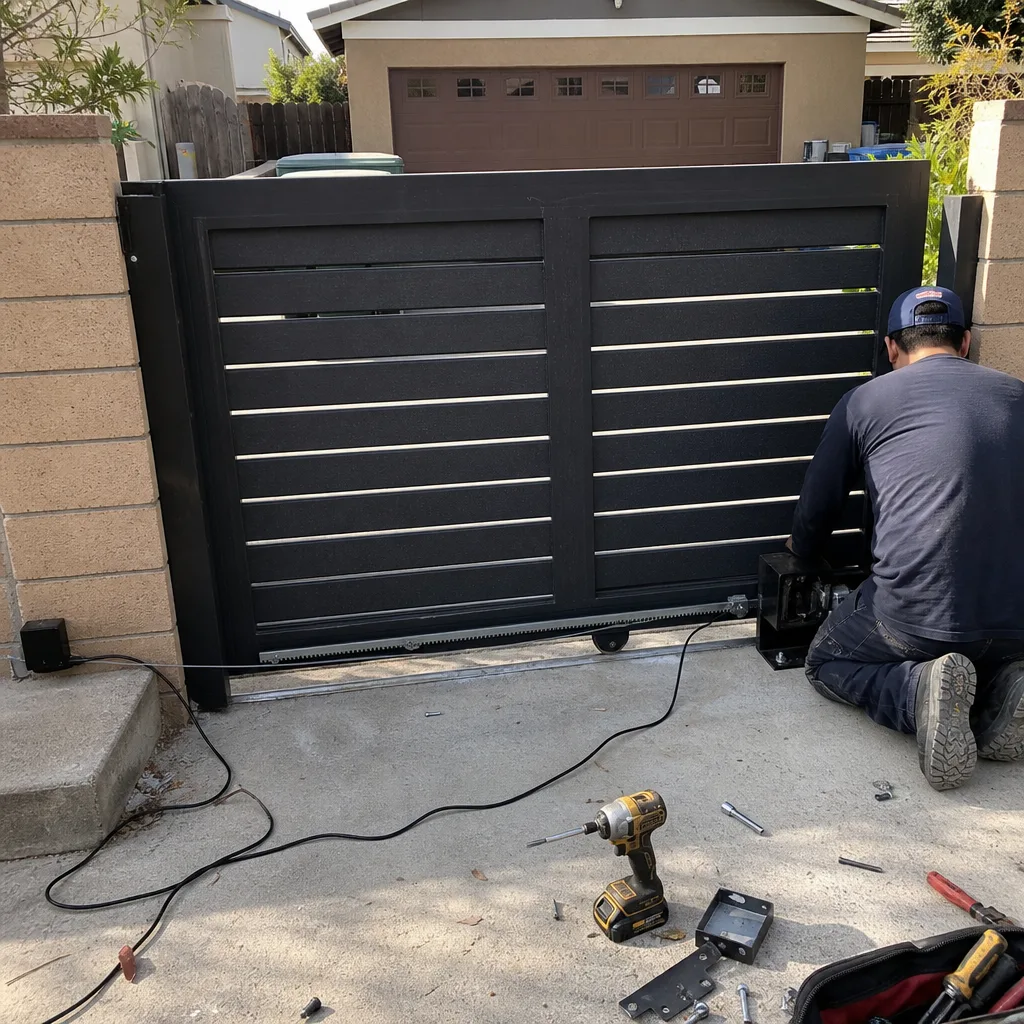 After
After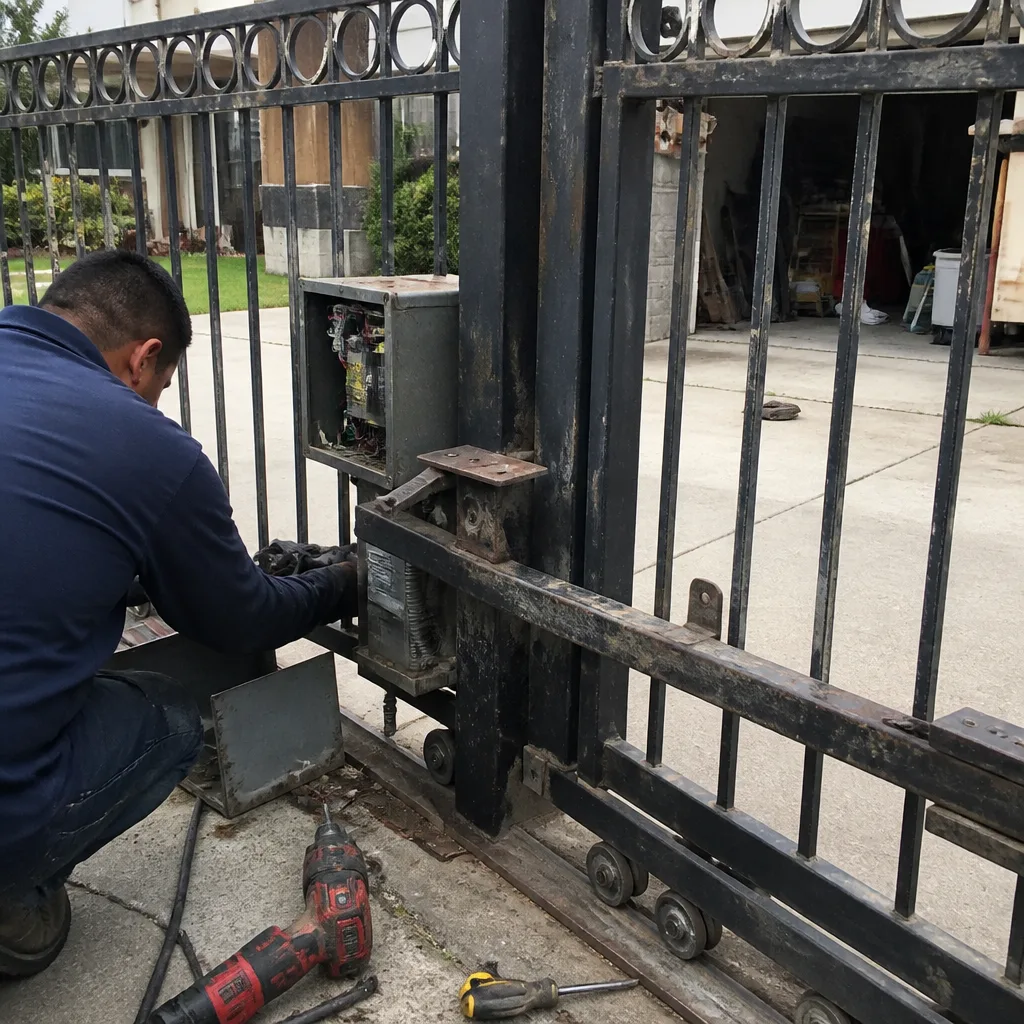 Before
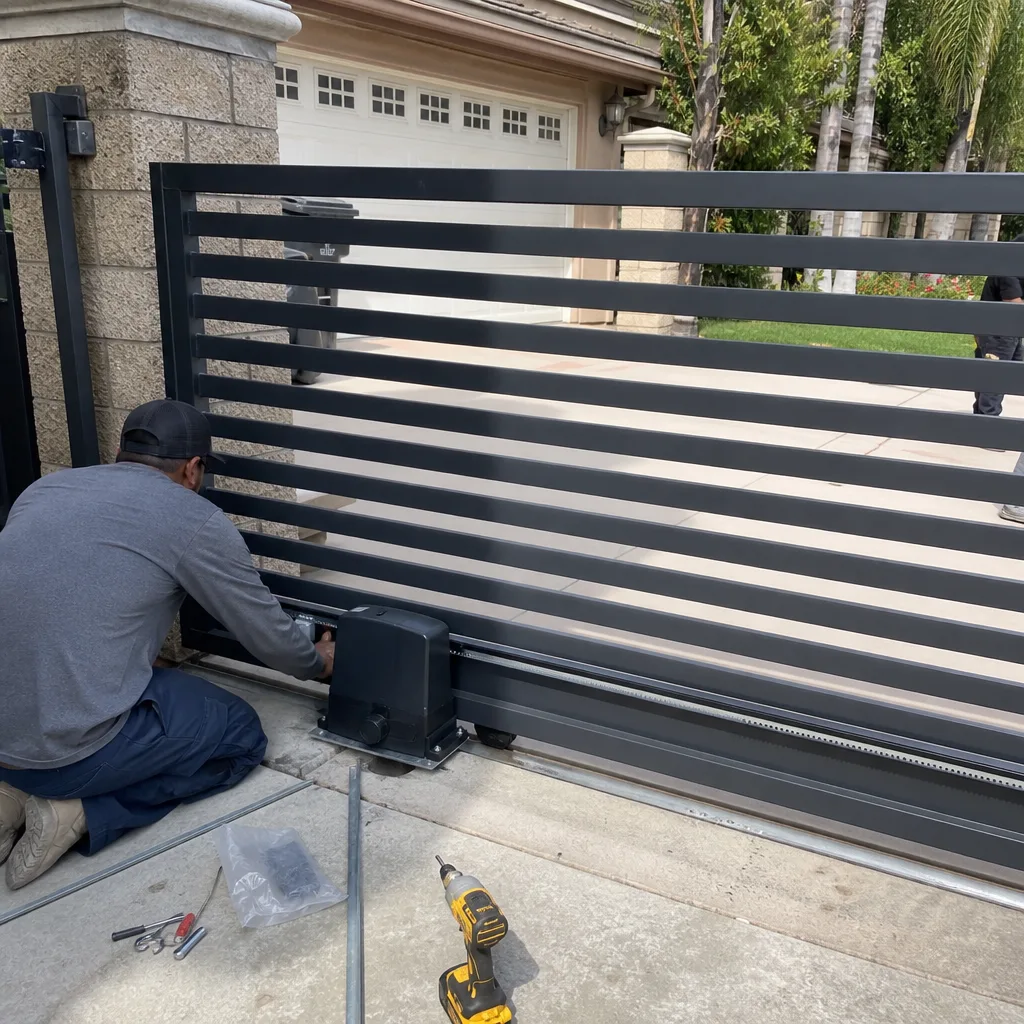 After
AfterSeasonal Gate Repair Care for Anaheim: Year-Round Homeowner’s Guide
Most Anaheim homeowners don’t think about their driveway gate until it refuses to open on a Monday morning. That’s the pattern we’ve watched for years: a gate runs quietly and faithfully for a decade, then fails without warning, usually on the hottest day of August or the first rainy morning of January. This guide is built to change that pattern. You’ll learn exactly how Anaheim’s specific climate stresses gate hardware at different times of year, what to check each season, and which repairs you can safely handle yourself versus which ones deserve a trained technician. By the time you finish reading, you’ll have a year-round maintenance plan that keeps your gate moving smoothly through every Santa Ana wind event and every coastal marine layer morning.
Quick Answer
Seasonal gate repair care in Anaheim means adjusting your maintenance routine to the city’s two distinct stress seasons: hot, dry summers that bake hinges, fade powder coating, and strain motors, and cooler, damper winters that accelerate rust on untreated steel and expose failing capacitor components in gate operators. A practical year-round plan includes quarterly hinge lubrication, seasonal track and roller cleaning, an annual opener force test, and a professional tune-up every 12 to 18 months. Most homeowners can handle the basic steps in under an hour per season, and catching small problems early prevents roughly 80% of the major failures we see on Anaheim driveways.
Table of Contents
- Why Anaheim’s Climate Is Harder on Gates Than You’d Expect
- Spring Gate Maintenance in Anaheim: Recovering from Winter Damp
- Summer Gate Care: Heat, Santa Ana Winds, and Motor Strain
- Fall Gate Preparation: Getting Ready for Rain and Shorter Days
- Winter Gate Service: Moisture, Cold Mornings, and Battery Backup
- What a Seasonal Tune-Up Actually Includes
- DIY Maintenance vs. Professional Gate Repair: Where to Draw the Line
- Common Mistakes to Avoid
- When to Call a Professional
- Frequently Asked Questions
Why Anaheim’s Climate Is Harder on Gates Than You’d Expect
Anaheim looks gentle on a postcard. Seventy-two degrees, palm trees, blue sky. But a gate that lives here endures a specific combination of stressors that gates in other Southern California cities don’t face. The city sits roughly 10 miles inland from the Pacific, which means it gets less of the cooling marine layer than Huntington Beach or Seal Beach and more of the raw interior heat. Summer highs regularly push into the mid-90s, and during Santa Ana wind events, temperatures can spike past 100 with single-digit humidity. That dry heat does two things to a driveway gate: it accelerates the breakdown of lubricants and it causes metal to expand, which changes the tolerances on hinges and latches by fractions of an inch that matter more than you’d think.
Then comes winter, and the pattern flips. Anaheim’s rainy season runs from November through March, and while annual rainfall typically lands between 13 and 15 inches, it arrives in concentrated bursts. A gate that sits dry for eight months suddenly faces standing water at its base, morning condensation on every exposed metal surface, and humidity that creeps into control boards and terminal connections. We’ve seen rust form faster on untreated steel gates in one Anaheim winter than in three summers. The city’s proximity to the coast also means salt content in the air is measurable, even if you can’t see it. Homes in West Anaheim, closer to the ocean influence, tend to show more corrosion on gate hardware than homes up near the 91 freeway or in Anaheim Hills, where the air is drier for more of the year.
The third factor is soil. Anaheim sits on a mix of sandy loam and clay that shifts seasonally with moisture content. A gate post set in clay soil will move slightly as the ground expands in winter and contracts in summer. Over several years, that movement is enough to throw a gate out of plumb, which puts uneven wear on hinges, causes the gate to drag on its track, and eventually forces the opener motor to work against resistance it was never designed to handle. This is why the same gate that operated flawlessly for years can suddenly start laboring, and why seasonal attention matters more here than in a city with more stable ground.
Spring Gate Maintenance in Anaheim: Recovering from Winter Damp
By March, Anaheim’s rainy season is winding down and the ground is starting to dry. This is the best time to assess what winter did to your gate. Start with what you can see: walk the entire length of the gate and look for rust spots, especially at the bottom rail, around weld points, and wherever the gate attaches to its hinges. Surface rust on a powder-coated gate shows up as small orange blisters under the paint. On a raw steel or iron gate, it appears as flaking brown patches. West Anaheim homes especially should check the gate’s lower third, where rain splash-back accelerates oxidation.
Next, check the hinges and the gate’s movement. Open the gate manually if you can and listen. A gate that creaks, grinds, or catches mid-swing is telling you something. Hinges that have gone dry over winter will produce a high-pitched metal-on-metal sound. This is a five-minute fix with the right lubricant, and it prevents the kind of hinge wear that eventually requires replacement. Pay attention to the gate’s position when fully open and fully closed. If it no longer sits level, or if one corner droops, the post likely shifted in winter soil and the gate needs a professional adjustment before the misalignment causes real damage.
- Inspect the full gate surface for rust, blisters, and flaking, concentrating on the bottom rail and hinge welds.
- Clean the gate with mild soap and water, then dry it thoroughly to remove winter mineral deposits.
- Lubricate all hinge pins, pivot points, and the latch mechanism with a quality lithium-based grease.
- Check that the gate sits level and moves freely through its entire arc without binding.
- Test the opener’s auto-reverse function and check the photo-eye sensors for alignment.
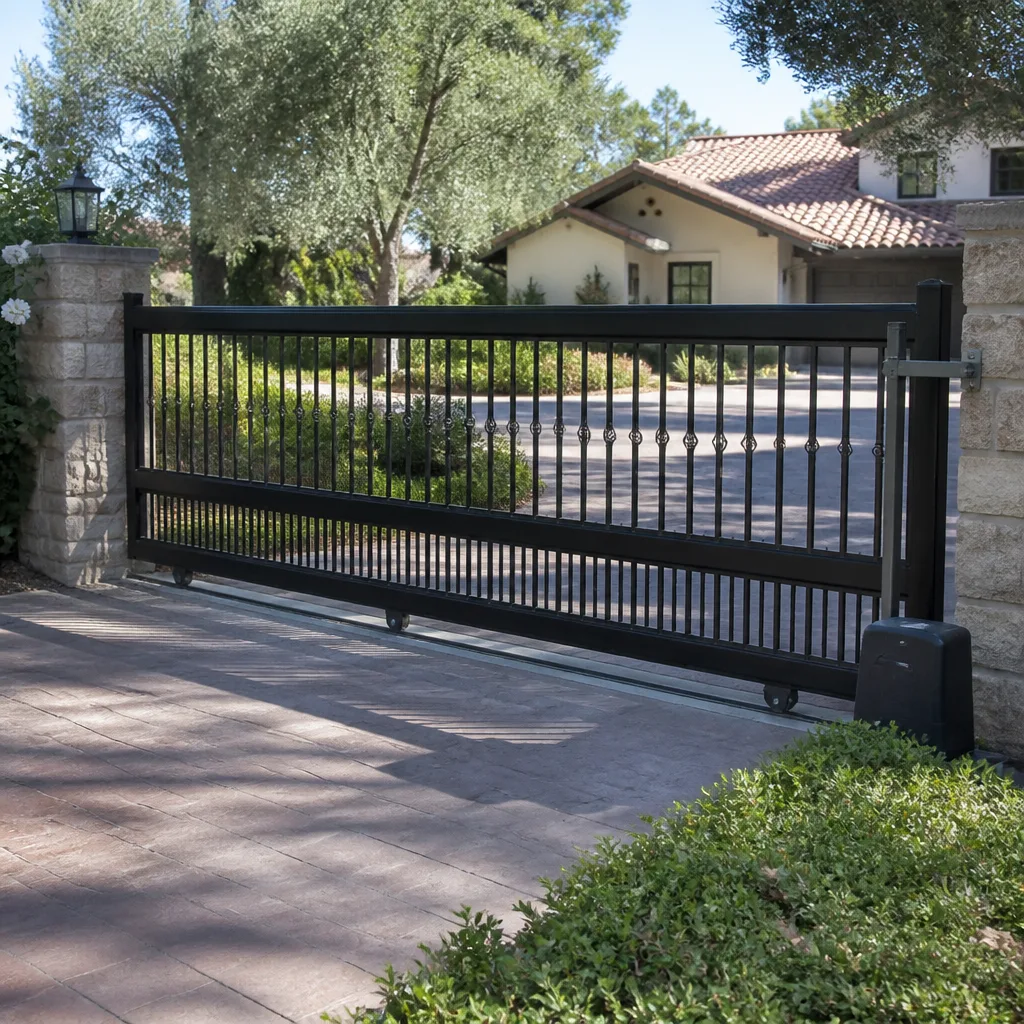
Spring is also the right time to clean the gate’s track if you have a sliding gate. Leaves, gravel, and winter mud collect in the track and create resistance. A track clogged with debris forces the motor to work harder, which shortens its life and increases the odds of a mid-cycle failure. Scoop out the debris, hose the track clean, and inspect the rollers while you’re there. Rollers with flat spots or wobble need replacement before they scar the track itself.
Summer Gate Care: Heat, Santa Ana Winds, and Motor Strain
Anaheim summers are hard on gate motors in a specific way. When daytime temperatures climb into the 90s, the motor inside your gate opener is already running warm. Add direct sun on a dark metal housing, and the internal temperature can exceed what the capacitor and circuit board were designed to tolerate long-term. Capacitors are the component most likely to fail first, and we see a measurable spike in capacitor replacement calls every July and August in Anaheim. The failure is sudden: the gate hums but doesn’t move, or the opener clicks and nothing happens.
Santa Ana wind events add another layer. Those hot, dry winds blow dust and fine grit into every exposed mechanism, including limit switches, chain drives, and roller bearings. The grit mixes with lubricant to form an abrasive paste that accelerates wear. We recommend checking your gate after any significant Santa Ana event, especially if your property sits on an exposed street in Anaheim Hills or any area without a windbreak from surrounding homes.
Heat also affects the gate itself. Metal expands in high temperatures, and a gate that fit perfectly in March may bind slightly in August, particularly if it’s a long, heavy gate on a double driveway. If your gate has started rubbing, scraping, or hesitating only on hot afternoons, thermal expansion is the likely culprit. Ignoring it means the opener motor fights increasing resistance, which draws more current, which generates more heat, which shortens motor life. The fix is usually a simple clearance adjustment, but it has to be done by someone who understands how much clearance the gate will need when it cools back down.
One more summer-specific concern: the rubber seal or weather strip along the gate’s bottom edge dries out and cracks in low humidity. Once cracked, it allows more dust and debris under the gate and into the track area. Replace dry-rotted seals before the Santa Ana season peaks in October and November.
Fall Gate Preparation: Getting Ready for Rain and Shorter Days
October and early November are the right time to prepare a Anaheim gate for winter. This is preventative work that pays off in January when the first real storms arrive. Start with drainage. Walk down the gate’s path and look at where water will flow during a heavy rain. If the gate’s track sits in a low spot, or if runoff from the driveway pools at the gate’s base, address the drainage now. A gate that sits in standing water for days at a time suffers rust, electrical shorts, and track deterioration. Many Anaheim homes have flat driveways with minimal slope, which makes pooling a real problem during El Niño winters.
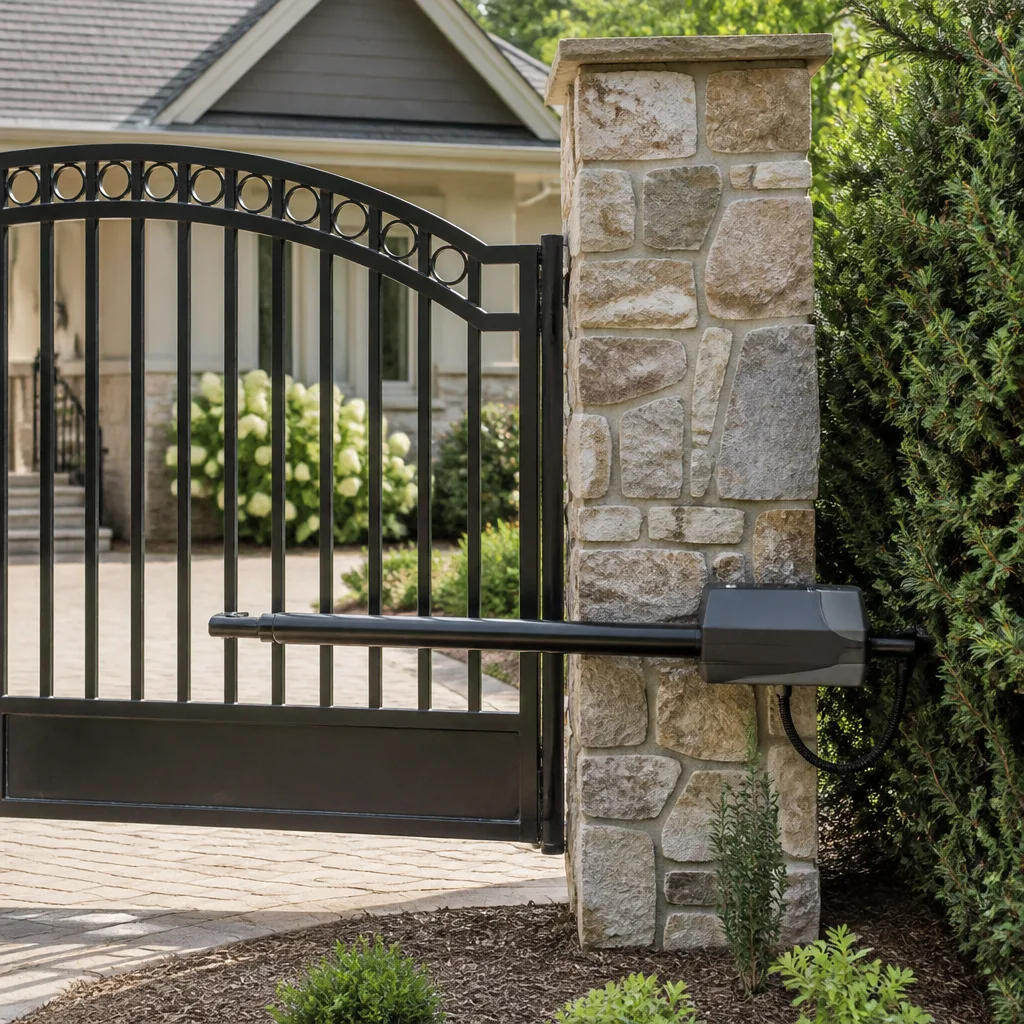
Check the gate opener’s electrical connections. Disconnect power first, then inspect the terminal block for signs of corrosion or arcing. Look for moisture intrusion around the housing gasket. Anaheim’s winter rain can find its way into a gate opener that has a small crack or worn seal, and the result is a control board that fails weeks later, usually at the worst possible time. If you see any green corrosion on terminals or white mineral deposits inside the housing, schedule a professional inspection before the rainy season begins in earnest.
Test your battery backup if the opener has one. Power outages are not frequent in Anaheim, but Santa Ana wind events can knock out power in certain neighborhoods, and a gate without backup power becomes a manual-lift inconvenience. The battery should hold a charge and should cycle the gate at least ten times on backup power. If it doesn’t, the battery is near the end of its life. Most backup batteries last three to five years in Anaheim’s climate, less if the opener sits in direct sun.
Finally, lubricate again before winter, and apply a protective coating to any bare metal spots you found in spring but didn’t address. A quick touch-up with rust-inhibiting paint on small spots now prevents those spots from becoming holes by spring.
Winter Gate Service: Moisture, Cold Mornings, and Battery Backup
Anaheim winters are mild by national standards, but they’re cold enough to affect gate operation in specific ways. Morning temperatures in the 40s are common in December and January, and that’s enough to thicken lubricants, stiffen rubber seals, and reduce battery efficiency. A gate that opens fine at 2 p.m. may hesitate at 6 a.m. because cold grease on the chain drive creates extra resistance and the battery delivers slightly less voltage on a cold start.
Moisture is the bigger enemy. During and after rain, inspect the gate’s control box for water intrusion. Look for condensation inside the housing, which appears as a thin film of moisture on the inside of the cover. Condensation causes more board failures than direct water contact in Anaheim because the moisture evaporates and re-condenses daily as temperatures fluctuate. If you find condensation, leave the housing open briefly to dry it, then identify where the moisture is entering. Often it’s a dried-out gasket or a conduit fitting that has backed off.
Winter is also when rust becomes visible. Check the gate’s welds, hinge barrels, and any unpainted hardware each month during the rainy season. Surface rust is treatable with a wire brush and rust-inhibiting paint, but structural rust, which appears as deep pitting or flaking that exposes layered metal, requires professional assessment. A gate with structural rust can fail suddenly under its own weight, and a falling driveway gate is a serious safety hazard.
For homes with slide gates, winter brings an additional maintenance item: track cleanliness. Wet leaves compact in the track and freeze into a dense mat overnight on cold mornings. This blocks rollers and strains the motor. Clear the track weekly during leaf-drop season, even if your gate doesn’t show symptoms yet. We’ve recovered more winter gate failures from compacted leaf debris in the Anaheim area than from any other single cause, including motor failure.
What a Seasonal Tune-Up Actually Includes
A seasonal tune-up is not a lubrication visit. It’s a systematic inspection of every component that affects gate operation, and it’s the single highest-value maintenance item a Anaheim homeowner can schedule. We offer a $89 Seasonal Tune-Up that walks through the entire gate system, from the post mounts to the opener’s force settings. Here’s what a thorough tune-up covers.
- Hinge and hardware inspection: Every hinge pin, weld, bolt, and bracket gets checked for wear, looseness, and alignment. Loose hardware gets tightened to specification.
- Track and roller service: The track is cleaned, inspected for dents or warping, and rollers are checked for flat spots and bearing wear. Damaged rollers are identified for replacement.
- Opener force testing: The opener’s force settings are tested and adjusted so the gate reverses properly on contact, which protects children, pets, and vehicles.
- Safety function verification: Photo-eyes are aligned and tested, the auto-reverse feature is confirmed at multiple points along the gate’s travel, and warning alarms are checked if present.
- Electrical inspection: Terminal connections are inspected for tightness and corrosion, voltage is confirmed at the board, and the capacitor is load-tested for heat fatigue.
- Lubrication of all moving parts: Hinges, pivot points, chain drives, and the latch mechanism receive fresh lubricant appropriate for the season.
- Battery backup load test: If the opener has backup power, the battery gets a load test to confirm it can cycle the gate a minimum of ten times on reserve power.
We’ll also document anything that looks like it might become a problem in the next twelve months. A hinge with slight play, a capacitor showing early heat stress, a track that’s starting to wear unevenly. You get a straight assessment, no scare tactics, and a written list of what we found and what we recommend, with prices. Then you decide what to address now and what can wait. That’s the whole thing.
DIY Maintenance vs. Professional Gate Repair: Where to Draw the Line
Some gate maintenance is genuinely homeowner-appropriate. Lubricating hinges, cleaning a track, checking for rust, testing the auto-reverse feature, and clearing drainage paths are all tasks a careful homeowner can handle in an hour or less. These tasks prevent problems and extend the life of the gate. We encourage them. A homeowner who does these four or five things quarterly will have fewer gate failures than a homeowner who does nothing, regardless of how expensive the gate was.
But there’s a line, and crossing it is dangerous. Any repair that involves the gate’s torsion springs or counterbalance system is professional work. These components are under extreme tension, and a spring released incorrectly can cause serious injury in a fraction of a second. The same goes for any work on the opener’s internal capacitor or control board. Capacitors store electrical energy even with the power disconnected, and touching the wrong terminal can deliver a painful shock. Gate automation wiring, especially anything involving line voltage, belongs with a trained technician, not a weekend project.
Structural repairs fall on the professional side too. Welding a cracked gate frame, resetting a gate post that has shifted, replacing a worn hinge barrel, or straightening a bent track are jobs that require equipment, experience, and an understanding of how the gate’s weight is distributed. A gate that isn’t balanced and aligned properly after a repair will destroy its own components over time. The opener motor, the hinges, the rollers all get punished by a gate that’s fighting itself.
If you’re unsure whether a specific repair is DIY territory, call and ask us. We’ll tell you honestly what you can do yourself and what we’d rather handle for you. That’s a free conversation, not a sales pitch.
Common Mistakes to Avoid
- Using WD-40 on hinges. WD-40 is a solvent and water displacer, not a long-term lubricant. It washes out the existing grease and leaves metal unprotected, which accelerates wear. Use a lithium-based grease on hinges and pivot points instead.
- Ignoring a slow or laboring gate. A gate that opens slower than it used to is working harder than it should be. The cause is usually increased resistance, and continued operation under that resistance shortens motor life by months or years. Slow movement is a warning, not a personality quirk.
- Adjusting the opener’s force settings without a force gauge. Force settings exist to protect people and vehicles. Cranking up the force so the gate pushes through resistance can make a gate dangerous. If your gate needs more force to complete its cycle, something is wrong, and the right answer is fixing the resistance, not overriding the safety setting.
- Forgetting the track in the dry season. Most Anaheim homeowners think about the track only when the gate stops moving. But dry-season dust and Santa Ana grit accumulate in the track gradually, and the abrasive action happens even when the gate moves normally. Clean the track every season, not just when it’s visibly clogged.
- Painting over rust without treating it first. Rust is active corrosion, and painting directly over it traps moisture and oxygen against the metal, which speeds up the process underneath. Wire-brush the rust, apply a rust converter or inhibitor, then paint with a rust-inhibiting product.
- Letting the gate sit unused for weeks at a time. A gate that doesn’t cycle regularly develops flat spots on rollers, stiff seals, and dry hinge lubrication. If you’re away for an extended period, have someone cycle the gate weekly, or ask us about adding a scheduled cycle function to your opener.
When to Call a Professional
Call a professional when your gate makes a new sound. A grinding, popping, or screeching noise that wasn’t there last month is the gate telling you something specific, and a trained ear can often diagnose it in minutes. Call when the gate hesitates, jerks, or reverses mid-cycle. Call when the opener hums but the gate doesn’t move. Call when you see cracks in the gate frame, at the welds, or around the hinge mounting points. Call when the gate sags visibly or drags on the ground. Call when the keypad, intercom, or remote system stops responding reliably. And call when the safety features, the auto-reverse or the photo-eyes, fail to work as they should. None of these problems fix themselves, and most of them get more expensive the longer they’re left alone. Ironworks Gate Co. offers free estimates in Anaheim, call (424) 395-3381 and we’ll come out, assess the gate, and give you a written price before any work begins.
Frequently Asked Questions
A basic seasonal tune-up in Anaheim typically runs between $89 and $180 depending on the gate type, opener brand, and whether any minor adjustments are needed. Our Ironworks Gate Co. $89 Seasonal Tune-Up covers the full inspection, lubrication, safety testing, and a written condition report. If repairs are needed beyond the tune-up, you’ll get a written quote before any additional work is approved. Call (424) 395-3381 for a specific quote on your gate.
A quality gate opener motor in Anaheim typically lasts 8 to 15 years, depending on gate weight, frequency of use, exposure to sun, and maintenance history. Motors on gates that are maintained seasonally and not overstressed tend toward the high end of that range. Motors on gates that operate with misaligned tracks, worn rollers, or incorrect force settings can fail in half that time.
In most cases, yes. We prioritize emergency gate failures because a gate stuck open is a security issue and a gate stuck closed is a daily obstruction. A live person answers our phones 24 hours a day, and we’ll get a technician to your Anaheim home as quickly as the schedule allows. Call (424) 395-3381 and describe what’s happening, and we’ll tell you honestly what to expect on timing.
You don’t need to winterize in the way a homeowner in Minnesota would, but Anaheim winters do require specific preparation: clearing drainage paths, inspecting electrical connections for moisture, testing battery backup, and addressing rust before the rainy season starts. A few hours of fall preparation prevents most winter gate failures we see in the Anaheim area.
We’re trained and equipped to service nine major gate-automation brands: LiftMaster, FAAC, BFT, Linear, Viking, Ghost Controls, DoorKing, Elite, and Mighty Mule. If your opener is from one of these manufacturers, we can diagnose and repair it on the first visit in most cases. If you have a different brand, call us anyway, we’ll tell you honestly whether it’s something we can handle or who to call instead.
Every three months is the right interval for most Anaheim gates. The dry heat of summer and the Santa Ana winds strip lubrication faster than coastal climates, and winter moisture washes it out of exposed pivot points. Use a lithium-based grease on hinges and pivot points, not a penetrating oil. If your gate is exposed to full sun all day, you may need to lubricate more often, every six to eight weeks during the hottest months.
Not always, but it’s a sign worth investigating. Some noise is simply the sound of dry hinges, which is a quick lubrication fix. But a grinding or popping sound can indicate a failing bearing, a bent track, or a hinge that’s wearing unevenly. If lubrication doesn’t quiet the gate within a day, that’s worth a professional look before the noise becomes a failure.
The Bottom Line
Seasonal gate care in Anaheim is not complicated, but it is consistent. Four times a year, spend an hour checking hinges, track, electrical connections, and safety features. Lubricate what moves, clean what carries weight, and address rust as soon as you see it. In the summer, watch for heat-stressed capacitors and Santa Ana grit. In the winter, watch for moisture intrusion and drainage problems. If you notice something you don’t understand, or if the gate starts behaving differently, call a professional before the problem compounds. A driveway gate is a significant investment, and the difference between a gate that lasts ten years and one that lasts twenty is usually nothing more than the routine attention it receives. Ironworks Gate Co. has been serving Anaheim homeowners for over 42 years, and we stand behind every job with a written 90-Day Done Right Promise. That’s the standard we’ve always worked to, and it’s the standard your gate deserves.
Written by Victor Salinas, Owner at Ironworks Gate Co., serving Anaheim since 2013.