
Last updated August 25, 2026
Free on-site gate assessment - hinges, posts, and your LiftMaster or Nice gate operator checked before anything is quoted
The assessment is free and the quote is the invoice.

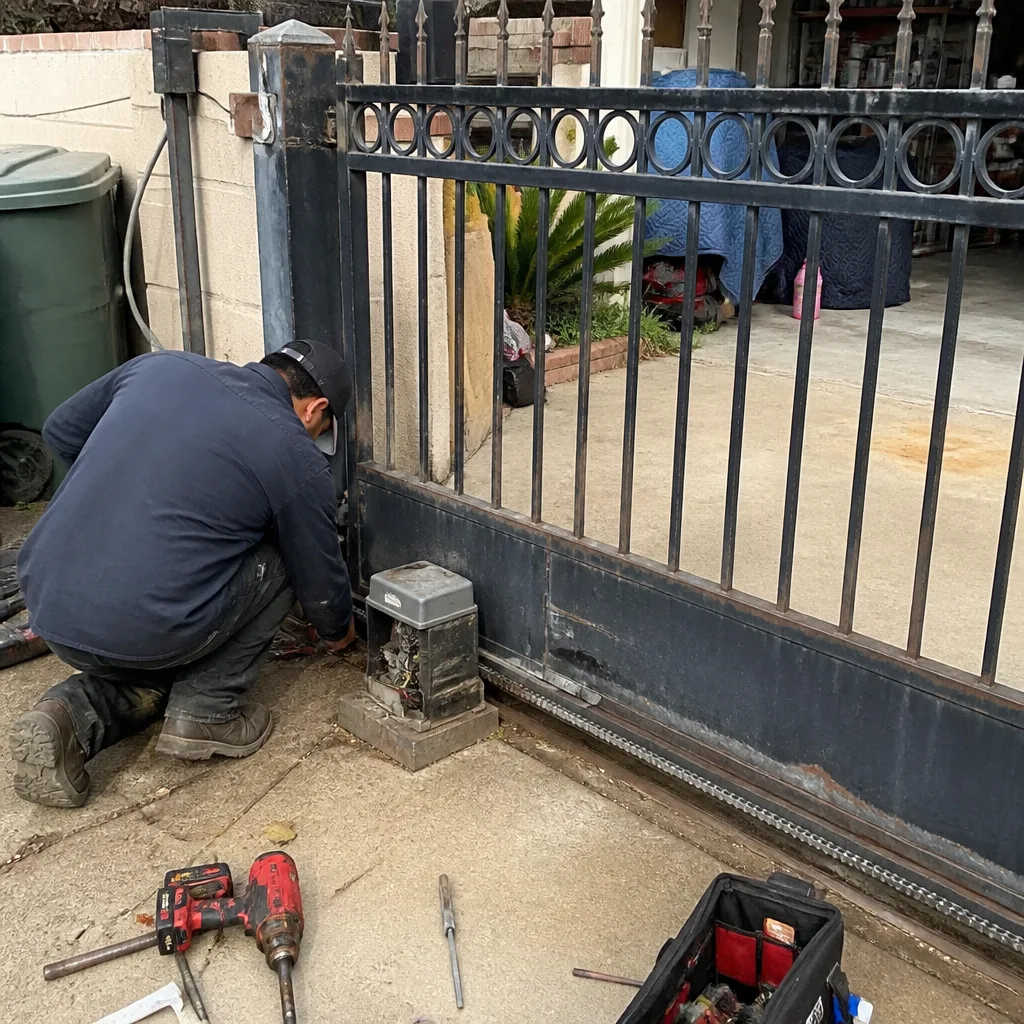 Before
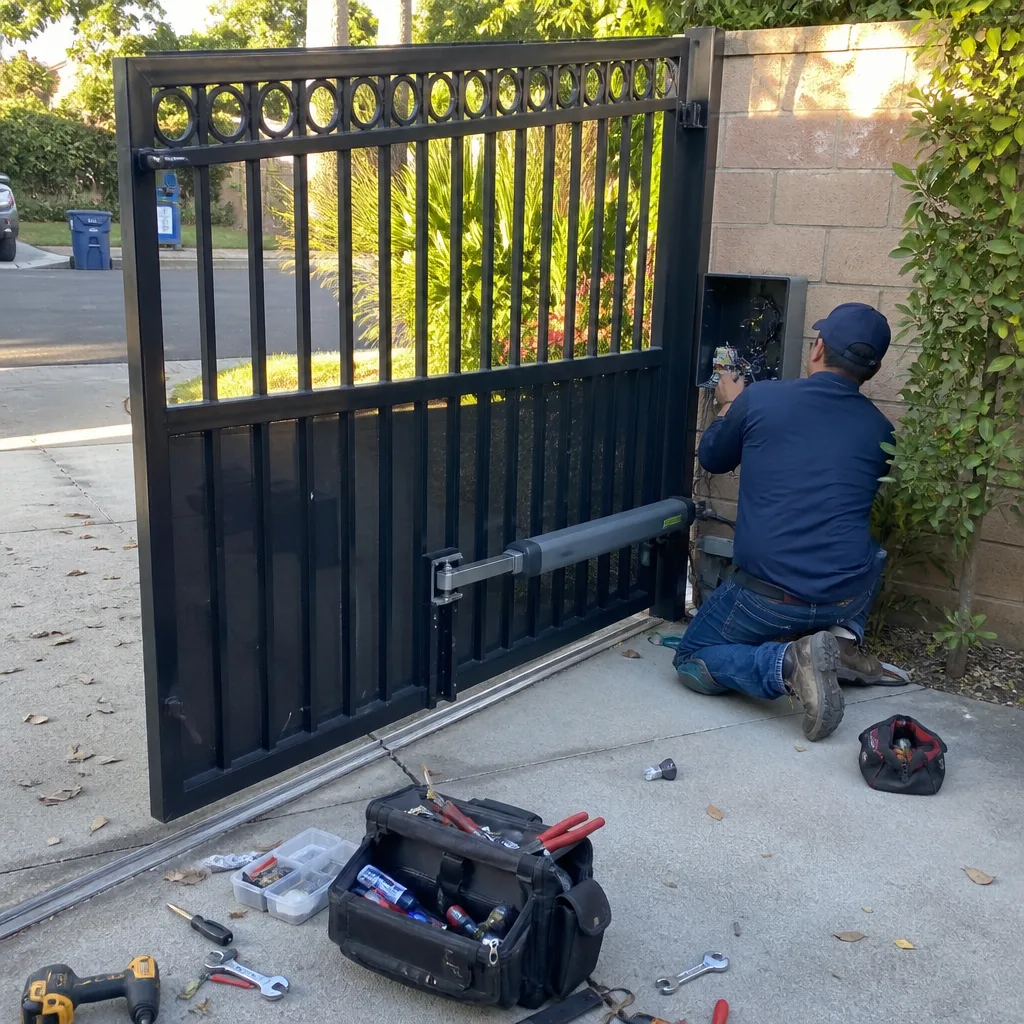 After
After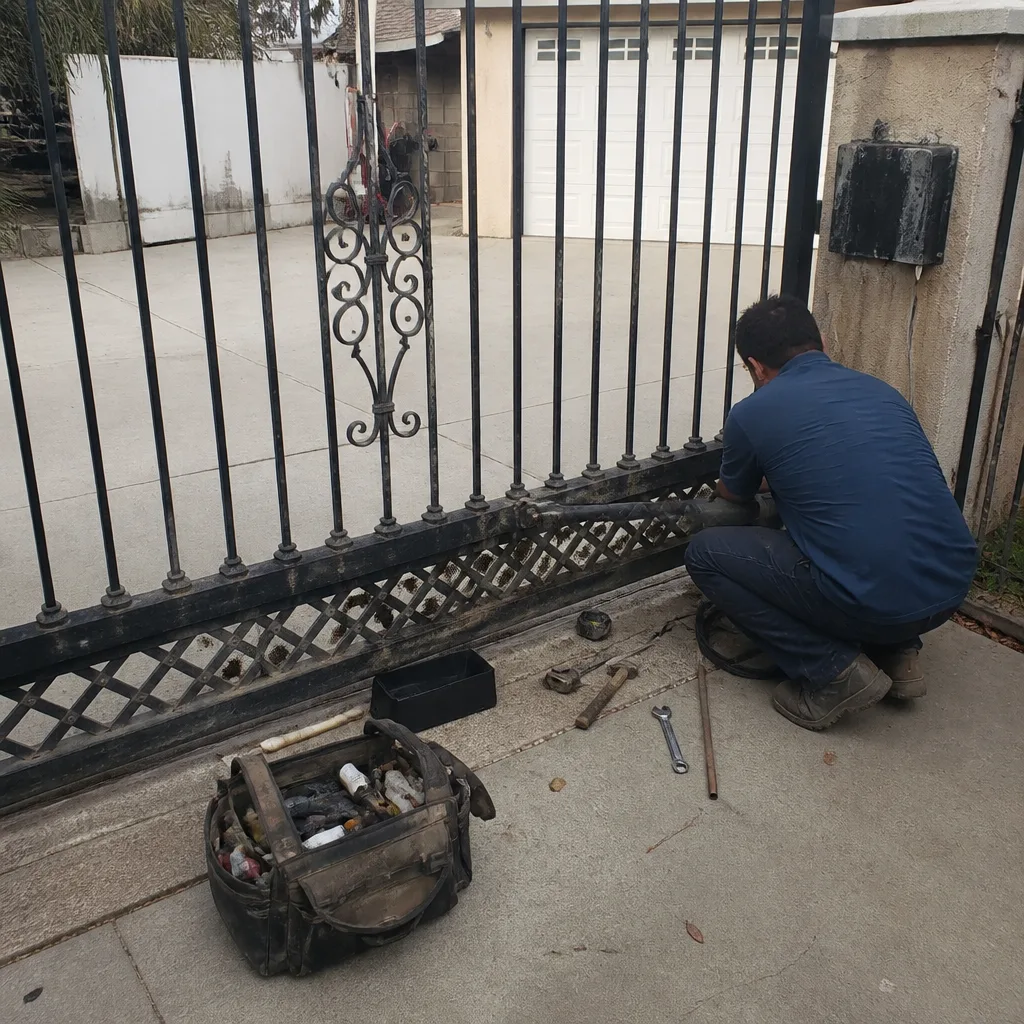 Before
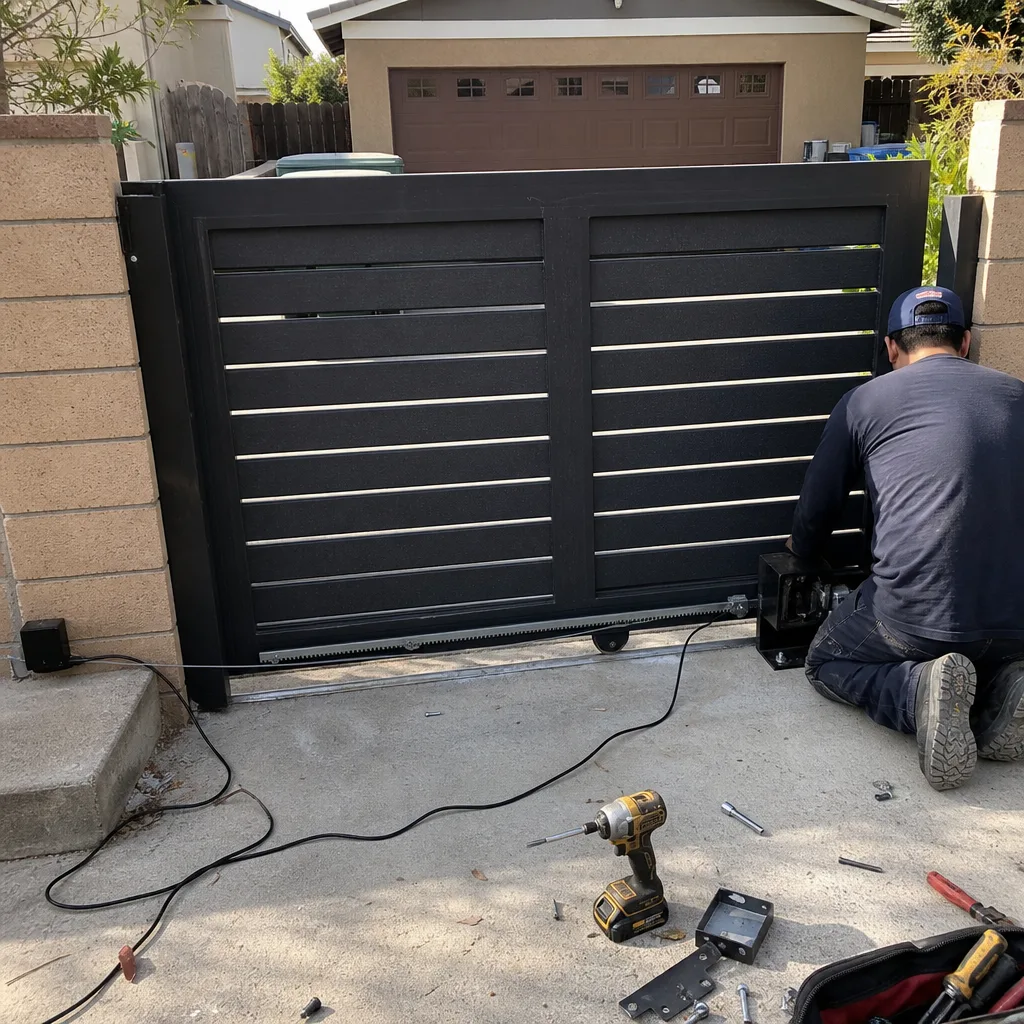 After
After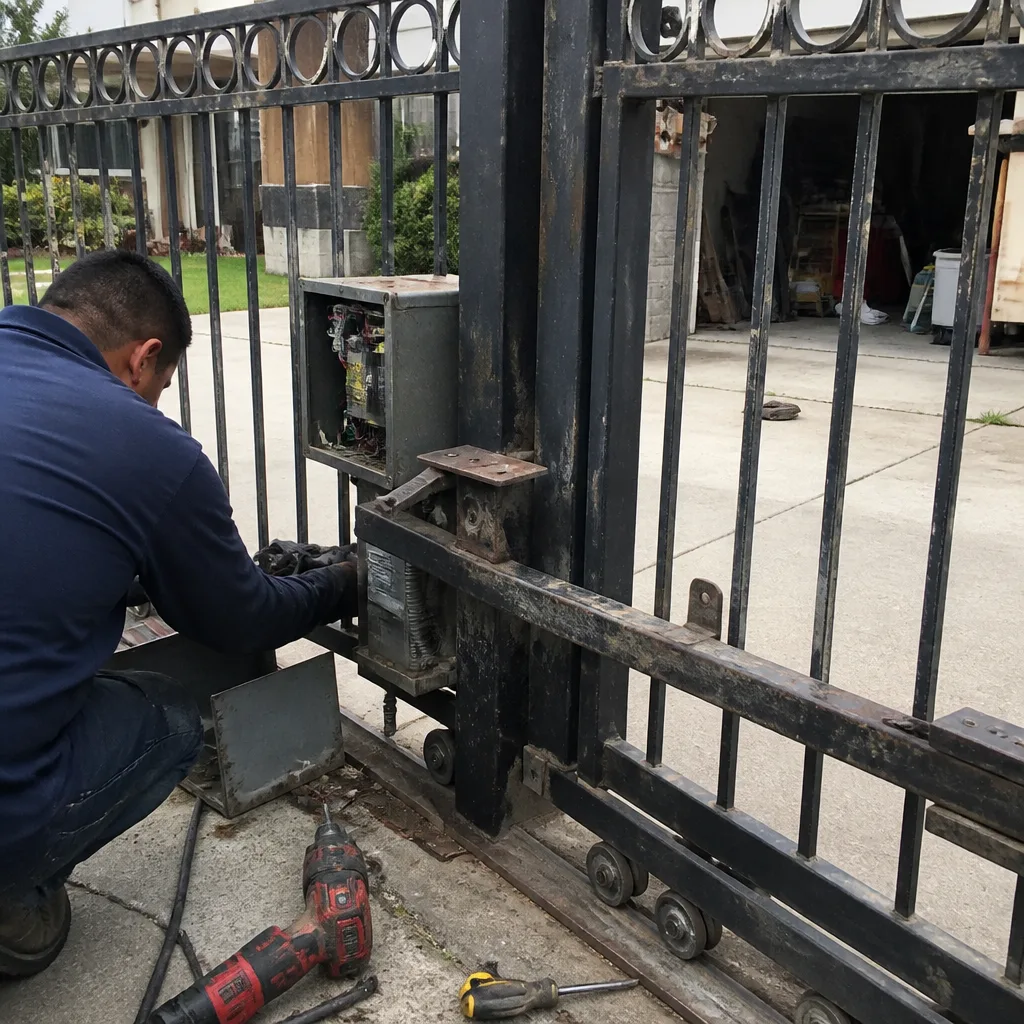 Before
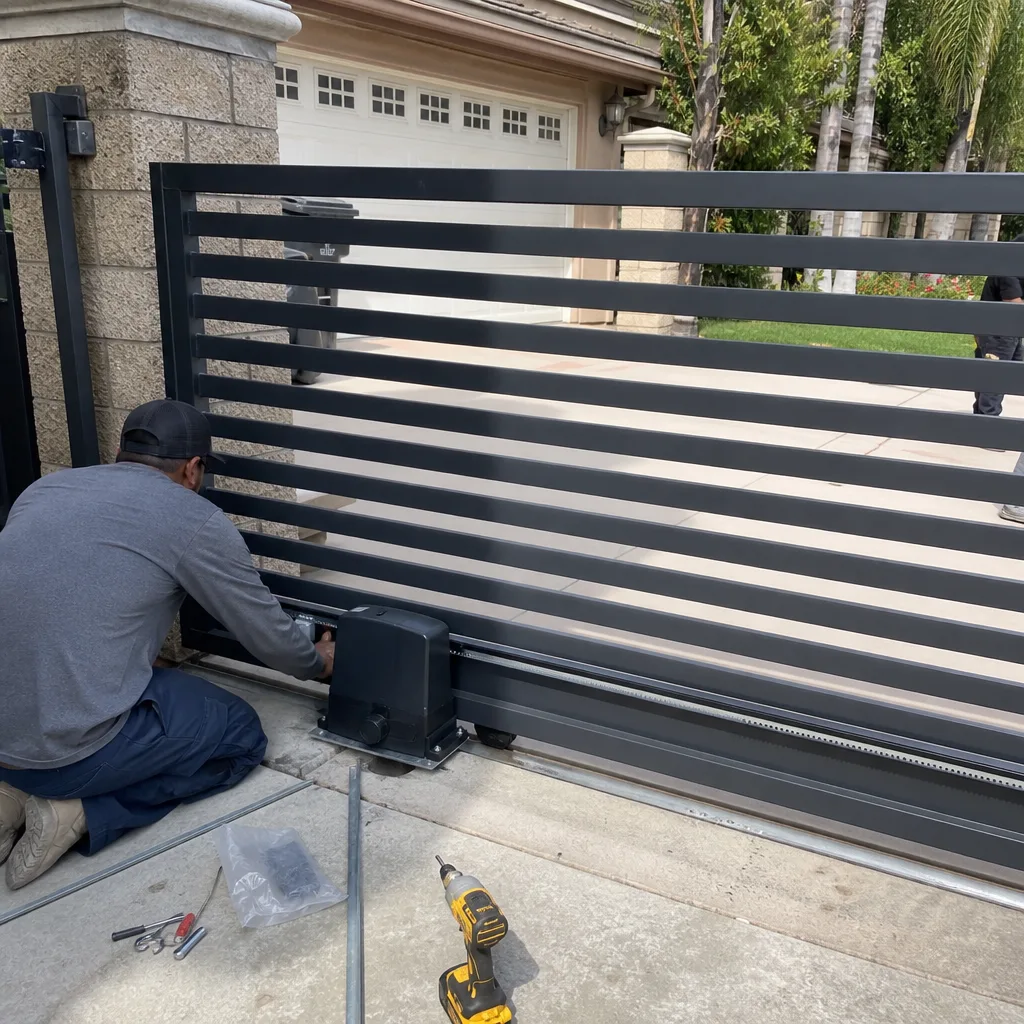 After
AfterGate Repair Warning Signs: A Anaheim Homeowner’s Reference Guide
Most Anaheim homeowners don’t think about their driveway gate until the morning it won’t open and the car is stuck behind it. That’s the expensive way to learn about gate repair. The better way is catching the seven warning signs covered in this guide before they turn into a full gate replacement or a weekend of frustration. We’ve been repairing and installing gates in Anaheim since 2013, and the pattern is always the same: a small, ignorable problem gets left alone until it becomes a big, expensive one. Here’s what to watch for, what it means, and when it’s time to call someone who does this work every day.
Quick Answer
The most common warning signs that your Anaheim gate needs repair are: sagging or dragging on one side, grinding or screeching during operation, slow or jerky movement, a motor that hums but won’t move the gate, rust bubbling through paint, and an opener that occasionally reverses for no reason. Any one of these is worth addressing now, not later. A gate that drags on the ground for six months usually becomes a gate that needs a new hinge post, a new hinge, and a straightened frame – a much bigger bill than adjusting it early.
Table of Contents
- A Gate That Sags or Drags on One Side
- Grinding, Screeching, or Metal-on-Metal Sounds
- Slow or Jerky Gate Movement
- The Motor Hums But the Gate Doesn’t Move
- Rust and Corrosion: Anaheim’s Quiet Gate Killer
- A Gate That Reverses or Stops Randomly
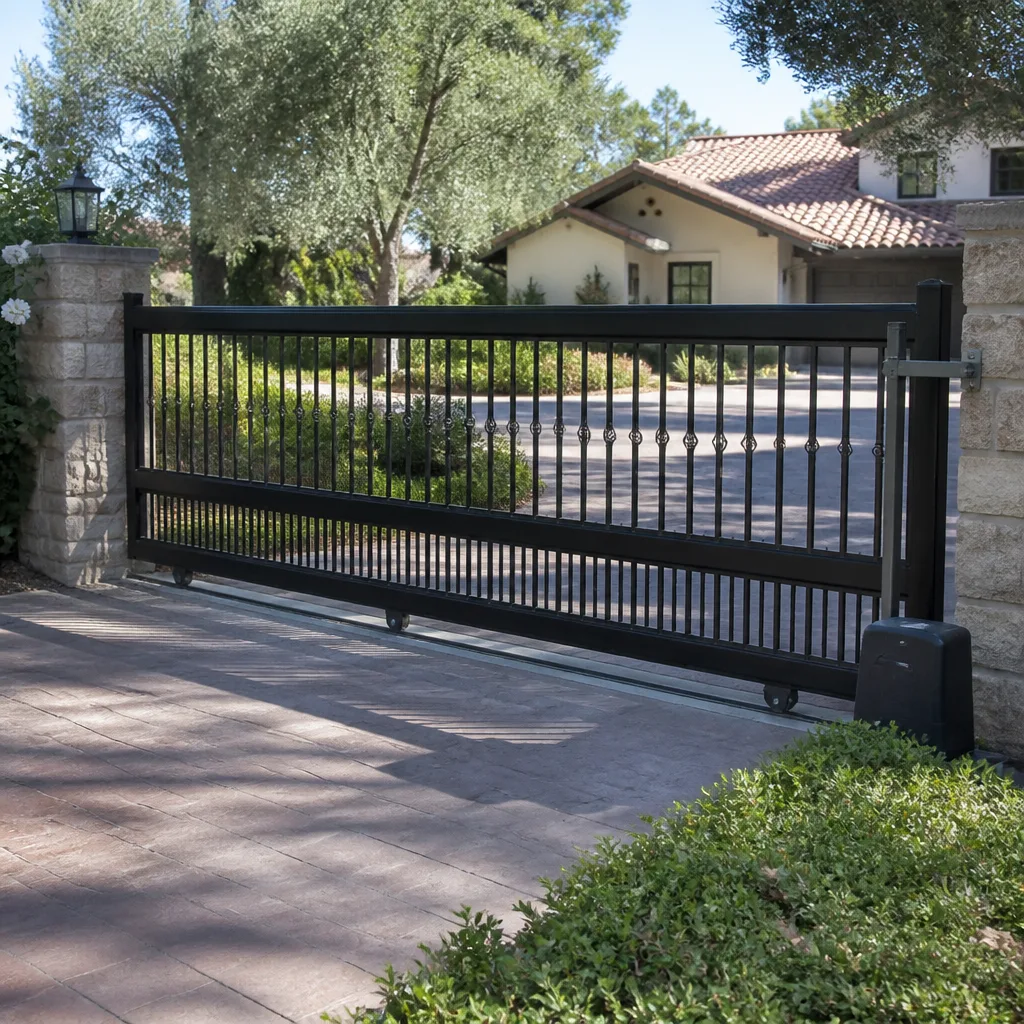
- Track Problems on Sliding Gates
- Common Mistakes to Avoid
- When to Call a Professional
- Frequently Asked Questions
A Gate That Sags or Drags on One Side
This is the most common gate problem we see in Anaheim, and it’s also the one homeowners ignore the longest. A gate that sags means the hinge side is carrying more weight than it was built for, and that almost always traces back to one of three causes: a hinge post that has shifted in the ground, hinges that have worn or bent, or a frame that was under-built for the gate’s actual weight. In Anaheim’s clay-heavy soil, which expands and contracts through wet winters and dry summers, fence and gate posts move more than you’d expect. A post that was plumb in May can be out by half an inch in September.
The test is simple. Stand back and look at the gate’s top edge. If it slopes downward away from the hinge side, that’s sag. If the latch doesn’t line up anymore, or you have to lift the gate slightly to get it to close, the sag has already progressed. Lifting a heavy gate every time you close it wears out the hinges faster, which makes the sag worse, which makes you lift harder. It’s a slow spiral that ends with a hinge tearing out of the post.
What to Do About a Sagging Gate
- Stop lifting it. Every manual lift accelerates the wear on the hinges and latch.
- Check the hinges themselves. If you can see daylight around the hinge pins or the welds have cracked, the hinge needs replacement, not adjustment.
- Check the post. Push on the post itself. If it moves at all, the post needs to be re-set in concrete or replaced. No hinge repair will hold on a moving post.
- Call for an assessment. A sagging gate can be fixed several different ways depending on the cause. The right fix is the one that addresses the cause, not just the symptom.
In our experience working across Anaheim neighborhoods from the Colony to Anaheim Hills, a sagging gate that gets addressed in the first month or two is usually a hinge adjustment and a tune-up. A sagging gate that’s been ignored for a year is usually a post job. The bill difference is significant.
Grinding, Screeching, or Metal-on-Metal Sounds
A gate that makes grinding or screeching noises is telling you something specific: metal is rubbing against metal somewhere it shouldn’t be. Gates that are properly lubricated and aligned operate quietly. A healthy automatic gate makes a low hum from the motor and the soft clack of wheels on track or hinges pivoting. Anything sharper than that is wear.
The most common sources of grinding sounds are hinge pins that have lost their grease and started to gall, wheels on sliding gates that have seized bearings, and chains on chain-drive openers that have stretched and are dragging on the rail. Screeching almost always comes from unlubricated hinges or rollers. In Anaheim’s dry, dusty environment, lubricant breaks down faster than in coastal climates, and fine dust gets into hinge pins and roller bearings. A gate that would stay quiet for a year in Huntington Beach might need lubrication twice a year in Anaheim just to keep the dust from grinding the metal.
What Those Sounds Mean
- Squeak on every open and close: Dry hinge pins or rollers. Lubrication may solve it short-term, but if the sound comes back in weeks, the hinge or bearing is worn past the point where lube helps.
- Grinding or groaning during movement: Usually a failing roller bearing in a sliding gate or a chain dragging. This is not a lubrication problem. It’s a replacement problem.
- Metal-on-metal scrape at one specific point: The gate frame is touching the fence, the post, or the ground. This means alignment has shifted, which usually means a post or hinge issue.
- Clicking or popping: Loose hardware, a cracked weld, or a chain link that’s failing. Loose bolts act like a ticking clock.
Ignoring these sounds doesn’t just make them worse. It makes the underlying problem more expensive every week. A seized bearing that might have been a $40 part becomes a scored wheel, then a damaged track, then a motor that burns out trying to push the whole mess.
Slow or Jerky Gate Movement
A gate that moves noticeably slower than it used to, or one that moves in little starts and stops, is sending a clear signal. The operator is working harder than it should, and either the gate is binding somewhere or the motor itself is beginning to fail. Sometimes both.
When we diagnose slow gate movement in Anaheim, we check four things in order: the gate’s mechanical condition, the track or hinge alignment, the operator’s capacitor, and the motor itself. A gate that has started to bind at a hinge or a wheel puts strain on the motor, which heats up, which shortens its life. A bad capacitor makes the motor start weakly and run slow. A motor with worn brushes or a failing winding will also lose power gradually over months.
Jerky movement, as opposed to just slow movement, usually points to something physical interfering: a wheel with a flat spot or a seized bearing, a section of track that’s bent or obstructed, or a chain that’s jumping teeth on a worn sprocket. On swing gates, jerky movement can be a hydraulic arm low on fluid or a ram piston that’s binding.
One tip from our own service calls: if the gate moves slower when it’s cold in the morning and closer to normal by afternoon, the operator’s capacitor is the likely culprit. Capacitors lose their ability to deliver starting power as they age, and temperature makes it worse.
The Motor Hums But the Gate Doesn’t Move
This is the warning sign that makes people call us. The gate hums, buzzes, or whines, but nothing moves. The motor is getting power and trying to run, but something is stopping the output.
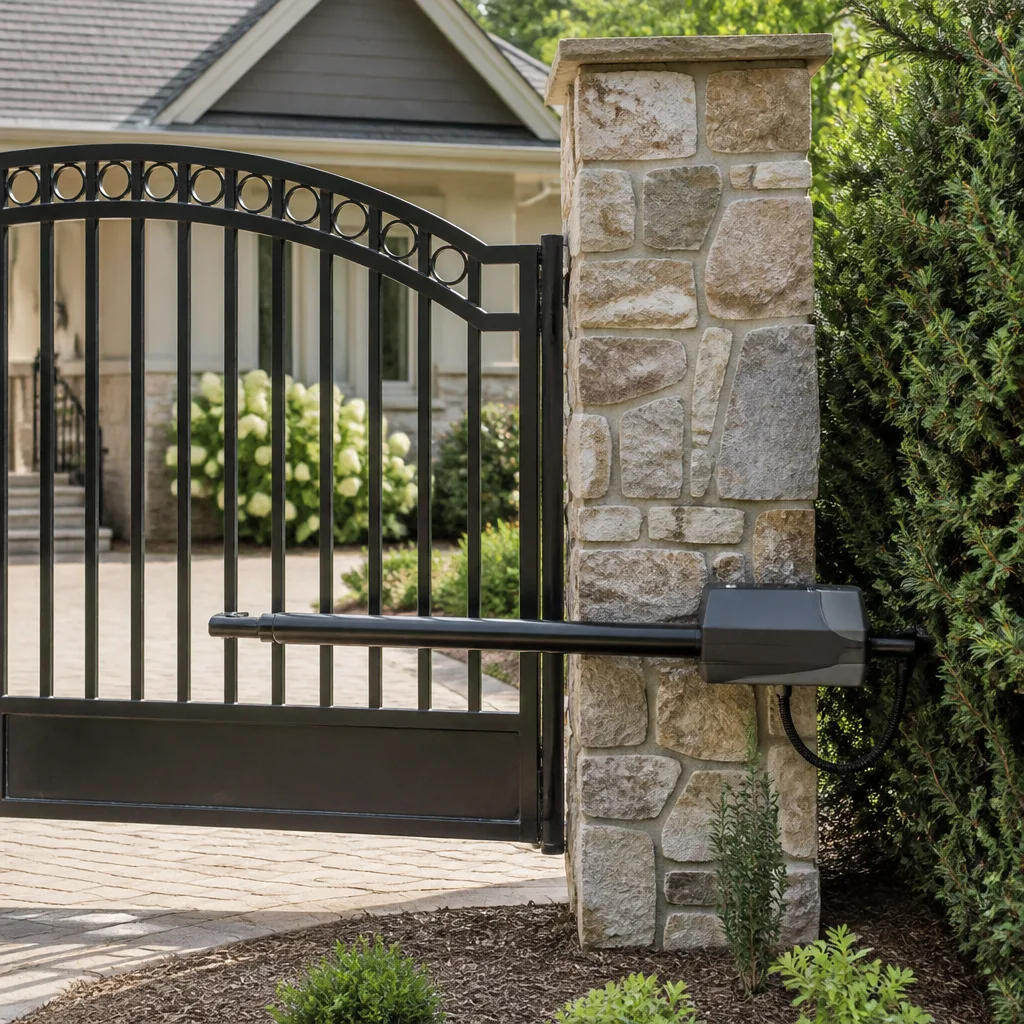
On a swing gate with an articulated arm or ram operator, this usually means the arm’s internal gearing has stripped or the piston seal has failed. The motor spins, but the force never reaches the gate. On a sliding gate with a chain drive, it means the chain has jumped off the sprocket, the sprocket has sheared its key, or the drive gear has stripped. On either style, the humming is the motor spinning and the mechanical connection to the gate being broken.
Do not keep pressing the button. Every hum cycle heats the motor and the transformer. Repeated hums without movement can burn out a motor that might have been repairable with a simple mechanical fix.
This is also one of those situations where the gate seems fine when you release the manual release and push it by hand. That’s a useful diagnostic: if the gate moves freely by hand, the problem is in the operator, not the gate’s physical structure. If it still won’t move by hand, the gate itself is bound and the operator may simply be locked up against the obstruction.
Rust and Corrosion: Anaheim’s Quiet Gate Killer
Anaheim doesn’t get the salt air that coastal cities do, but we have our own corrosion problem: dry heat, occasional Santa Ana winds that carry fine dust, and irrigation overspray that hits gates near planter beds. Steel gates in Anaheim rust from the bottom up when sprinklers hit the bottom rail every morning. The water sits in the crevices, the sun bakes it dry, and the cycle repeats hundreds of times a year.
Rust doesn’t announce itself loudly. It starts as paint bubbling, a small orange stain weeping from a corner, or a rough patch on a weld. By the time the paint actually flakes off and you see bare rusted metal, the structural steel underneath has already lost thickness.
There are different levels of rust concern:
- Surface rust: Orange discoloration but no flaking or pitting. This can be wire-brushed, primed, and repainted. Do it before it becomes the next level.
- Pitting rust: Small craters in the metal where rust has eaten below the surface. The steel is losing thickness. It needs mechanical removal and possibly patch welding if pits are deep.
- Structural rust: Holes, cracked welds, or flaking layers of steel. This is a replacement-level condition on the affected member, not a paint job.
Check your gate’s bottom rail, the area around hinge mounts, and anywhere two pieces of steel are welded together. Those are the places Anaheim gates rust first. A gate with surface rust caught early is an afternoon fix. A gate with structural rust on the bottom rail is a welding project or a replacement.
A Gate That Reverses or Stops Randomly
Automatic gates are supposed to reverse when they hit an obstruction. That’s a safety feature. When a gate reverses or stops mid-cycle with no obstruction present, the safety system is malfunctioning, and it’s usually one of three things: a failing safety sensor, a control board glitch, or the gate’s force settings drifting out of adjustment.
Safety edges and photo eyes are the two main sensor types. The photo eye sends a beam across the gate opening and reverses the gate if the beam is broken. The safety edge is a pressure-sensitive strip on the gate’s edge that reverses movement when it contacts something. In Anaheim, photo eyes suffer from two environmental problems: dust coating the lens and direct afternoon sun overwhelming the receiver. A dirty lens or a misaligned eye can cause intermittent false trips. A sun-blinded receiver can cause the gate to refuse to close at certain times of day.
Control boards also develop glitches over time, especially in our summer heat. Boards mounted inside metal operator housings can reach 120 degrees or more on an Anaheim afternoon. Heat ages capacitors on the board, and older boards from brands like Viking or Elite begin to behave erratically: phantom stops, reverse commands, or failure to close after opening.
Intermittent problems are the hardest to diagnose because the gate works fine when the technician is standing there. That’s why we ask homeowners to note the time of day, the weather, and the specific behavior. A gate that only acts up at 4 p.m. on hot days is a different problem than a gate that acts up at dawn.
Track Problems on Sliding Gates
Sliding gates are popular in Anaheim for homes with wide driveways, and they bring their own set of warning signs. The track is the foundation of the entire system, and when the track has problems, every other component suffers.
The most obvious track problem is debris. Anaheim’s sycamore leaves, bark chips, and gravel driveways all end up in the track. A rock in the track can cause the gate to jump, stall, or knock the guide rollers out of alignment. Regular clearing is a maintenance item, not a repair, but it prevents repairs.
Bent or warped track sections come next. A track that’s been hit by a car tire (it happens more than you’d think), shifted by soil movement, or simply worn down by decades of sliding is no longer straight. The gate will bind, the rollers will wear unevenly, and the motor will strain.
Worn or seized guide rollers are the third warning sign. The rollers are what carry the gate’s weight as it slides. When they wear, the gate drops slightly and drags on the track. When they seize, the gate scrapes along instead of rolling. We replace more rollers on Ghost Controls and DoorKing sliding gate systems in Anaheim than any other single component.
Here’s the maintenance sequence that prevents most track problems:
- Clear the track weekly with a broom or leaf blower. Two minutes.
- Inspect the track monthly for bends, dents, or loose anchors. Run your eye along it like a carpenter checking a board for straightness.
- Check the rollers every three months. Spin them by hand and feel for grinding or wobble.
- Lubricate the rollers and track bearings every six months with a proper gate lubricant, not WD-40.
Common Mistakes to Avoid
- Lubricating with WD-40 or cooking spray. WD-40 is a water displacer, not a long-term lubricant. It washes out grease and leaves the surface drier than before. Use a lubricant made for gate hardware.
- Ignoring a small sag because “it still closes.” Today’s sag is next year’s hinge tear-out. The fix gets cheaper the earlier you catch it.
- Repeatedly pressing the remote when the gate hums or stalls. Every press heats the motor. A stalled motor that gets hammered with twenty button presses can cook itself in minutes.
- Painting over rust without treating it. Paint over active rust is like putting siding over termite damage. The rust keeps eating underneath and you won’t see it until the metal fails.
- Replacing an opener without checking the gate’s mechanical condition first. A new motor on a gate that binds will burn out fast. The gate’s physical health comes first.
- Skipping the maintenance entirely because the gate “still works.” Every gate we’ve replaced in Anaheim worked fine until the day it didn’t. The ones that last are the ones that get checked.
- Hiring based on price alone. The cheapest estimate often means a tech who changes parts and hopes the problem goes away. A gate is a system, not a collection of parts.
When to Call a Professional
Call a professional when the problem involves the motor, the control board, the safety sensors, or any component that carries the gate’s weight. Specifically: a gate that hums but won’t move, a gate that reverses randomly, a sagging gate where the post moves when pushed, any electrical problem inside the operator housing, and any rust that’s pitted or structural. These are not DIY-friendly situations. A gate’s tension, weight, and electrical components can cause serious injury if handled incorrectly. Ironworks Gate Co. home offers free estimates in Anaheim - call (424) 395-3381 and we’ll come look, give you a straight answer, and a written price.
Frequently Asked Questions
Minor gate repairs in Anaheim typically run $150 to $400, while motor replacement, post re-setting, or major welding work falls between $500 and $1,800 depending on the gate’s size and the components involved. The exact cost depends on what’s actually wrong, which is why we give free estimates before any work starts. Call (424) 395-3381 for an exact quote - estimates are free and the price is settled before a single bolt gets turned.
A quality gate opener in Anaheim should last 10 to 15 years with proper maintenance, though cheaper units often fail in 5 to 7 years. Our heat and dust shorten opener life compared to coastal areas, so periodic tune-ups matter more here. We service nine major brands including LiftMaster, FAAC, BFT, Linear, Viking, Ghost Controls, DoorKing, Elite, and Mighty Mule.
Most gate repairs in Anaheim are completed in a single visit, and we carry common parts for major brands on the truck. If a specific part needs to be ordered, we’ll tell you upfront and give you a timeline. Call (424) 395-3381 and we’ll get you on the schedule - a live person answers 24 hours a day.
At 20 years old, replacement is usually the better value in Anaheim. The control board, motor, and safety systems on an opener that old are all near the end of their service life. But don’t decide blind - we’ll assess the opener’s actual condition and give you an honest recommendation based on what we find.
We’re trained and equipped to service nine major gate-automation brands: LiftMaster, FAAC, BFT, Linear, Viking, Ghost Controls, DoorKing, Elite, and Mighty Mule. Whatever is on your driveway, odds are we’ve seen it and fixed it before.
Morning noise usually means the lubricant has broken down and the hinge pins or rollers are dry after sitting overnight. In Anaheim’s low humidity, lubrication degrades faster than in coastal climates. The noise fades as the gate moves and redistributes whatever grease is left. It’s a sign that a lubrication service is overdue. Our $89 seasonal tune-up includes re-lubrication and a full mechanical check.
The Bottom Line
Most serious gate failures in Anaheim start as small, ignorable warning signs. A sag here, a grind there, a motor that’s a little slow. Each one is a cheap fix when caught early and an expensive fix when ignored. The rule is simple: if your gate has changed the way it looks, sounds, or moves in the last six months, something is happening. Get it checked. A free estimate costs nothing, and knowing what’s actually going on with your gate is worth more than a guess. We’ve been serving Anaheim homeowners since 2013, and every job we do is backed by our written 90-Day Done Right Promise. Call (424) 395-3381 and talk to a real person, any time of day or night.
Written by Victor Salinas, Owner at Ironworks Gate Co., serving Anaheim since 2013.