
Last updated August 25, 2026
Free on-site gate assessment - hinges, posts, and your LiftMaster or Nice gate operator checked before anything is quoted
The assessment is free and the quote is the invoice.
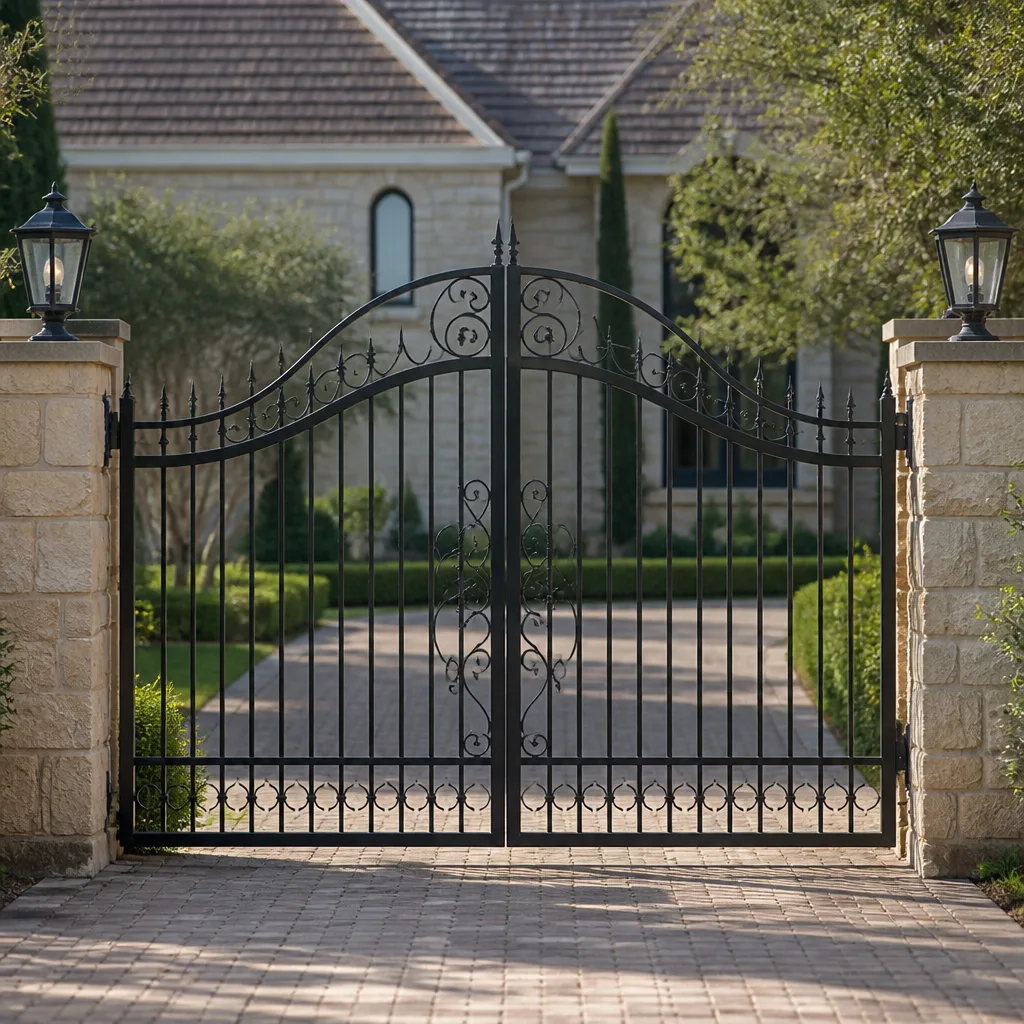
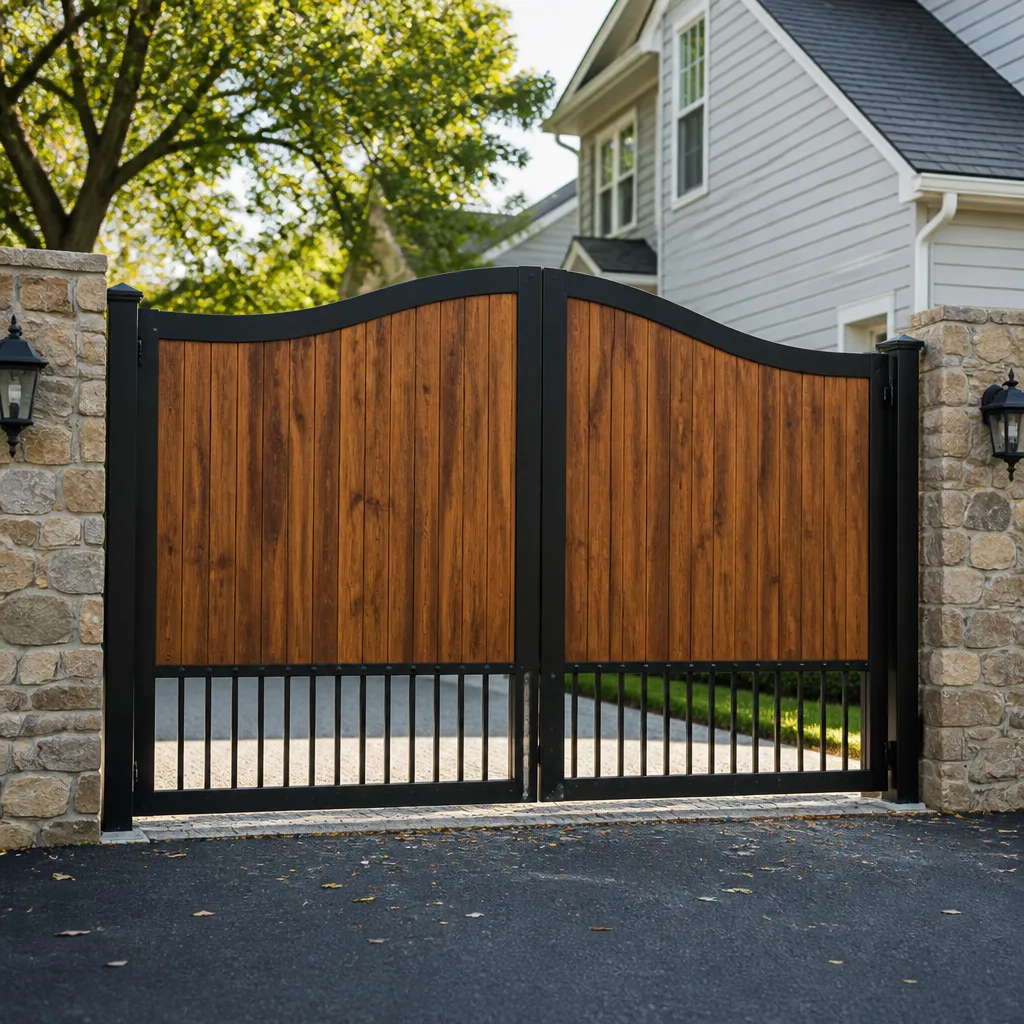
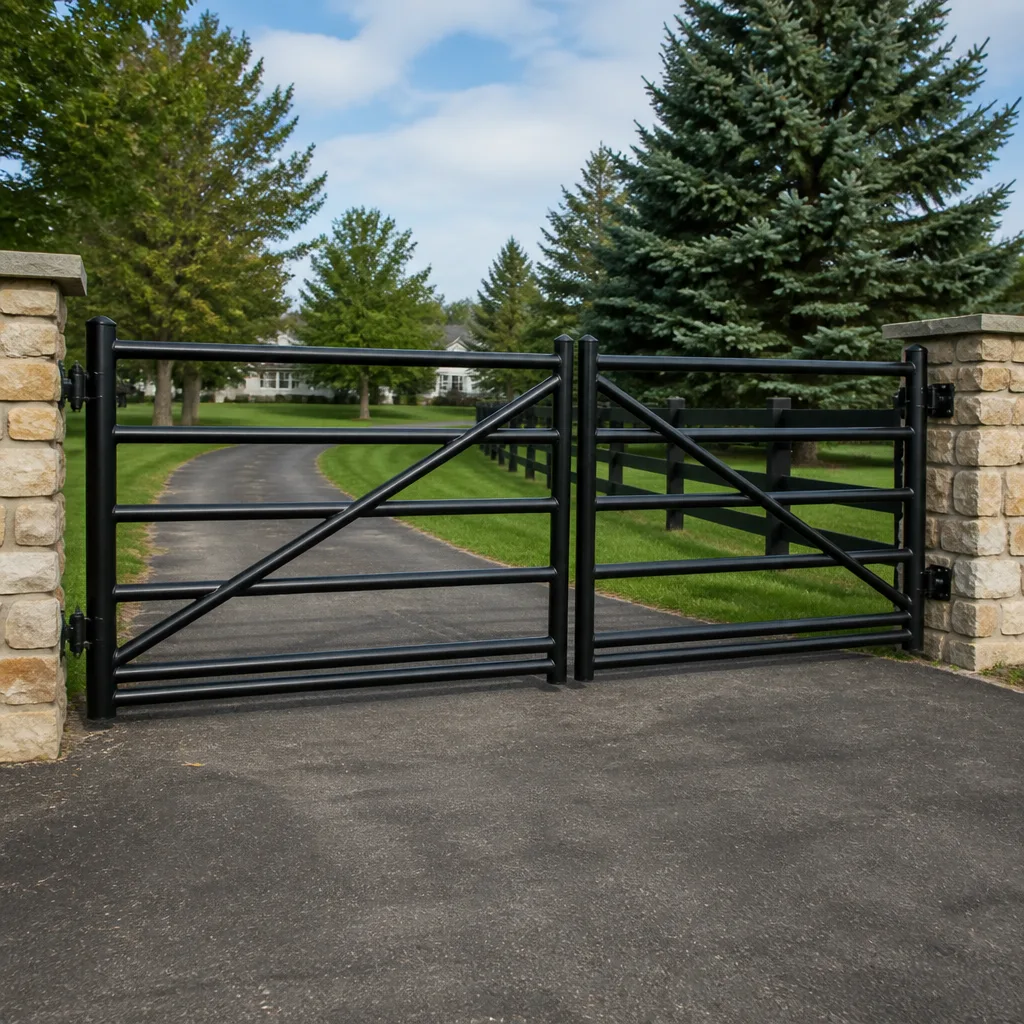
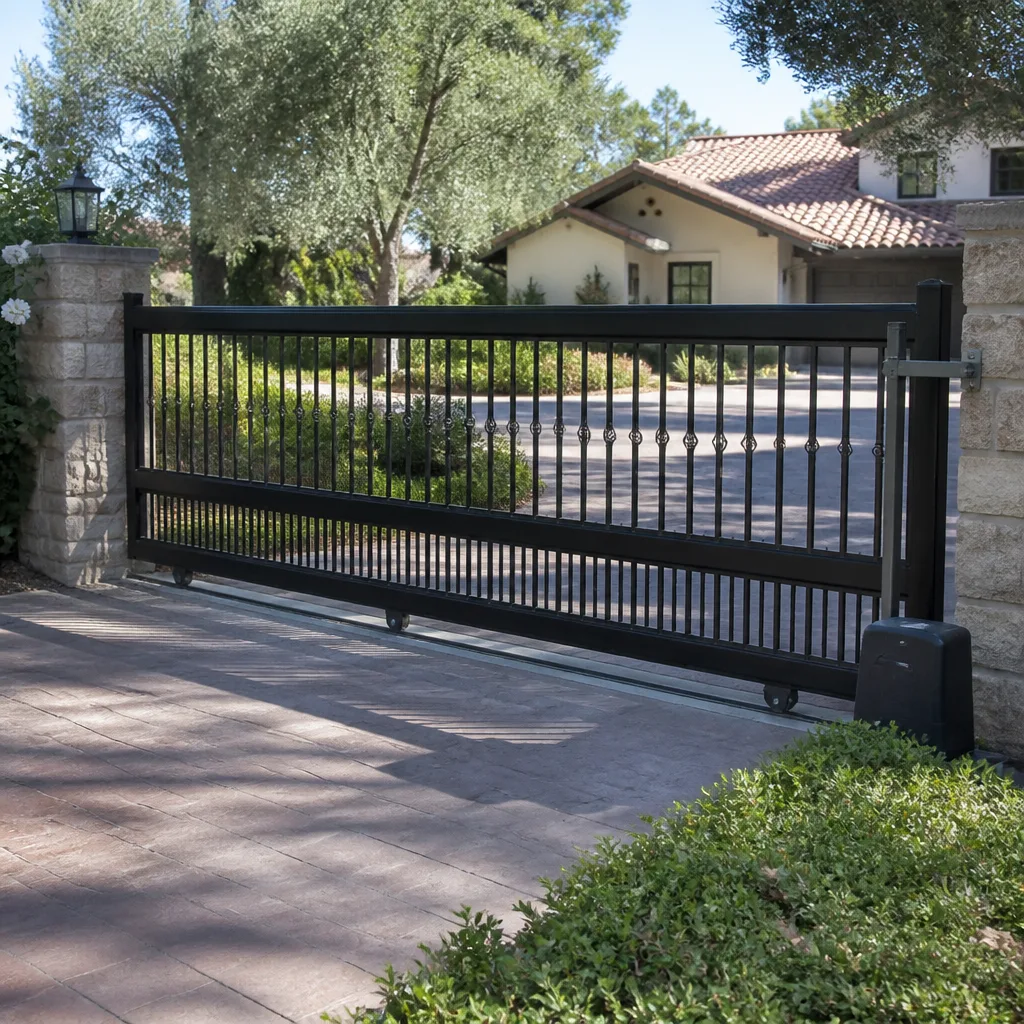
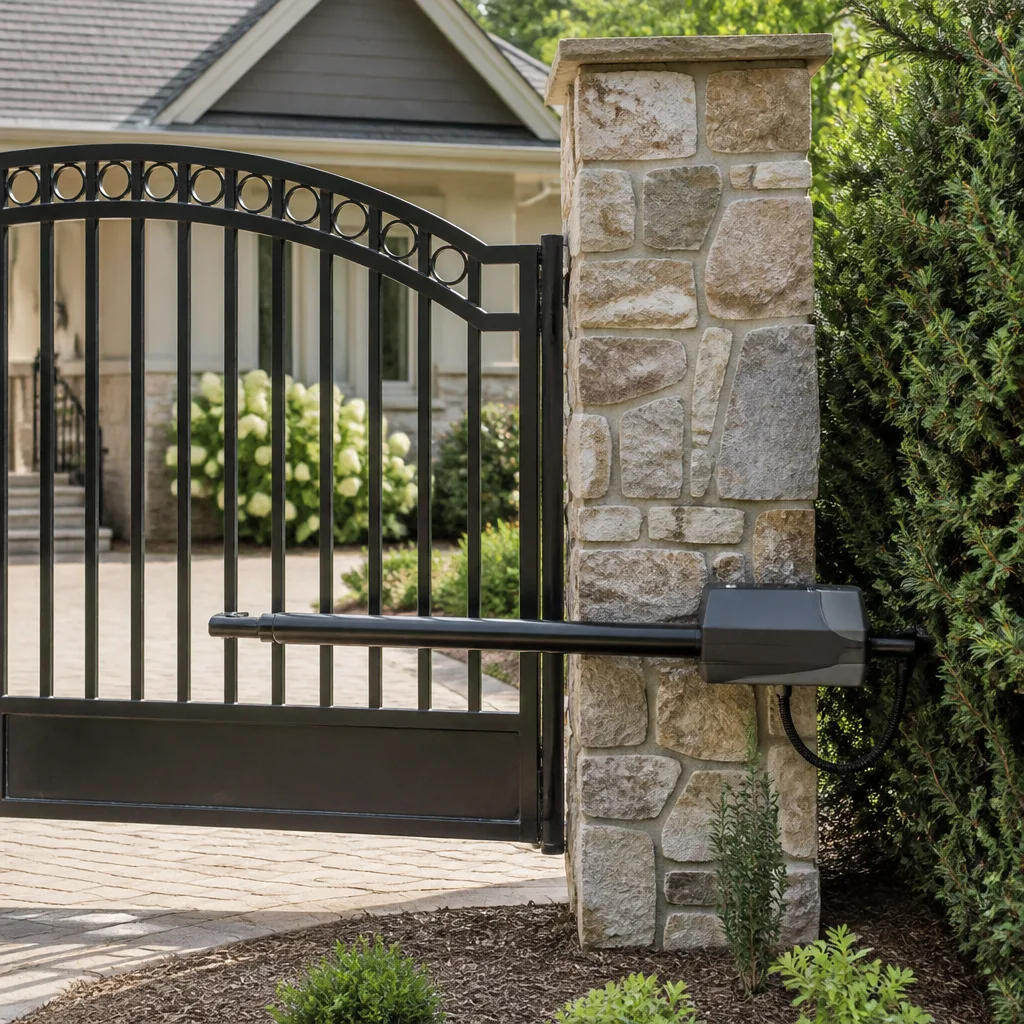
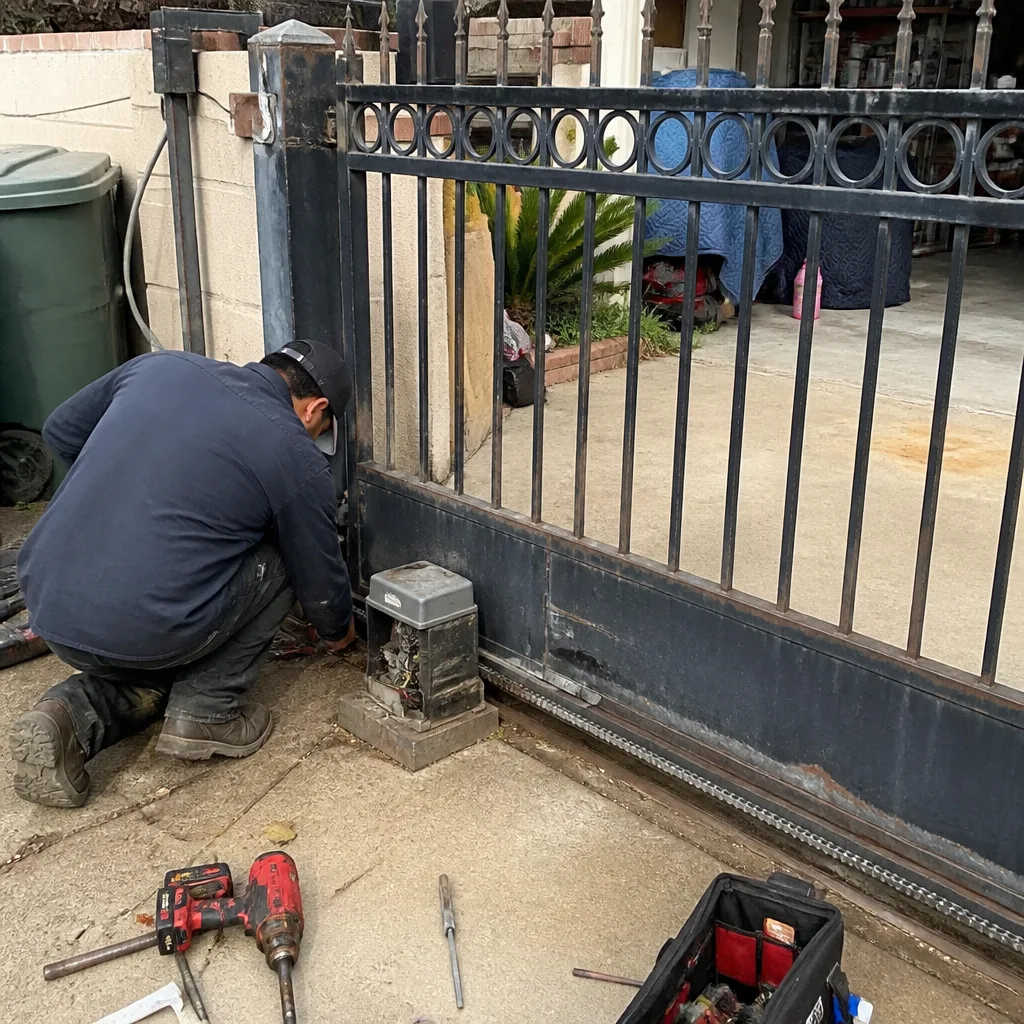 Before
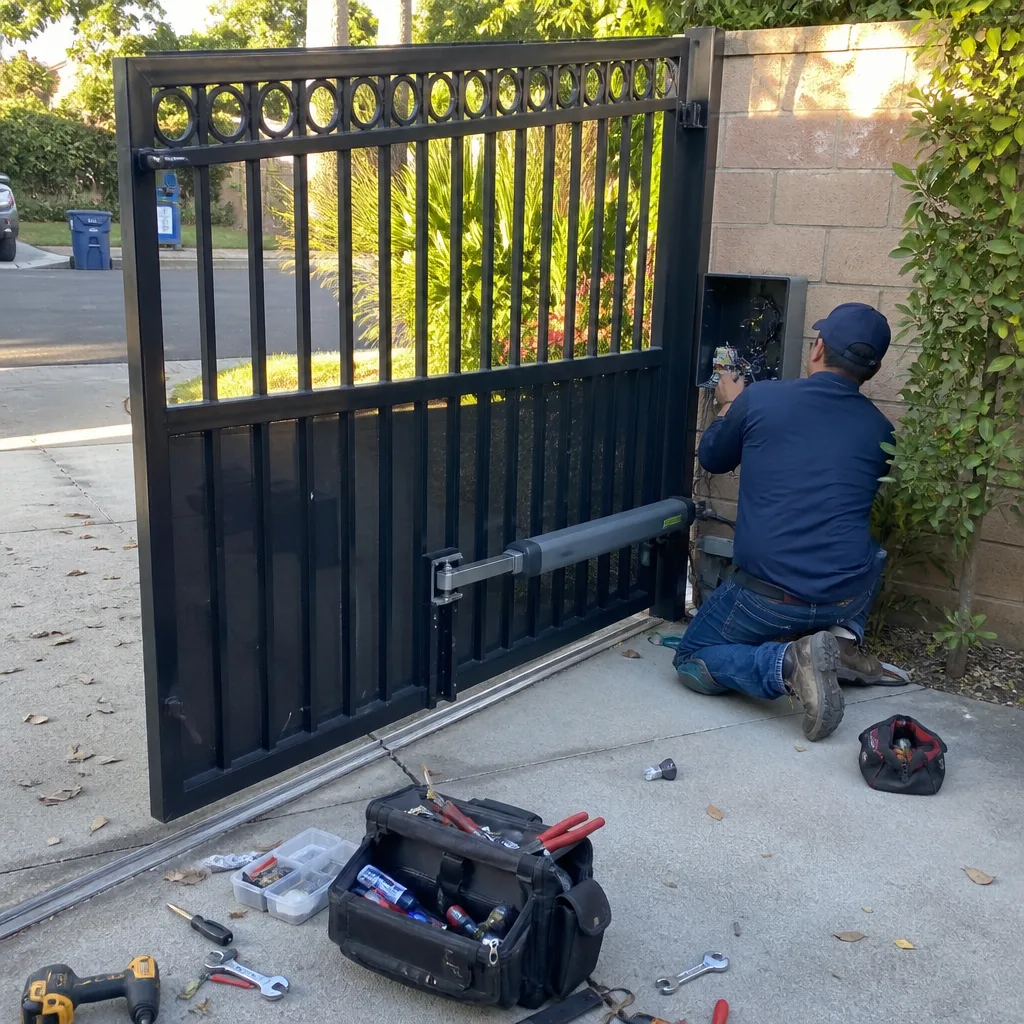 After
After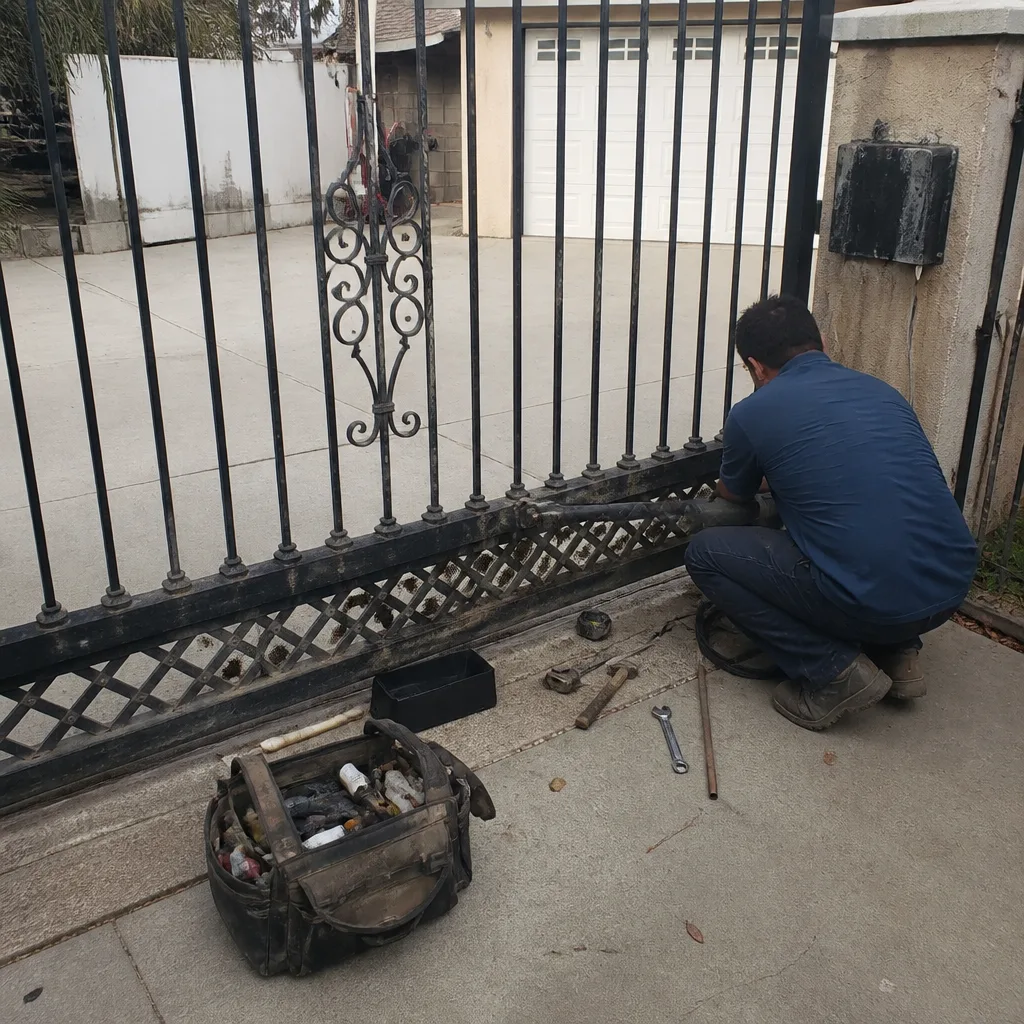 Before
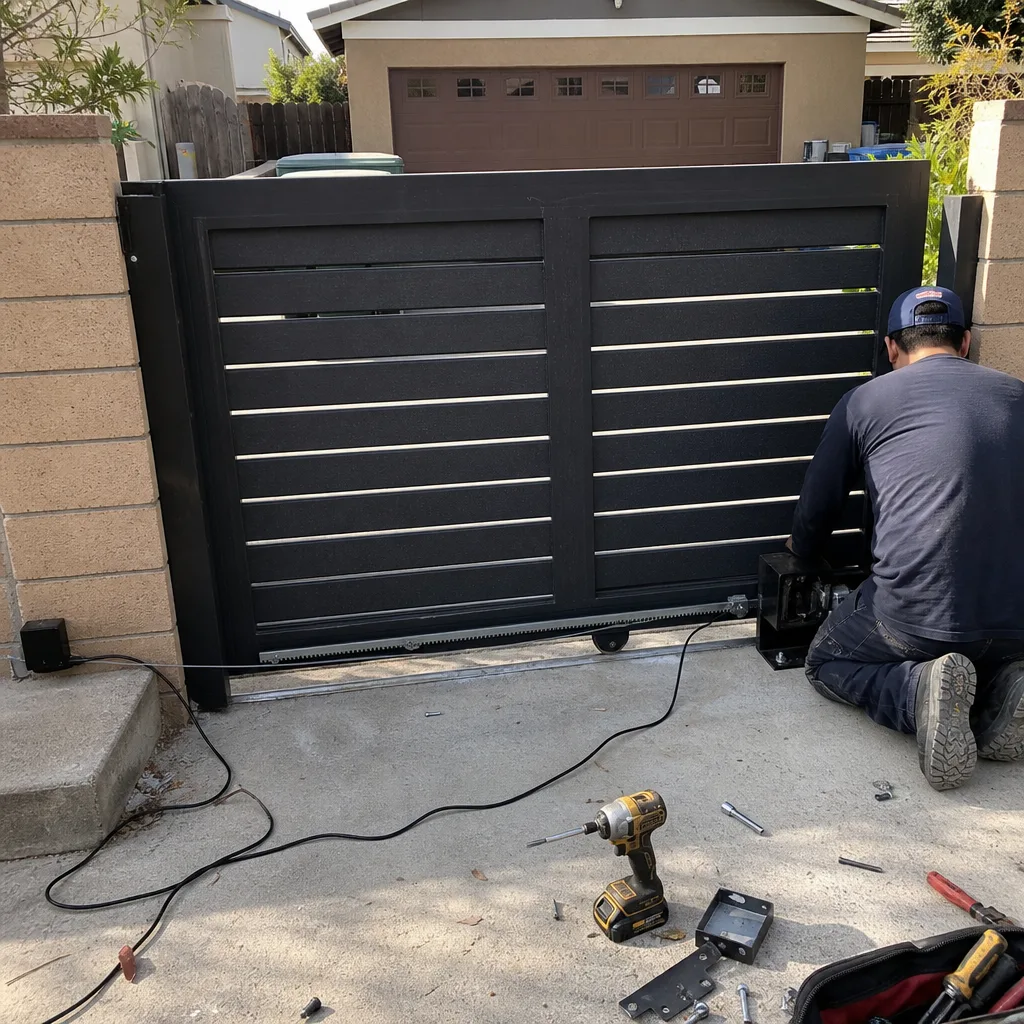 After
After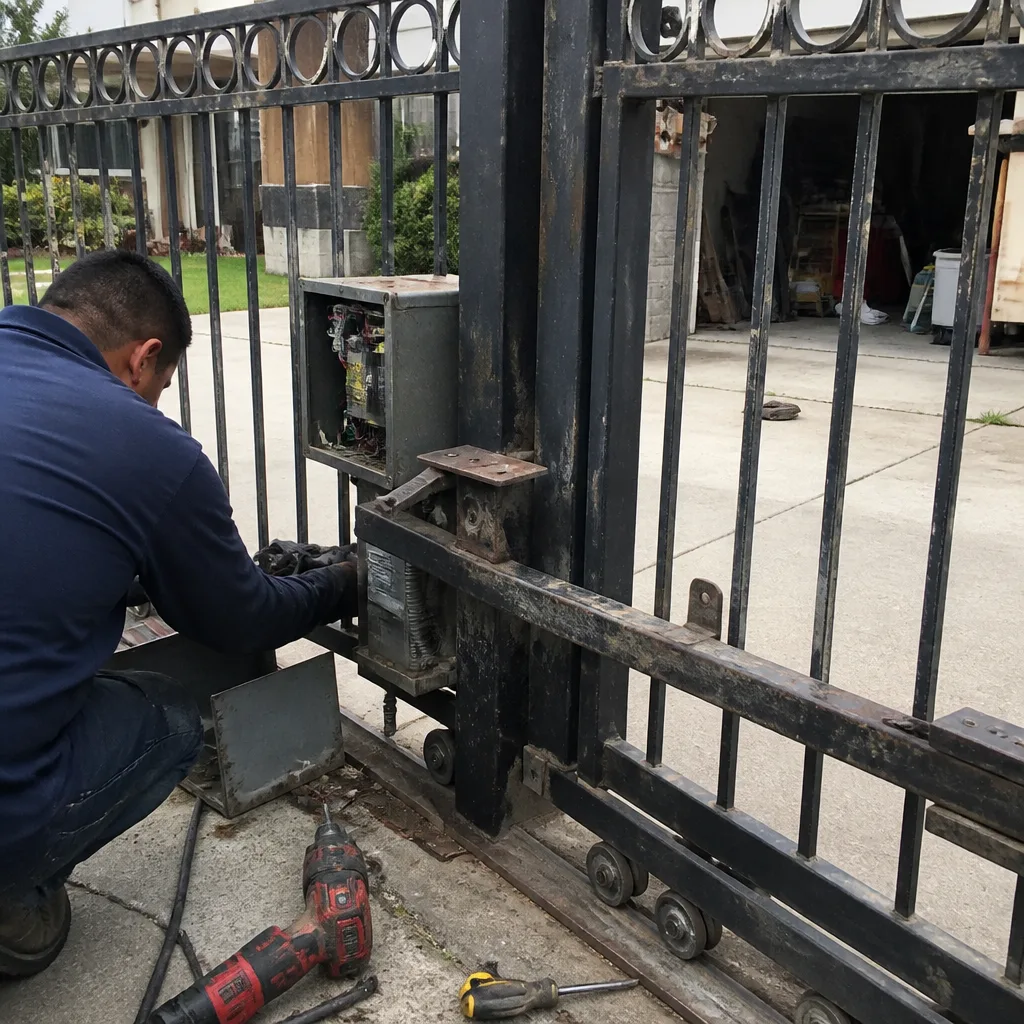 Before
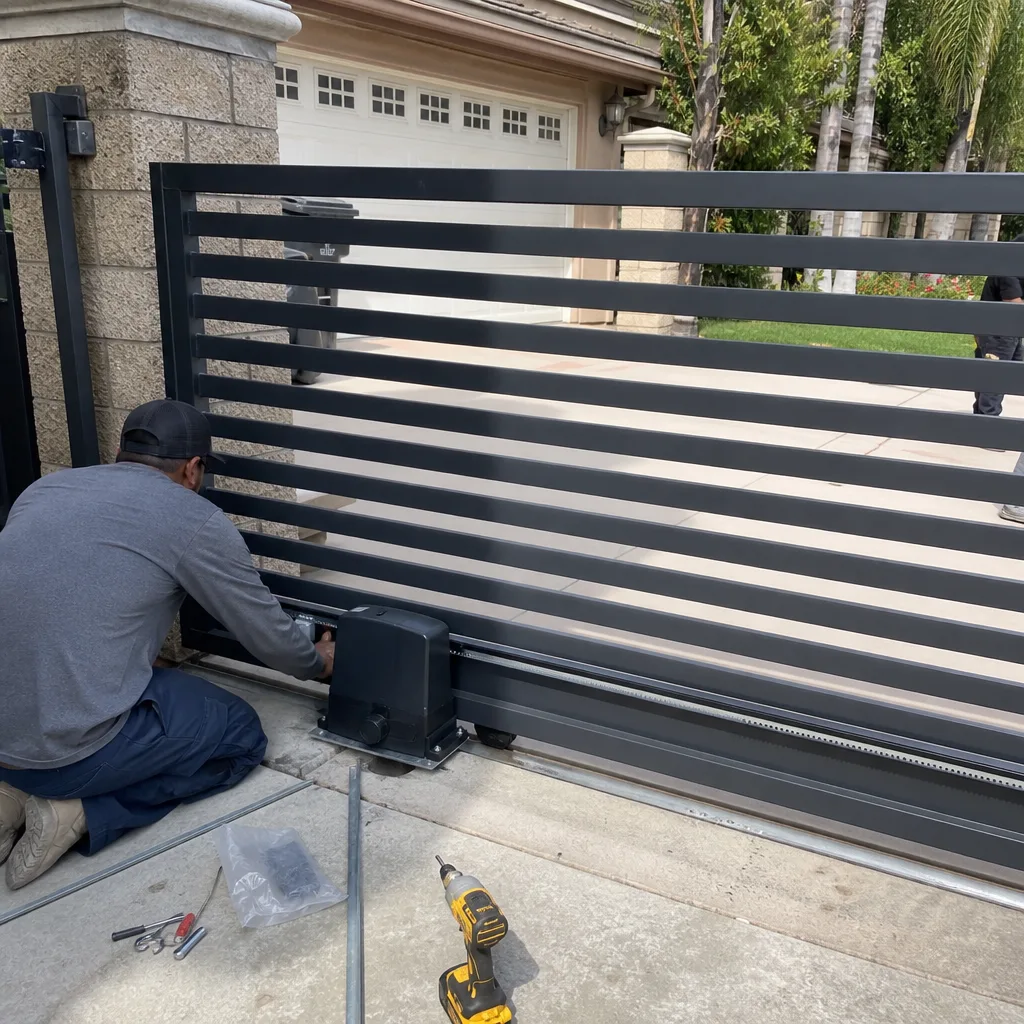 After
AfterGate Repair Permits, Codes & Inspections in CA: What You Need to Know
Most homeowners are surprised to learn that a simple gate repair can trigger permit requirements in California, depending on what exactly is being fixed. A hinge replacement is one thing. Moving a gate post, adding a motor, or running new electrical is another matter entirely, and the rules change from one city to the next. In Anaheim, where many homes date back to the 1950s and 1960s, we regularly encounter gate work that was done decades ago without permits and now needs to be brought up to current code. This guide walks you through what California and Anaheim actually require, what triggers an inspection, and how to avoid the expensive mistakes we see homeowners make every year.
Quick Answer
In California, most straightforward gate repairs replacing hinges, wheels, or welded sections do not require a permit, but any work that alters the gate’s structure, adds automation, or runs new electrical lines typically does. In Anaheim, the key triggers for permits are moving or setting new posts, installing a gate opener that requires a new power run, and any installation that changes vehicle access or affects a public right-of-way. When permits are required, expect a plan check, an inspection, and a final sign-off before the job is legally complete.
Table of Contents
- When a Permit Is Actually Needed for Gate Repair
- Anaheim-Specific Permit Rules and Costs
- California Gate Codes That Affect Your Repair
- Electrical Work, Gate Motors, and the Permit Line
- What Happens During a Gate Inspection
- Fire Access Requirements for Driveway Gates
- CC&Rs, HOAs, and Historical Districts in Anaheim
- Common Mistakes to Avoid
- When to Call a Professional
- Frequently Asked Questions
When a Permit Is Actually Needed for Gate Repair
The short version: repairing what already exists usually does not need a permit. Changing what exists usually does. But the line between repair and alteration is where most Anaheim homeowners get tripped up, so let’s be precise about it.
Replacing a rusted hinge, welding a cracked frame member, swapping out a bent wheel, or installing a new latch on an existing gate post falls under routine maintenance. No permit, no inspection, no paperwork. The City of Anaheim treats this the same way it treats replacing a faucet washer or a doorknob. You are restoring the gate to its original condition, not changing what it is.
Where permits enter the picture is when the work changes one of three things:
- Structure: Moving a gate post, setting a new post, changing the gate’s footprint, widening a driveway opening, or replacing a rotted wood post with steel. Any time concrete is poured for a new post footing, Anaheim wants a permit.
- Function: Converting a manual gate to an automated one, adding a pedestrian gate where none existed, or changing a swing gate to a slide gate. This changes how vehicles enter and exit the property, which triggers code review.
- Power: Running new electrical to the gate for a motor, keypad, intercom, or loop detector. This falls under the California Electrical Code and requires an electrical permit, usually as part of a combined gate permit.
In our experience, roughly two out of every ten gate repairs we are called out for in Anaheim turn out to include at least one element that technically requires a permit. The homeowner usually has no idea. That is not their fault. The good news is that a qualified contractor can tell you within the first visit whether your job crosses the permit line or not.
Anaheim-Specific Permit Rules and Costs
Anaheim operates under the California Building Code, but the city adds its own local amendments and fee schedule. We have worked with the Anaheim Planning and Building Department on many gate projects over the years, and the process has become more streamlined, but it still surprises first-timers.
For a typical automated driveway gate project that includes new posts, a motor, and a new electrical circuit, an Anaheim permit will generally run between $400 and $900, depending on the valuation of the work. That includes the plan check. Smaller permits, like a simple post replacement without automation, fall on the lower end, sometimes under $300. These are not the exact current fees the city updates its schedule periodically but they give you a realistic ballpark. A contractor who works in Anaheim regularly will pull the exact numbers when you get the quote.
There are two things about Anaheim that affect gate permits more than most homeowners expect:
- Setback requirements. Anaheim enforces specific distances between a driveway gate and the property line or public sidewalk. If a gate sits too close to the street, a vehicle stopped at the gate may block the sidewalk or extend into the right-of-way. The city may require the gate to be set back far enough for a full car length to sit between the gate and the street, which is a code issue that comes up frequently in older Anaheim neighborhoods like the Colony and the area around Pearson Park where lots are tighter.
- Plan check turnaround. Expect one to two weeks for a simple gate permit plan check in Anaheim. More complex projects with access control or fire department review can push to three or four weeks. If your gate is stuck open or your motor is dead, that is a long time to wait, which is why we always recommend separating emergency repairs from permitted upgrades. You can fix the hinge today and pull the permit for the motor next week.
California Gate Codes That Affect Your Repair
California has been tightening gate safety regulations for years, and the codes that matter most to homeowners boil down to entrapment protection and access. These are not suggestions. They are law, and they apply to any automated gate, whether it was installed last year or twenty years ago.
The primary standard you will hear referenced is UL 325, which is the national safety standard for automated gates. California adopts this into the California Building Code, which means any new motor installation must be UL 325 compliant. What that means in plain English is that the gate must have:
- Entrapment sensors that stop and reverse the gate if it encounters an object or a person while closing.
- Photoelectric eyes or edge sensors across the gate opening, monitored so that a single failure does not leave the gate unprotected.
- Warning signage posted on both sides of the gate where pedestrians could come into contact with a moving gate panel.
There is also the matter of the pedestrian gate requirement. In many California jurisdictions, including Anaheim, a driveway gate that is the only means of entry without climbing a fence must have a separate pedestrian gate for safety and emergency access. If your existing gate is a wide single panel with no walk gate, a repair that keeps it that way may trigger a requirement to add one. We have seen this come up during inspections more than once.
Height and visibility rules matter too. Anaheim limits residential front yard structures, including gates, to 42 inches in height within the front setback, though side and rear gates can go taller. Solid metal gates that block visibility at a driveway approach may also raise concerns with the city’s traffic engineering division. A slatted or ornamental design within the first several feet of the property line is a safer bet.
Electrical Work, Gate Motors, and the Permit Line
This is the section where we see the most confusion, so let’s be very direct: if a gate motor needs a new or extended circuit, that is electrical work, and in Anaheim, electrical work requires a permit.
The rule does not care whether the wire runs three feet from an existing outlet or forty feet from the panel. New wiring, a new conduit run, a new junction box, or a new breaker is an electrical installation, and the California Electrical Code applies. That means a licensed electrical contractor, a permit, and an inspection.
Now, here is the part most homeowners do not know. Many gate opener failures are not motor failures at all. They are electrical supply problems, and the attempted fix often creates a code violation. We regularly see extension cords buried under pavers, Romex run outside without conduit, and makeshift splices wrapped in electrical tape inside underground boxes. All of those violate the code and all of them eventually fail or create a safety hazard.
A proper gate electrical installation in Anaheim involves:
- A dedicated circuit from the main panel, protected by the correct breaker.
- UF-rated or THWN conductors run in PVC conduit, buried to the correct depth usually 18 inches for PVC under the California Electrical Code.
- A weatherproof junction box or the motor’s integrated electrical compartment, with proper strain relief and no exposed connections.
- Bonding and grounding in accordance with code, particularly for metal gate frames.
If you are replacing an existing motor and the old wiring is in good condition and code-compliant, the repair may not need a new electrical permit. That is a judgment call based on what is actually there, and it is exactly the kind of thing an experienced gate contractor can tell you during the estimate. Brands like Viking, Ghost Controls, and DoorKing each have specific electrical specs, and we service all of them in Anaheim on a regular basis.
What Happens During a Gate Inspection
If your gate project required a permit, the final step is the city inspection. Understanding what the inspector is looking for will save you a failed inspection, a re-inspection fee, and another week of waiting.
For a standard automated gate repair or installation in Anaheim, the inspector will typically walk through these checks:
- Setback and placement. The inspector verifies that the gate sits where the plans said it would, with the correct distance from sidewalks, driveways, and property lines.
- Footing depth and post anchoring. For new posts, the inspector may check before the concrete pour (a pre-pour inspection) and after, confirming the post is plumb and the footing meets the approved plan’s depth requirements.
- Entrapment protection. The gate is run through open and close cycles while the inspector tests the photoelectric eyes and edge sensors. If the gate does not stop and reverse within the UL 325 requirements, it fails.
- Electrical safety. The inspector checks the conduit, the junction boxes, the grounding, and the breaker connection. Any exposed wiring or missing Ground Fault protection is an automatic fail.
- Warning signs. The correct UL 325 signage must be mounted on both sides of the gate.
- Manual release. The gate must be operable by hand in a power outage. The inspector verifies the release mechanism works and can be accessed without special tools.
The inspection itself usually takes 20 to 30 minutes. Most failures we see are simple things: missing signage, a sensor that is slightly out of alignment, or a conduit that was not strapped properly. None of them are hard to fix, but each one costs a re-inspection fee and another visit. A contractor who does this work in Anaheim regularly knows the checklist cold and gets it right the first time.
Fire Access Requirements for Driveway Gates
Driveway gates do not exist in a vacuum. In Anaheim, the fire department has a say in any gate that controls access to a property, and those requirements can override what you had in mind for your repair.
The short version: Anaheim Fire & Rescue needs to be able to get onto your property in an emergency, and your gate cannot slow them down. That means:
- The gate must open wide enough for emergency vehicle access, which generally means a clear opening of at least 12 feet for a standard driveway, though specific requirements depend on the property type and the fire department’s access plan for your street.
- Automated gates must have a manual override or a fire department key switch, depending on the installation. In many Anaheim neighborhoods, the fire department uses a standard Knox key switch mounted near the gate so they can open it without waiting for the homeowner.
- Gates that serve properties on long driveways or private roads may need to meet additional turnaround and access requirements. This comes up in the Anaheim Hills area, where many homes have long, gated driveways off winding canyon roads.
- Your HOA’s architectural guidelines. Many HOAs in Anaheim, particularly in newer planned communities, require written approval before any exterior change, including a gate repair that alters appearance. Replacing a wrought iron gate with a matching style is usually fine. Switching from iron to a solid aluminum panel may not be.
- Your property’s CC&Rs. Even without an HOA, some Anaheim properties carry recorded CC&Rs that restrict gate height, color, material, or even the type of motor you can install. These run with the land, which means they apply to you whether you knew about them or not.
- Historical designation. Anaheim has several historic districts, including the Colony, and individual homes across the city are listed on the local historic register. If your home is designated, gate changes may require review by the city’s historic preservation program. Original iron gates in the Colony are often protected and must be repaired, not replaced.
- Assuming all gate repairs are maintenance. Replacing a hinge is maintenance. Moving a post or adding a motor is construction. If you are unsure, ask a contractor who works in Anaheim. Guessing wrong can mean an unpermitted project on your property record when you eventually sell.
- Burying the electrical without a plan. The number one code violation we see at gate sites in Anaheim is improper underground wiring. Direct-buried Romex, shallow conduit, and spliced connections fail inspections and create a shock hazard.
- Ignoring the pedestrian gate requirement. If your driveway gate is the only way through your fence line, many Anaheim projects require an adjacent pedestrian gate. Skipping it now means paying for it later when the inspector flags it.
- Installing a motor on a gate that was never designed for one. A heavy, sagging gate with a new operator slapped on will destroy the motor within a year or two. The gate structure must be sound before automation goes on, and that structural work often triggers the permit in the first place.
- Buying the opener first, then getting the permit. Not every motor meets Anaheim’s current requirements for entrapment protection or fire department access. We have seen homeowners buy a discounted opener online only to learn it cannot be permitted. Let the permit and code requirements drive the equipment choice, not the other way around.
- Forgetting the HOA. The city permit and the HOA approval are two separate processes. Finishing a beautiful new gate and then receiving an HOA violation letter is a frustrating and avoidable outcome.
- Accepting a quote that does not mention permits. If a contractor quotes a gate job that clearly crosses the permit line and says nothing about permits, that is a red flag. Either the contractor does not know the code, or they plan to do unpermitted work. Neither is acceptable in Anaheim.
If your gate project triggers a fire department review, the permit process takes longer. The fire department’s comments are not optional. They take precedence over aesthetic preferences, and they should. A gate that keeps the fire department out is not protecting anything.
CC&Rs, HOAs, and Historical Districts in Anaheim
The city is not the only authority that governs your gate. In many Anaheim neighborhoods, your HOA or your property’s CC&Rs (covenants, conditions, and restrictions) impose their own rules, and those can be stricter than the city’s.
Before you start any gate project, check these three things:
This layer of rules is separate from the building permit process. Getting a city permit does not satisfy an HOA requirement, and HOA approval does not replace a city permit. Both must be handled independently. We have helped enough Anaheim homeowners through this that the HOA paperwork, when needed, is usually a short form and a quick review. But it has to be done.
Common Mistakes to Avoid
When to Call a Professional
There is a version of this guide that tells you how to fix your own gate. This is not that guide, and there is a reason for that. A driveway gate is a heavy, moving structure that weighs hundreds of pounds and is under tension. When a gate falls, it falls hard. When a motor is wired incorrectly, it can start a fire. We have seen the results of well-intentioned DIY gate work in Anaheim, and the repair bill always costs more than hiring the right person the first time would have.
Call a professional when the repair involves any structural element, when electrical work is needed, when the gate is automated and behaving unpredictably, or when you are not certain whether a permit is required. Ironworks Gate Co. offers free estimates in Anaheim - call (424) 395-3381, and we will tell you exactly what the job needs, including the permit path, before any work begins. Learn more about our full range of Ironworks Gate Co. home services.
Frequently Asked Questions
Most repairs that restore an existing gate to its original condition, such as hinge replacement, welding a cracked member, or replacing wheels, do not require a permit in Anaheim. Work that changes the gate’s structure, adds automation, or runs new electrical lines crosses the permit threshold.
A typical automated gate permit in Anaheim runs between $400 and $900 including plan check, depending on the scope and valuation of the work. Simple post replacements or structural repairs fall on the lower end, often under $300. The city updates its fee schedule periodically, so use these as realistic ranges rather than exact quotes. Call (424) 395-3381 for the current numbers on your specific project.
No, not if the installation requires a new electrical circuit in Anaheim. That falls under the California Electrical Code and requires a permit, a licensed contractor, and an inspection. If you are replacing an existing motor without changing the wiring, the repair may fall outside the permit requirement, but the entrapment protection must still meet current UL 325 standards.
Unpermitted gate work is common in older Anaheim neighborhoods, and most of the time it only becomes a problem when you sell the home or when the gate fails. At that point, the city may require you to bring the entire installation up to current code, which sometimes costs more than the original work did. It is worth getting an evaluation to know where you stand before it becomes urgent.
That depends entirely on your HOA’s governing documents. Many HOAs require approval for any exterior change that alters appearance, and some regulate gate height, material, and design. Check your CC&Rs and architectural guidelines before starting any project, because HOA approval is separate from a city permit and one does not satisfy the other.
Possibly. Gates on long driveways, private roads, or properties in Anaheim Hills frequently trigger fire department review as part of the permit process. The review typically covers emergency vehicle access, the manual override, and whether a Knox key switch is required. If the fire department comments on your project, those requirements are mandatory.
The Bottom Line
Gate repair permits in California are not as complicated as they are made out to be, but they are not optional where they apply. The rule is simple: routine repairs are fine without a permit, structural changes and automation are not. In Anaheim, the city adds specific setback, height, and fire access requirements that vary by neighborhood, and your HOA may add another layer on top. The safest path is to have a contractor who knows Anaheim evaluate the gate before the work starts. It costs you nothing to find out, and it prevents the expensive version of the same job later. A gate that is repaired correctly, permitted properly, and inspected cleanly is a gate you will not have to think about again.
Written by Victor Salinas, Owner at Ironworks Gate Co., serving Anaheim since 2013.