
Last updated August 25, 2026
Free on-site gate assessment - hinges, posts, and your LiftMaster or Nice gate operator checked before anything is quoted
The assessment is free and the quote is the invoice.
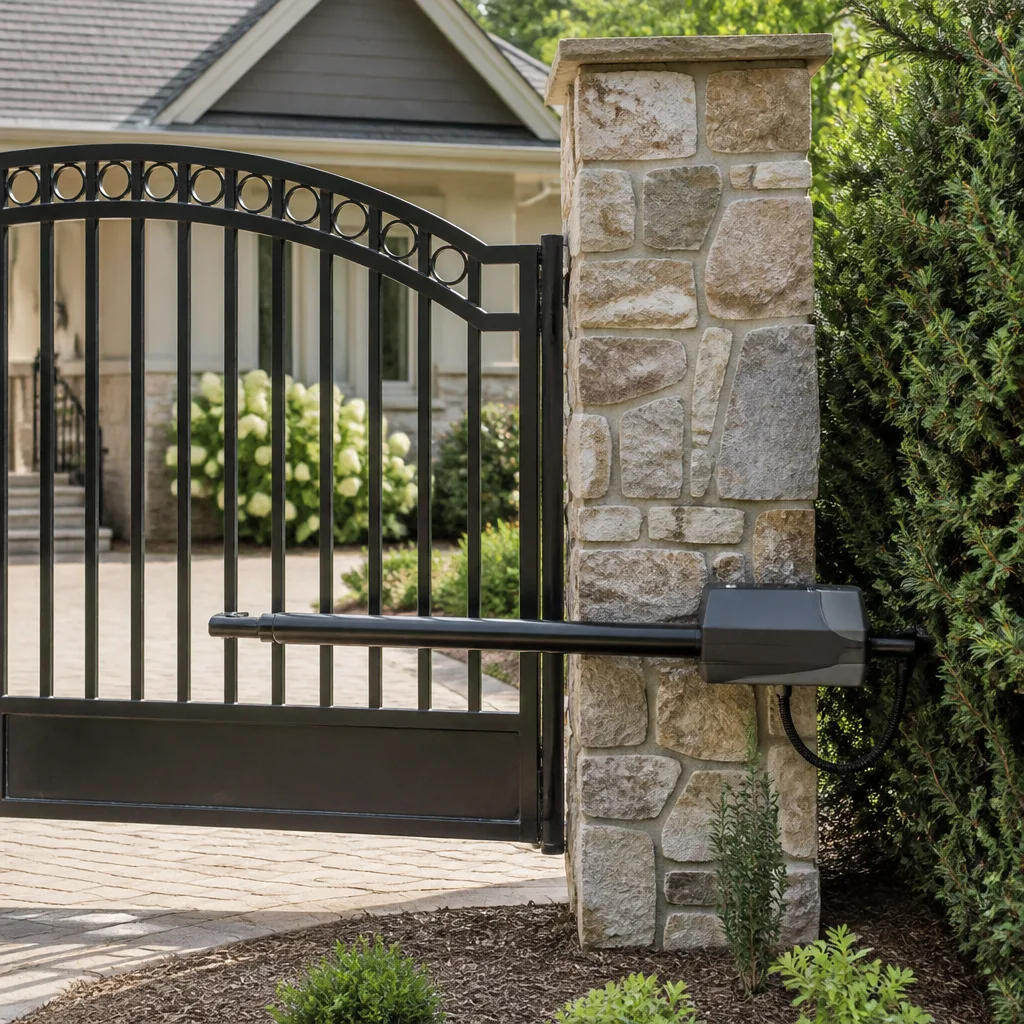
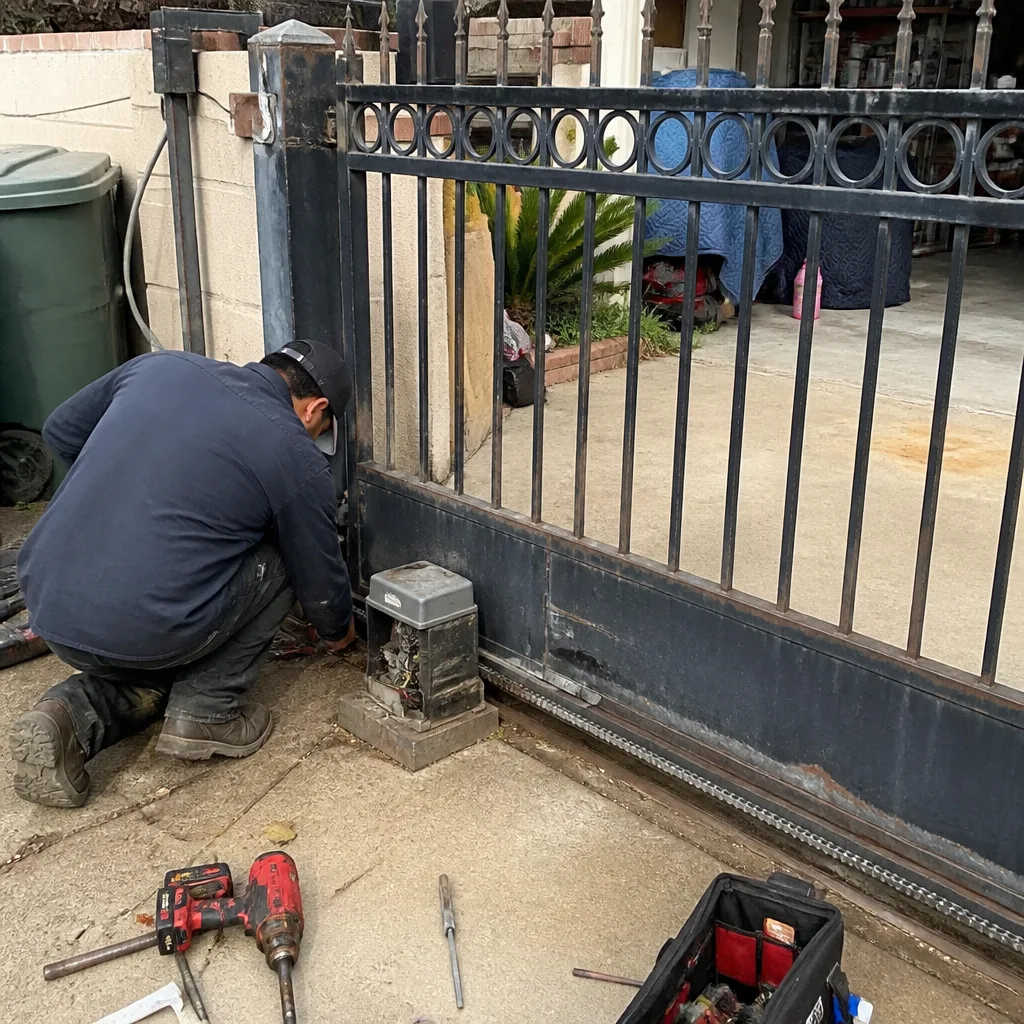 Before
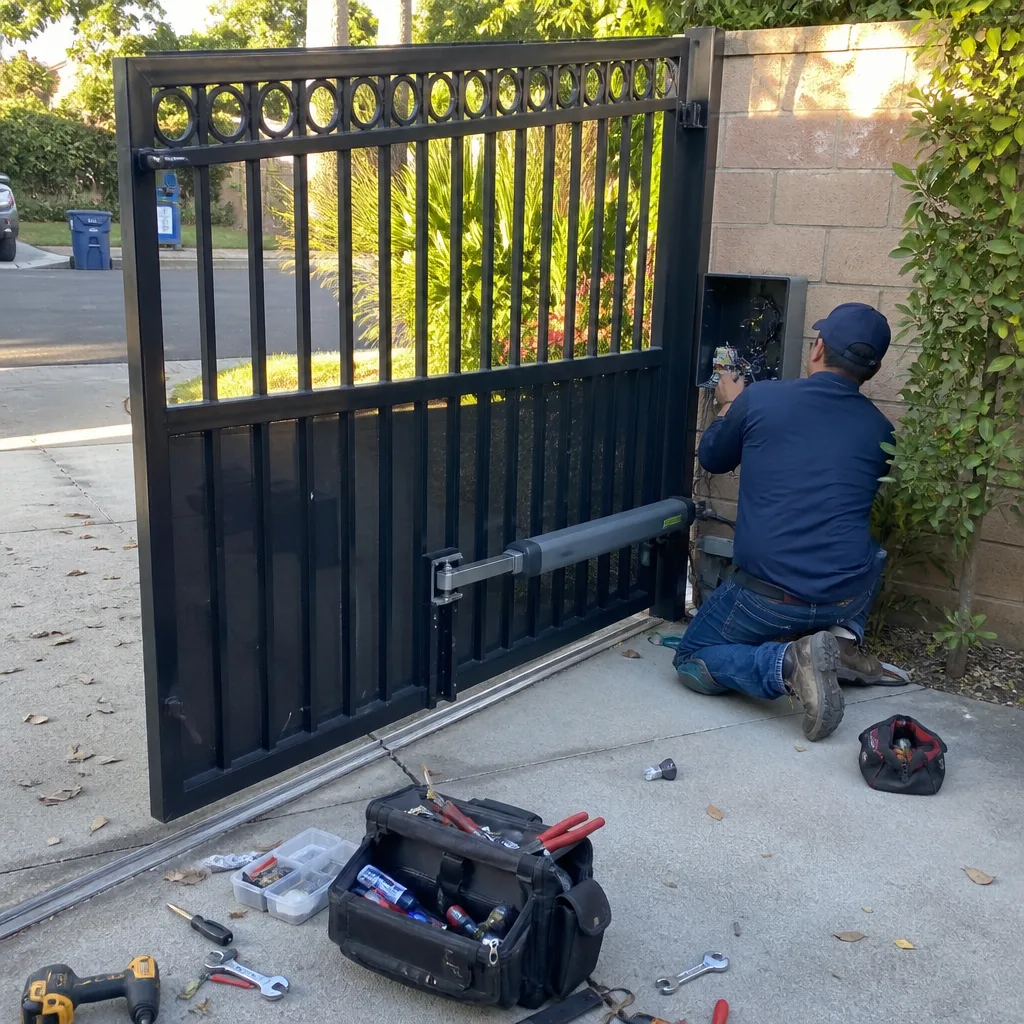 After
After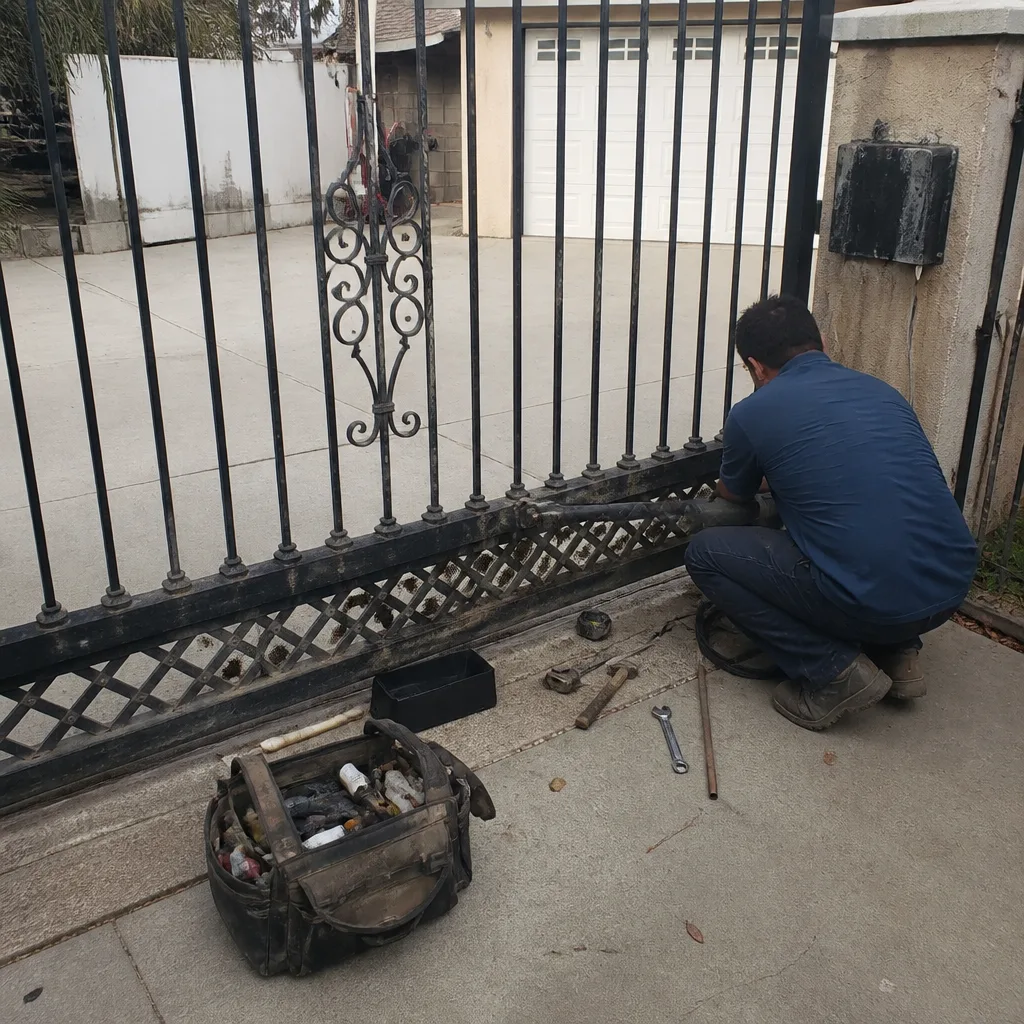 Before
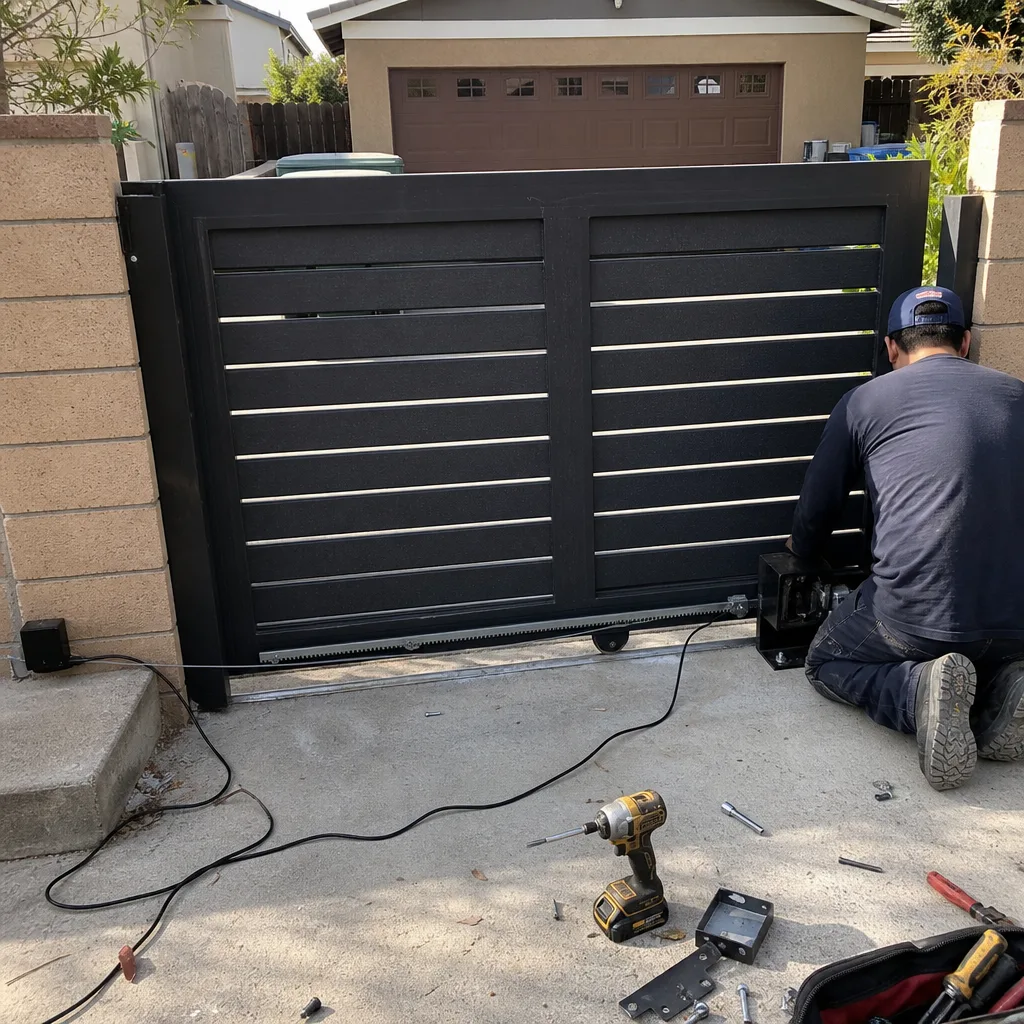 After
After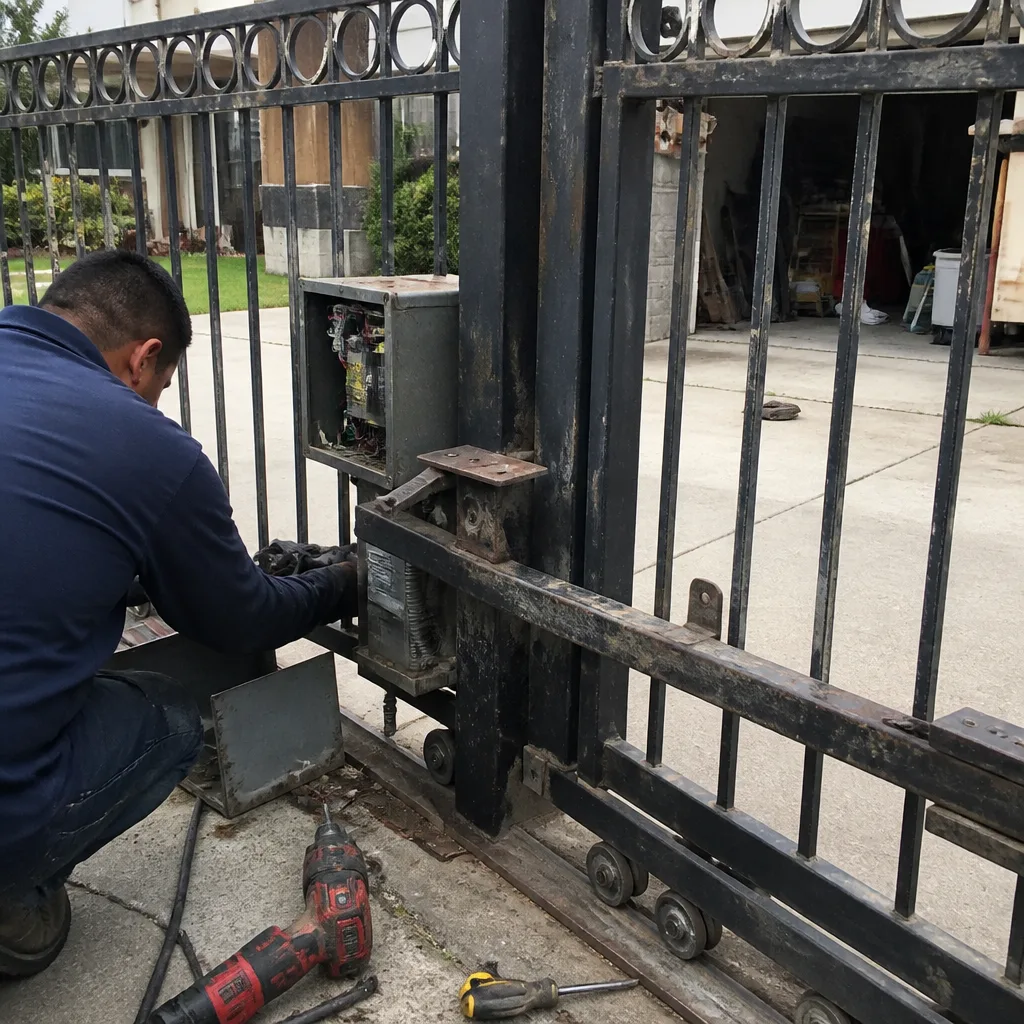 Before
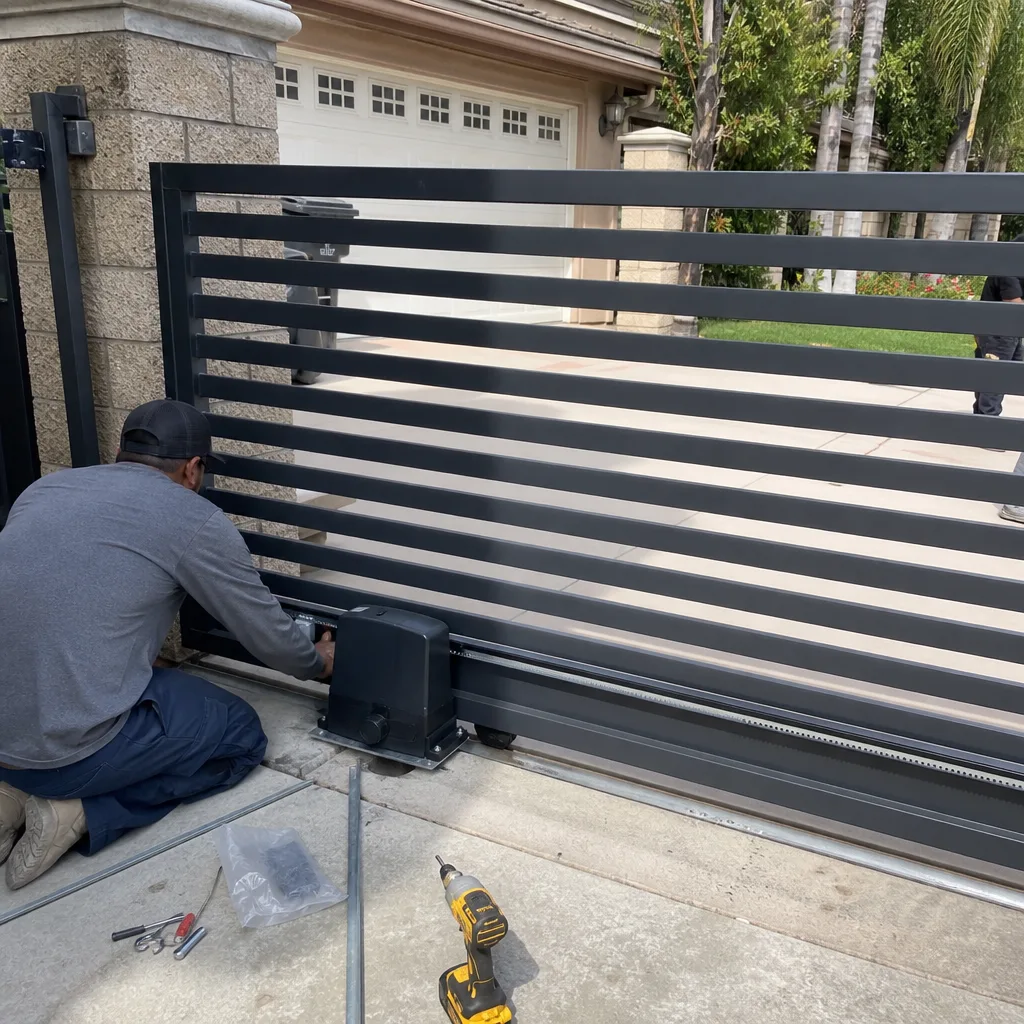 After
AfterGate Repair Maintenance Checklist for Anaheim Homeowners
Most gate failures in Anaheim don’t start with a sudden snap. They start as a slow, quiet drift, a hinge that binds slightly, a motor that labors a little more each week against the same 600-pound leaf it swung easily last spring. By the time a homeowner calls us, the problem has usually been developing for six to twelve months, and what could have been a $150 adjustment has become a $1,400 motor replacement. This guide covers the exact maintenance routine we recommend for Anaheim’s climate and soil conditions, from the hinges to the circuit board, so a gate that closes reliably today is still closing reliably in 2035.
Quick Answer
A sound Anaheim gate maintenance routine comes down to four seasonal tasks: clean and lubricate hinges and rollers every 60 to 90 days, check the opener’s force settings and safety edges every quarter, keep the track clear of soil and debris, and have a professional inspect the motor, wiring, and welds once a year. Done consistently, this routine catches most failures before they happen and adds years to the opener’s life. If you’d rather hand the checklist to someone else, Ironworks Gate Co. provides a complete $89 Seasonal Tune-Up in Anaheim and the surrounding areas.
Table of Contents
- The Monthly Visual Walkaround
- How to Lubricate Anaheim Gate Hardware Properly
- Track and Ground-Track Maintenance in Anaheim Soil
- Opener Force and Safety-Edge Checks, Quarter by Quarter
- Battery Backup Systems and Anaheim Heat
- Weld and Hinge Inspection: What Anaheim Gates Do Over Time
- A Seasonal Maintenance Schedule for Anaheim Homeowners
- Common Mistakes to Avoid
- When to Call a Professional
- Frequently Asked Questions
- The Bottom Line
The Monthly Visual Walkaround
The most useful maintenance habit we can teach an Anaheim homeowner takes five minutes and costs nothing. Once a month, stand in front of the gate and look at it the way a mechanic looks at a car. You are not fixing anything. You are looking for changes.
Start with the gate in the closed position. Look at the vertical gap between the two leaves and the gap between the gate and the post. Both gaps should be even, top to bottom. If the gate has dropped slightly on one side, the hinge bushings or the post itself is shifting, and that drop will get worse if it is ignored. Next, open the gate halfway and look at the hinge points. You are checking for rust bloom, red-brown dust, or a gap between the hinge barrel and the pin where there was none before. Push on the gate with one hand, gently. It should move no more than a quarter inch at the latch. More than that means a hinge or a wheel bearing is wearing.
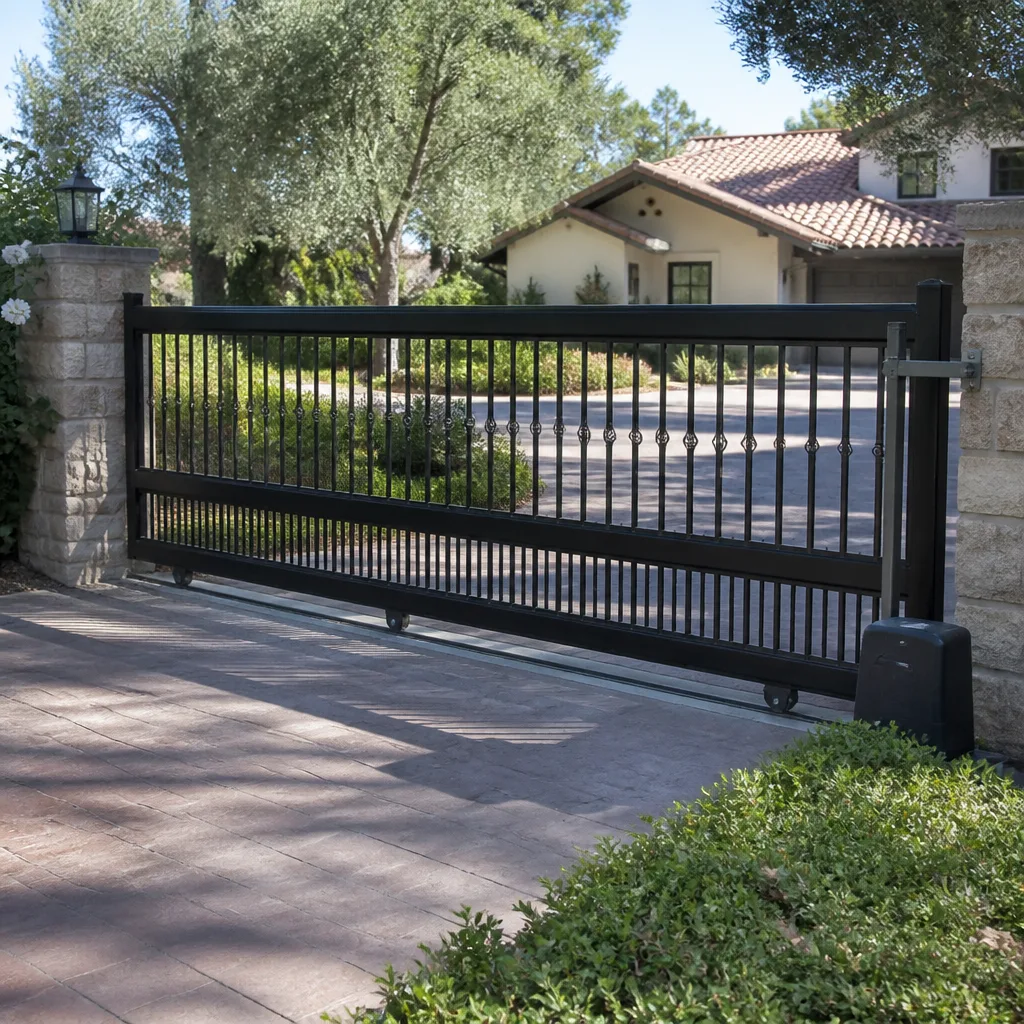
Walk the length of the gate track if you have a slide gate. Anaheim’s dry, sandy soil blows into the track throughout the summer, and a track that is half-full of debris will overburden the motor and wear the drive chain prematurely. If the chain looks dry or has visible rust, note it. If the wheels sound gritty when the gate moves, note that too.
Finally, look at the bottom of the gate itself. Anaheim homes with older steel gates often show rust along the bottom rail where sprinklers hit the metal every morning. That rust is not cosmetic. It thins the steel over time, and a gate that rusts through at the bottom rail will eventually sag, flex, and strain every other part of the system.
This monthly look costs nothing and catches most problems before they become repairs. It is the single habit that separates homeowners who spend nothing on their gate for a decade from homeowners who replace a motor every four years.
How to Lubricate Anaheim Gate Hardware Properly
Lubrication is the one maintenance task almost every homeowner does, and unfortunately, the one most get wrong. The rule we teach our Anaheim customers is simple: grease the pins, oil the chain, and keep anything else dry.
Start with the hinges. Each hinge has a pin, and that pin should be greased, not oiled. Grease stays in place and resists the heat, while oil runs down the gate and stains the stucco or the driveway. A lithium-based grease or a marine grease works well for Anaheim’s dry heat. Apply a small amount to each pin and work the gate back and forth a few times to distribute it. You do this two to four times a year, depending on how often the gate cycles. A gate that opens ten times a day needs more attention than one that opens twice.
The rollers on a slide gate and the wheels on a cantilever gate take the same grease treatment. Each wheel has a bearing, and each bearing has a grease fitting or a sealed cap. If there is a fitting, use a grease gun and give it one pump. Too much grease will blow out the seal and let dirt in, and Anaheim has no shortage of dirt.
Chains are the exception to the grease rule. Use a chain lubricant, not grease, and not WD-40. WD-40 is a solvent that will strip whatever lubrication is already on the chain, and ten days later the chain will be drier than before. A proper chain lube goes on wet and sets up slightly tacky, which is what you want. Apply it along the full length of the chain, wipe off the excess with a rag, and you’re done.
One caution worth stating flatly: the torsion springs on some Anaheim gate systems, particularly the older Estate and custom iron designs, are under enormous tension. Do not lubricate them yourself, do not adjust them, and do not remove any cover or housing that is bolted over them. A torsion spring under load can release with enough force to break a hand. This is a genuinely dangerous component, and it is the one part of the gate where the only correct maintenance is a trained professional’s inspection. Ironworks Gate Co. home can provide that inspection on a seasonal tune-up call.
Track and Ground-Track Maintenance in Anaheim Soil
Anaheim sits on soil that ranges from sandy loam near the Santa Ana River to heavy clay in the older neighborhoods north of the 91. Both soil types cause the same problem in a different way: sand blows, and clay expands. The result is that the ground track on a slide gate is either filling with debris or shifting slightly with the seasons, and sometimes both.
Keep the track clear, and note how often you are clearing it. If the track fills with debris every month, you have a drainage or landscape issue worth addressing. A track that stays full of soil will grind the gate wheels, load the motor unnecessarily, and eventually bend the wheels or the track itself. If you notice the gate sounds different, a grinding quality rather than a smooth roll, stop operating it until the track is cleaned and inspected. Every cycle with a fouled track is doing measurable wear to the system.
Slide gates in Anaheim often have two tracks: the main track the gate rolls on, and a guide track that keeps the top of the gate from leaning. Check both. The top guide track collects less debris but is easy to forget, and a dry top guide will squeal and score the gate frame over time.
Cantilever gates, the kind that roll on wheels without touching the ground, are more tolerant of soil conditions, but they have their own requirement: the wheels must stay clean and lubricated, and the concrete pad they roll over must stay level. Anaheim’s clay soil expands noticeably after a wet winter, and a concrete pad that was poured on clay can heave slightly. If a cantilever gate begins to bind or slow down in the spring, the pad may have shifted, and the fix is typically a shim or a re-set of the wheel heights rather than anything wrong with the motor.
Opener Force and Safety-Edge Checks, Quarter by Quarter
Every automatic gate opener in Anaheim has two safety systems that need to work before anything else matters: the force setting, or how hard the motor pushes before it gives up and reverses, and the safety edge or photo-eye system that detects an obstruction. A gate that pushes too hard is a danger to children and pets. The force setting is not a set-and-forget adjustment; it should be checked every quarter because the gate’s weight changes over time as the hinges settle, the wheels wear, and the gate accumulates dirt and moisture.
Here is the quarterly check, in order, for a gate with a safety edge:
- Open and close the gate once and listen. The motor should not labor or strain at any point in the cycle. A motor that is working harder than it did last month is telling you something: usually a dry wheel, a fouled track, or a failing capacitor.
- Test the safety edge. Close the gate, and while it is closing, press the edge with the flat of your hand. The gate should reverse immediately, not after a delay, not after some additional pressure. If it does not reverse, stop using the gate automatically and switch it to manual operation until it is repaired. This is not a matter of convenience; a gate that does not reverse on contact is a serious safety hazard, particularly on a property with children or animals.
- Check the photo eyes. Wave your hand through the beam while the gate is closing. The gate should stop or reverse. If the photo eyes are misaligned or dirty, the gate may fail open, meaning it will not close at all, which is a different problem but an important one to recognize.
- Look at the battery backup if the opener has one. Battery terminals corrode in Anaheim’s heat, particularly in the summer when temperatures inside the operator housing can exceed 130 degrees. A corroded or swollen battery needs replacement.
If any of these checks fails, the gate should be repaired before it is used in automatic mode again. Ironworks Gate Co. services automatic openers from Viking, Ghost Controls, DoorKing, Elite, and several other major brands, and this quarterly check is part of the $89 Seasonal Tune-Up we offer in Anaheim.
Battery Backup Systems and Anaheim Heat
Anaheim gets two stress tests on gate batteries every year: the summer heat wave, and the Santa Ana wind season, when power flickers and fails. A gate with a working battery backup will open and close during a power outage, which matters more than it sounds. The gate is usually the only way in and out of a driveway, and during a wind event, being locked behind a dead gate is not where anyone wants to be.
Battery backups fail in two ways in Anaheim. The first is heat. Batteries degrade faster in high heat, and a sealed operator box sitting in direct sun on a 95-degree day can run well above the rated operating temperature of the battery inside. The second is calendar age. A battery that is four years old, even a good one, is at the end of its useful life in this climate, regardless of how little it has cycled.
We recommend checking the battery twice a year, in April before the summer heat and in October before the Santa Ana season. The check takes a technician five minutes: the battery is load-tested, the terminals are inspected for corrosion, and the connections are tightened. It is a small part of a seasonal gate service that prevents the single most common “it worked yesterday” failure we see in Anaheim.
One more note on this: if your gate opener is an older model, the battery may be lead-acid. If it is newer, it may be a sealed lithium pack. They fail differently. A lead-acid battery swells and leaks; a lithium pack simply dies quietly. If you notice the gate running slower than normal or the opener beeping or showing a warning light, the battery is often the first thing to check.
Weld and Hinge Inspection: What Anaheim Gates Do Over Time
Steel gates in Anaheim age differently than steel gates in coastal cities. The air is drier, which spares the metal from the constant salt corrosion we see on the coast, but the heat cycles work the metal in another way. A black steel gate in direct Anaheim sun can reach 160 degrees on a summer afternoon and drop to 60 by morning. That hundred-degree cycle, repeated daily, causes the steel to expand and contract, and over ten or fifteen years, that movement finds the weakest points: the welds at the hinge mounts and the welds where the pickets meet the bottom rail.
An annual weld inspection is a visual and physical check. We look at each weld on the gate’s hinge points and the frame corners for hairline cracks, rust discoloration along the weld line, or any flaking of the paint or powder coat that suggests movement underneath. We also tap the welds lightly with a small hammer. A good weld rings; a failing weld sounds dull. It is a quick, old-fashioned test, and it works.
Hinges are the other wear item on a welded gate. Most Anaheim gates use barrel hinges or bearing hinges, and both have a service life. A hinge that has worn its bushing will let the gate drop slightly at the latch side, and the gate will begin to drag or bind. The fix is a bushing replacement or a hinge re-weld, not a motor adjustment. The motor is simply trying to move a gate that no longer hangs straight.
Our experience in Anaheim has been consistent: most gate repairs under $300 are hinge and wheel work, and most repairs over $1,000 are motor replacements that could have been avoided if the hinge work had been done when it needed doing. The gate’s frame, hinges, and wheels are a system, and the motor is the last link in that system. It feels everything upstream.
A Seasonal Maintenance Schedule for Anaheim Homeowners
The following schedule covers the whole year. It assumes a standard driveway gate cycling eight to twelve times a day. If you are on a busier street or running an estate gate, move the lubrication schedule up by a month.
January through March (cool season, occasional rain):
- Walk around after every heavy rain and check for soft spots or pooling under the gate path, especially on clay soil. Mark any new ground movement.
- Lubricate hinges and rollers once in January and again in March if the rains have been heavy.
- Check the track for mud or debris, since winter rains carry fine silt into the track.
April through June (warming, dry wind):
- Test the battery backup and inspect terminals for corrosion before the first heat wave.
- Lubricate all hinges and rollers.
- Do the full force and safety-edge check described above.
- Walk the gate with a critical eye for rust bloom, especially after the Santa Ana winds have scoured any exposed metal.
July through September (peak heat):
- Check the operator housing for heat. If the box is too hot to touch in the afternoon, the motor and battery are shortening their service life. Consider shade or ventilation.
- Lubricate hinges again; the heat dries grease faster.
- Listen to the motor once a week. A change in sound is always the first warning.
October through December (Santa Ana winds, cooling):
- Test the battery backup again before the wind season.
- Check all welds visually, or have a professional do the full hammer-and-eye inspection.
- Clean the track thoroughly before the first rains arrive.
- Adjust the gate’s close speed if you prefer a gentler close for the winter, though this is rarely necessary.
This schedule is deliberately simple. It is four walks around the gate per year, a few minutes of lubrication each time, and two battery checks. That is the maintenance that keeps an Anaheim gate running for decades rather than years.
Common Mistakes to Avoid
- Using WD-40 on the chain or hinges. It strips lubricant and evaporates, leaving the metal drier than before. Use grease for the pins and chain lube for the chain.
- Ignoring the safety-edge failure. A gate that does not reverse on contact is a hazard to children and pets. Switch to manual operation and have it repaired. This is not optional.
- Adjusting the force setting to compensate for a binding gate. When a gate binds and the motor breaks its force limit, the right fix is the hinge or the wheel, not the dial. Cranking the force setting means the gate pushes harder against the obstruction instead of reversing.
- Painting over rust without treating it. A coat of paint over active rust seals the moisture in and the steel keeps rusting underneath. The rust must be removed and the metal primed before painting, or the paint is decorative only.
- Relying on the gate to tell you when something is wrong. By the time a gate visibly sags or a motor stops working, the underlying problem has been developing for months. The monthly walkaround catches the early signs.
- Using a generalist handyman to diagnose an opener fault. Automatic gate openers, especially the modern ones from brands like DoorKing and Elite, are precision equipment with specific force, timing, and safety logic. The correct fix requires familiarity with the specific board and its programming.
When to Call a Professional
Some gate maintenance is homeowner work; some is not. Call a professional if the gate is sagging enough to see, if the safety edge or photo eyes are not working correctly, if the motor has started making a sound it did not make before, or if you see a crack in a weld anywhere on the gate or its posts. Anything involving the torsion springs, the opener’s internal electronics, or the gate’s structural welds is professional work, and attempting it with a homeowner toolkit is a good way to turn a small repair into a large one. Ironworks Gate Co. offers free estimates in Anaheim, and a live person answers our phone 24 hours a day. Call (424) 395-3381 and we will be there when we say.
Frequently Asked Questions
Lubricate hinges and rollers every 60 to 90 days, or four to six times a year. Anaheim’s heat dries grease faster than coastal air, and a gate cycling ten times a day needs more frequent lubrication than one cycling twice. Use lithium or marine grease on the pins and a proper chain lubricant on any drive chain. Call (424) 395-3381 if you would like us to handle the lubrication as part of a seasonal service.
Gate repairs in Anaheim typically fall between $150 for a hinge or wheel adjustment and $1,400 for a complete opener motor replacement, depending on the age and brand of the opener. A seasonal tune-up is $89, and we offer $50 off any repair over $250 and a free second opinion on any written estimate. Ironworks Gate Co. provides a written price before any work begins, so there are no surprises on the bill.
We answer the phone 24 hours a day and schedule service calls throughout Anaheim every day of the week. The earliest available appointment depends on the day and the workload, but when you call (424) 395-3381, a live person will give you a straight answer and a firm arrival window.
The tune-up includes the full quarterly checklist: hinge and roller lubrication, a force and safety-edge test, a battery backup check, a track cleaning and adjustment, and a visual weld inspection. It is designed to catch every common Anaheim gate failure before it becomes a repair, and it applies to most automatic gate systems. Call (424) 395-3381 to schedule yours.
We are trained and equipped on nine major gate-automation brands, including Viking, Ghost Controls, DoorKing, Elite, LiftMaster, and FAAC. Whatever opener is on your Anaheim driveway, the odds are very high that we service it regularly. If you’re not sure, call us and ask; a live person will confirm in a minute.
A well-maintained gate opener in Anaheim typically lasts twelve to fifteen years. Without maintenance, especially without lubrication and without battery checks, that life drops to five or six years. The difference is almost entirely in the maintenance, not the brand. The $89 Seasonal Tune-Up is the single best investment in the longevity of your gate system.
The Bottom Line
A gate in Anaheim will reward the homeowner who looks at it once a month, lubricates it four times a year, checks the safety systems quarterly, and has the welds and the opener inspected annually. That is the whole secret. The gate does not fail suddenly; it fails slowly, and every slow failure shows itself early to the person who is looking. If the maintenance feels like more than you want to handle, or if you would rather have a professional’s eye on the gate every year, Ironworks Gate Co. is here for that. Done right – and backed in writing.
We are a dedicated gate specialist serving Anaheim and the surrounding communities, and every job is protected by our 90-Day Done Right Promise. A square deal: upfront price, no surprises on the bill. Call (424) 395-3381 for a free estimate, or to schedule the $89 Seasonal Tune-Up.
Written by Victor Salinas, Owner at Ironworks Gate Co., serving Anaheim since 2013.